
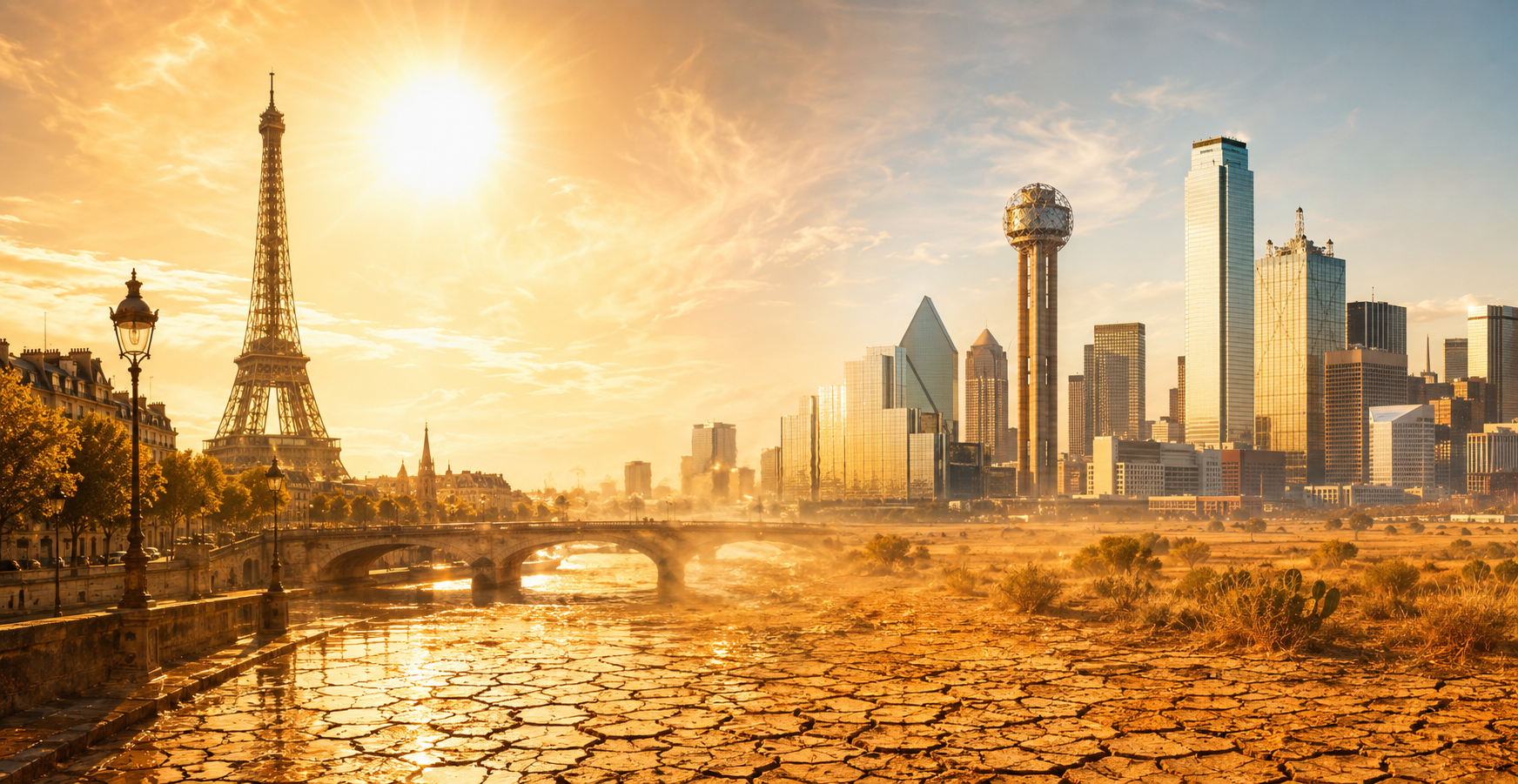
Updated 30 August 2026: Europe and the United States have just experienced an extraordinary Northern Hemisphere summer. From record heat and brutally warm nights to surging electricity demand and fans selling out, there are some very practical lessons for Australia as we prepare for summer 2026-27.
If you want a preview of why Australia should be preparing for summer before summer actually arrives, look north.
Europe has just endured an extraordinary run of heat.
The United States has just recorded its warmest month in 132 years of national records.
Fans have been flying off shelves. Portable air conditioners have sold out. Electricity networks have been pushed towards their limits. Businesses have shifted working hours. Workers have started earlier to escape afternoon heat. Governments have activated heat-health plans and cooling centres.
And perhaps the most useful lesson for Australians is surprisingly simple:
Waiting until the heatwave arrives is usually too late to start preparing for it.
Western Europe's June 2026 was its hottest June on record. By the end of July, western Europe had experienced its hottest combined June-July period in the Copernicus ERA5 record.
Across the Atlantic, July 2026 became the warmest month ever recorded for the contiguous United States since national records began in 1895. Even more strikingly, average overnight minimum temperatures were the highest ever recorded for any month.
Those are not identical weather systems, and Australia should not assume its coming summer will simply copy Europe or America.
But they give us an unusually useful real-world case study.
We can see what happens to homes, workplaces, electricity systems, retail supply chains and everyday routines when extreme heat arrives repeatedly rather than as one isolated scorcher.
And Australia is heading into summer with its own reasons to pay attention.
The Bureau of Meteorology says a strong El Niño is well established and continuing to strengthen, while NOAA's August ENSO outlook gives a greater than 90% chance of a very strong El Niño later in 2026.
That does not guarantee an extreme Australian summer.
But it certainly strengthens the case for preparing early.
Want the Australian forecast first?
We've already broken down the latest El Niño forecasts, summer predictions and state-by-state outlook in two dedicated resources.
In this guide
- Seven lessons from the Northern Hemisphere summer
- Europe's summer started early and barely let up
- Why hot nights matter
- America's historic July heat
- Why fans and cooling products sold out
- What actually worked
- What it means for Australian workers
- When fans work and when they don't
- Why cooling works best in layers
- Electricity and backup cooling
- What it means for Australia in 2026-27
- How to prepare before summer
- Heatwave and summer FAQ
The Short Answer: Seven Lessons From the Northern Hemisphere Summer
The biggest lessons are not particularly complicated.
1. Heat preparation works better before a heatwave than during one.
2. Cooling equipment can disappear incredibly quickly once forecasts turn red.
3. Hot nights matter almost as much as hot afternoons.
4. Workers need a heat plan, not simply more water bottles.
5. Air movement can be extremely useful, but a fan is not air conditioning.
6. Shade, airflow, water, scheduling, clothing and mechanical cooling work best as a system.
7. Repeated heatwaves create cumulative problems, from fatigue and power demand to low stock and reduced overnight recovery.
Europe's Summer Started Early and Barely Let Up
One of the most important things about Europe's 2026 heat was not simply how hot it became.
It was how early it started and how persistent it became.
Western Europe experienced an unusually early heatwave towards the end of May. Parts of western France, England and Wales recorded daily average temperatures more than 10°C above normal, while Portugal, the UK and Ireland recorded their highest May temperatures at individual weather stations.
France experienced its hottest May day on record nationally.
Then came June.
According to Copernicus, June 2026 became the hottest June recorded across western Europe. The regional average was around 3.06°C above the 1991-2020 average.
England and France experienced their warmest Junes on record. Germany, the Netherlands and the UK overall recorded their second warmest.
Then July arrived.
France experienced a 16-day heatwave from 4 to 19 July, its third-longest recorded. Spain recorded its joint-warmest July. France recorded its warmest.
By the time June and July were combined, western Europe had experienced its hottest June-July period in the ERA5 record.
Lesson for Australia: Don't prepare for one spectacularly hot afternoon. Prepare for several hot days and warm nights stacked together.
A single 39°C day followed by a cool night and a mild week is one challenge.
Several heatwaves stacked together, with warm nights, dry soils, increasing wildfire risk and buildings that have not fully cooled from the previous event, are another problem entirely.
Source: Copernicus Climate Change Service, June 2026 and July 2026.
The Heat Didn't Stop When People Went Indoors
It is easy to imagine extreme heat as an outdoor problem.
Tradies on roofs. Landscapers. Road crews. Farmers. People walking through the city at midday.
But 2026 again showed why indoor heat and overnight heat deserve just as much attention.
Homes can accumulate heat through the day and release it slowly after sunset. Apartments can become particularly difficult to cool. Warehouses, workshops, kitchens, laundries, factories and poorly ventilated offices can remain hot long after outdoor temperatures begin falling.
Warm nights compound the problem because the body gets less opportunity to recover.
Safe Work Australia specifically identifies warm nights as a workplace heatwave risk because poorer sleep contributes to fatigue and can affect a worker's ability to perform safely and effectively the next day.
The United States' July statistics tell a similar story.
Average daytime maximum temperatures across the contiguous US ranked among the hottest on record.
Average minimum temperatures, however, were the warmest ever recorded for any month.
That distinction matters.
Sometimes the most exhausting heatwave is not the one producing the single highest afternoon temperature.
It is the one that never really switches off.
America's July 2026 Heat Was Historic
If Europe offered one warning, America offered another.
NOAA's National Centers for Environmental Information calculated an average July 2026 temperature of 76.9°F across the contiguous United States, around 3.3°F above the 20th-century average.
That made July 2026 both the hottest July and the hottest individual month in the US record extending back to 1895.
Every contiguous state ranked within the warmest third of its historical July temperatures.
Some regions dealt with much more oppressive conditions than the national average suggests.
In parts of the Midwest, heat-index readings reached around 110-120°F, with some local values climbing even higher during periods of exceptional humidity.
Temperature isn't the whole story.
Humidity changes how effectively sweat evaporates. Direct sunlight changes radiant heat load. Wind changes evaporation. PPE changes the body's ability to release heat. Physical work generates additional heat inside the body.
This is why workplace heat professionals often use metrics such as Wet Bulb Globe Temperature, or WBGT, rather than simply looking at the number shown in a weather app.
Source: NOAA National Centers for Environmental Information.
Perhaps the Most Relevant Lesson for Us: Everyone Buys Cooling Equipment at the Same Time
This summer produced some extraordinary retail numbers.
And this is where the Northern Hemisphere story becomes particularly relevant for anyone thinking:
"I'll just buy a fan when it gets hot."
During Britain's June heatwave, electronics retailer Currys reported that fan sales jumped almost 3,000% over the latest heatwave weekend compared with the previous weekend.
Portable air-conditioning sales rose approximately 330%.
Earlier in the event, searches for fans had increased by almost 1,500%, while searches for air-conditioning products were reportedly up around 3,500%.
By early July, Currys was warning that supplies of both fans and air conditioners were becoming tight as another heatwave approached.
Independent electrical retailers reported similar behaviour.
One UK retailer told trade publication ERT that customers had been fighting over the final fan in the store.
Another reportedly had a waiting list of customers essentially saying:
"Get me anything you've got."
Portable air conditioners were selling out.
Popular fan models were disappearing.
TechRadar reported that Meaco's tabletop and pedestal fan range had completely sold out during the previous heatwave.
The retail pattern is fascinating because extreme heat creates a very compressed buying cycle.
Normally, thousands of consumers might purchase a product gradually over several months.
During a heatwave, a huge portion of that demand can arrive almost simultaneously.
The forecast changes.
News coverage ramps up.
Someone sleeps badly for one night.
Their office becomes unbearable.
The old fan from five summers ago finally gives up.
Suddenly everyone is searching for exactly the same product.
Sources: Reuters, The Guardian, ERT and TechRadar.
The Best Time to Buy Summer Cooling Gear Is When Nobody Desperately Needs It
There is a fairly obvious takeaway here.
Do not wait until the first 40°C forecast to discover whether your cooling gear still works.
This applies whether you are buying a cooling towel, a rechargeable portable fan, an air-conditioning unit or 200 wearable fans for a work crew.
For households, early preparation means more choice.
For businesses, it can mean the difference between deploying a heat plan across the workforce and urgently trying to source equipment after temperatures have already climbed.
We've seen the same seasonality ourselves. Cooling products that sit quietly through winter can suddenly move extremely quickly once warmer forecasts arrive.
Preparing your summer setup?
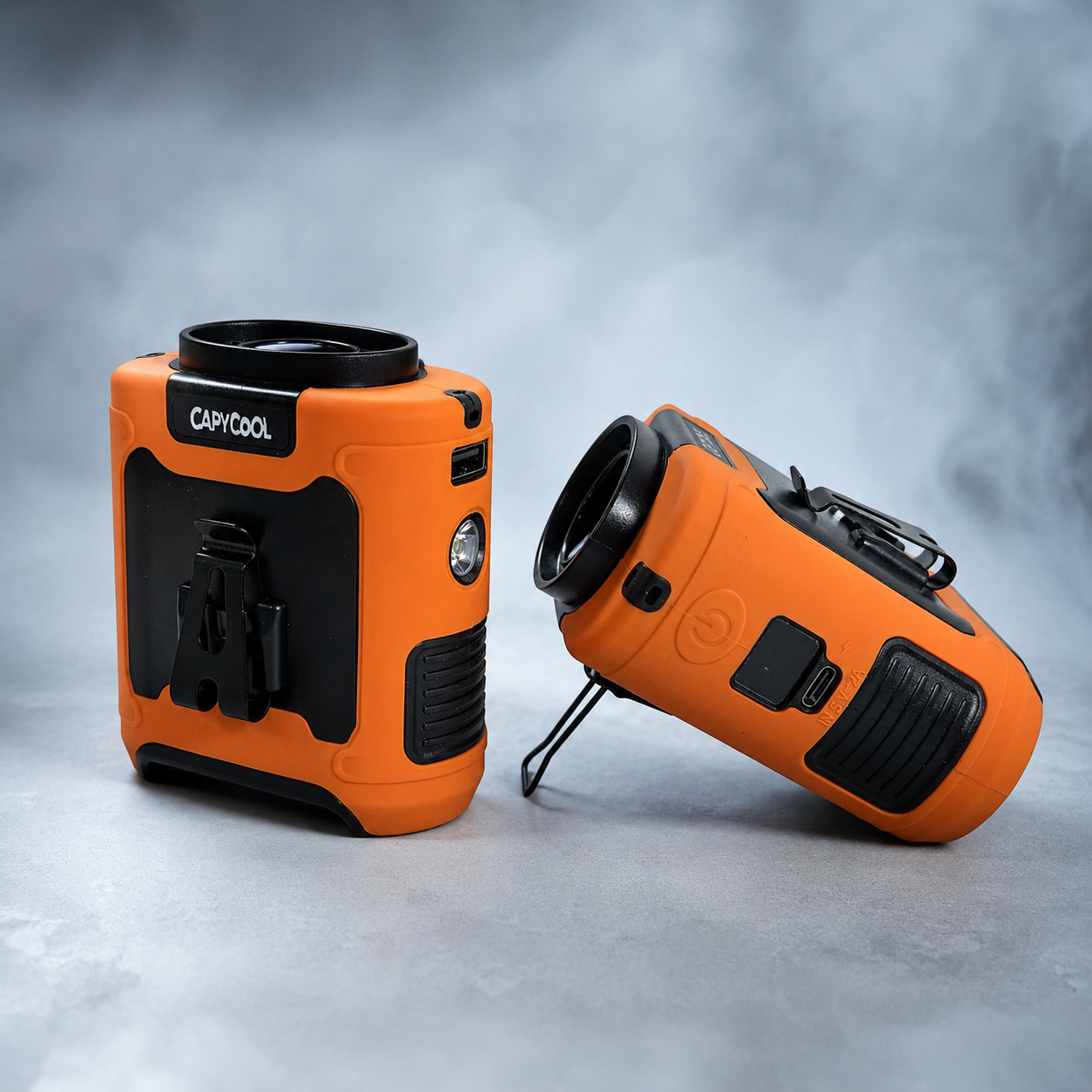
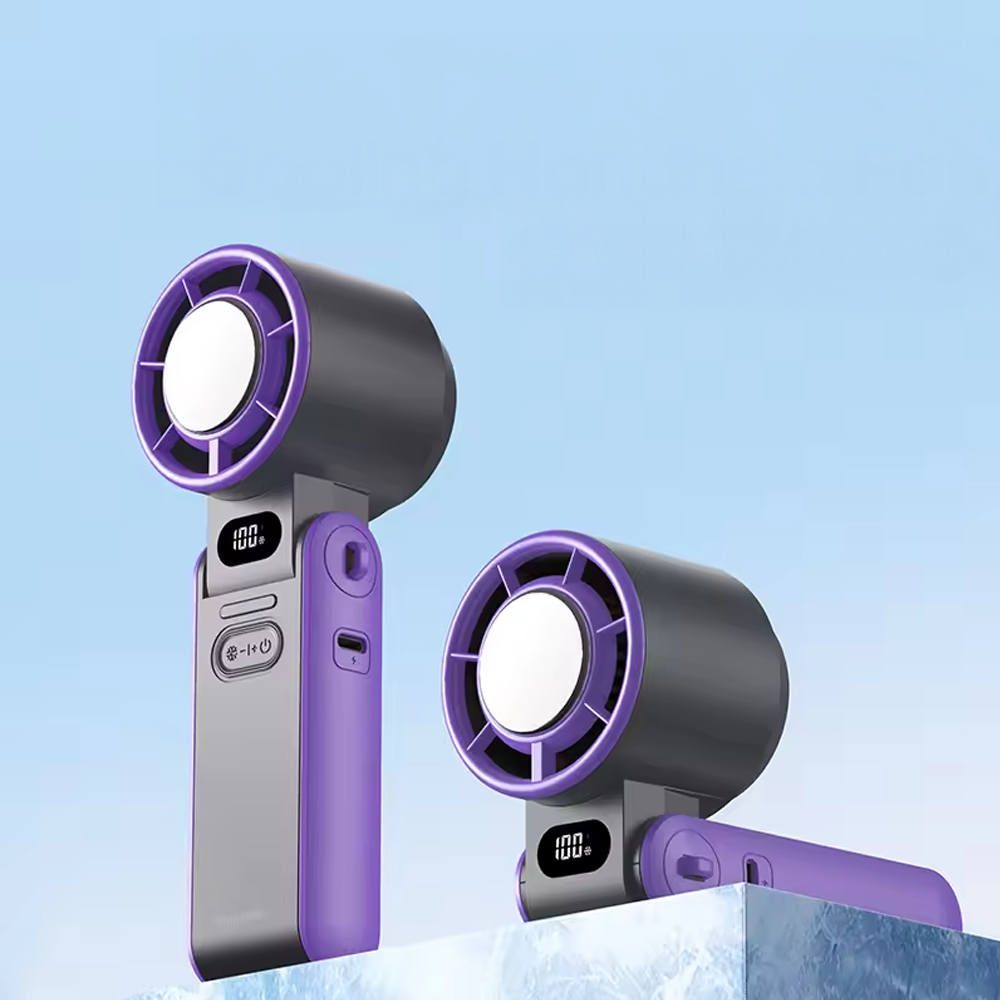
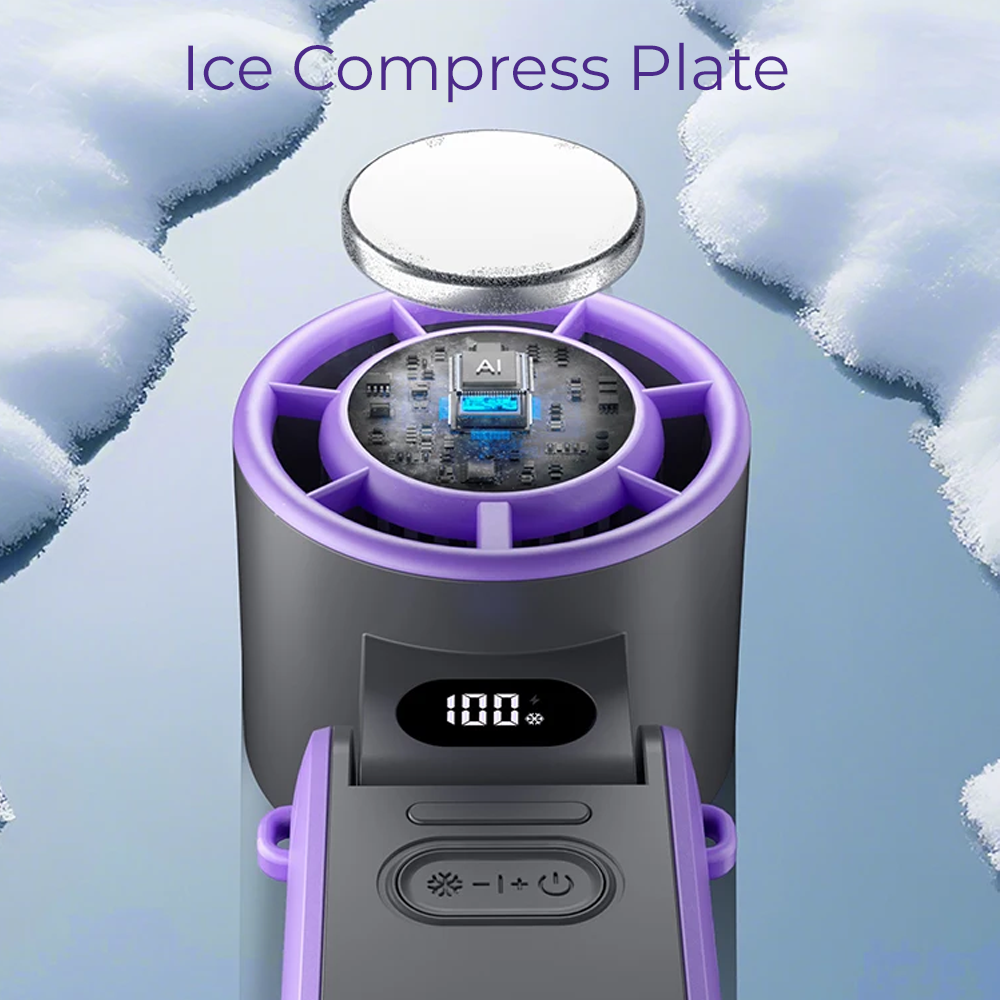
If you know portable airflow will form part of your setup, start with the broader CapyCool Portable Fans range. For hands-free airflow while working, gardening, walking or moving around, the Waist Fan and Shirt Fan range is designed specifically for that job.
What Actually Worked During Europe's Heatwaves?
The good news is that 2026 did not simply show us what went wrong.
It also gave us examples of what worked.
WHO Europe held an emergency meeting with representatives from 41 member states during the July heatwaves.
Its conclusion was encouragingly practical:
Heat-health action plans work.
Countries with existing plans were able to link weather warnings with health responses, communications, monitoring of vulnerable people and preparation within health services.
WHO highlighted examples including Italy's mortality surveillance system, Spain's coordination with media, Austria's workplace protections, Belgium's heat alert system and France's cross-sector coordination.
This is the pattern that keeps appearing when you study successful heat adaptation.
People do better when decisions have already been made before the crisis.
- Who watches the forecast?
- What happens when a heat threshold is reached?
- Who checks vulnerable family members?
- When do work shifts move earlier?
- Where is the cool break area?
- Who has authority to stop or reschedule strenuous work?
- What happens if the power fails?
- Where is the nearest genuinely cooled environment?
A heat plan turns all of those questions into answers before everyone is already hot, tired and making decisions under pressure.
Source: World Health Organization Europe.
Businesses Changed the Work, Not Just the Temperature
Another important lesson came from European employers.
Reuters reported businesses changing how work was organised rather than simply expecting employees to tolerate the same routine in hotter conditions.
Some construction and agricultural operations shifted towards earlier starts or night work.
Germany's DHL supplied workers with cooling equipment.
Companies including Thyssenkrupp and E.ON increased access to water, cooling measures and shaded rest areas.
Even office dress codes started changing.
By August, Reuters was reporting a broader move towards relaxed summer clothing in European workplaces, with unions arguing that traditional dress expectations increasingly conflict with worker comfort and health during severe heat.
You cannot solve occupational heat purely by giving someone a gadget.
You need to change exposure.
That may mean changing where, when or how work is performed.
Cooling equipment then becomes another useful layer in the system.
What This Means for Australian Workers
Heat is one of the clearest areas where comfort, safety and productivity overlap.
WHO estimates that more than 2.4 billion workers globally are exposed to excessive heat, contributing to millions of occupational injuries annually.
Its workplace heat guidance says productivity decreases by around 2-3% for every degree increase beyond 20°C WBGT, while roughly 30% of workers frequently exposed to heat stress report losses in productivity.
That does not mean every Australian worker suddenly becomes dramatically less productive because the weather app says it is 30°C.
WBGT is a more sophisticated heat-stress measurement incorporating environmental factors including humidity, radiant heat and airflow.
But the broader point is straightforward.
The hotter the environment and the harder the physical work, the more energy the human body must dedicate to keeping itself cool.
And eventually something has to give.
Pace slows.
Concentration becomes harder.
Fatigue builds.
Mistakes become more likely.
Then heat illness becomes possible.
Source: World Health Organization: Workplace Heat Stress.
Australia Does Not Have One Universal "Too Hot to Work" Temperature
This is worth clarifying because it is commonly misunderstood.
Safe Work Australia says there is no single maximum temperature at which all workers must automatically stop work.
That makes sense when you think about it.
Thirty-four degrees in a shaded warehouse with strong air movement is not the same physiological problem as 34°C on a roof in direct sunlight.
Thirty-four degrees at low humidity is different from 34°C at very high humidity.
Sitting is different from lifting.
A breathable shirt is different from heavy PPE.
A worker acclimatised to the environment is different from somebody returning after weeks away.
Safe Work Australia therefore recommends managing heat through the normal hierarchy of controls.
- Where practical, eliminate or reduce exposure.
- Move or reschedule hot work.
- Reduce physical demands.
- Create shade.
- Use air conditioning, ventilation or fans where appropriate.
- Provide cool drinking water.
- Allow suitable breaks.
- Adjust work practices.
- Train workers and supervisors to recognise heat illness.
That hierarchy matters.
A waist fan should not become an excuse to keep somebody performing unsafe work in dangerous heat.
Neither should a cooling towel.
Neither should a bottle of electrolyte drink.
They are tools within a broader heat-management system.
Source: Safe Work Australia: Managing the Risks of Working in Heat.
Which Australian Workers Should Be Preparing Hardest?
Pretty much anyone working around heat should be paying attention, but several groups have particularly obvious exposure.
Construction and Trades
Roofers, builders, labourers, electricians, plumbers, traffic controllers and landscapers may combine direct sunlight, physical exertion, PPE, hot surfaces and limited shade.
Roof cavities and unfinished structures can create extremely hot microclimates even when the official outdoor temperature looks relatively moderate.
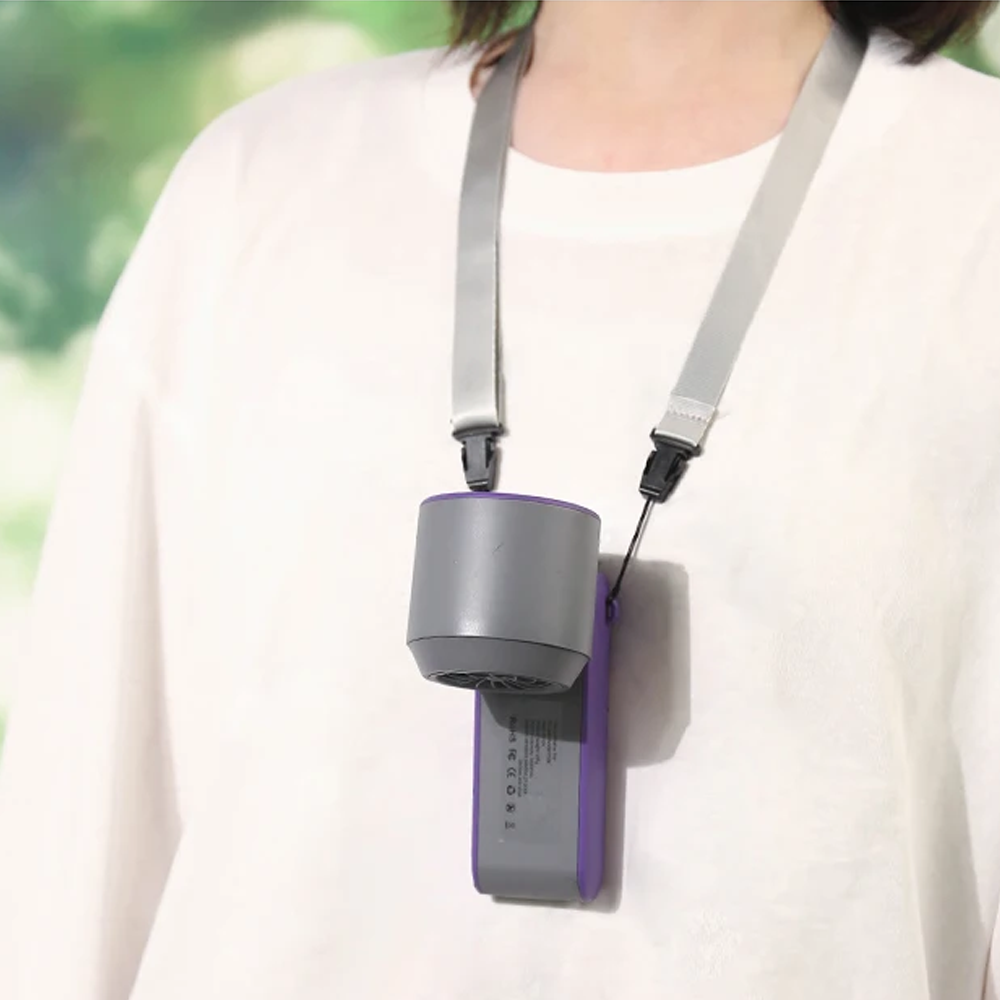
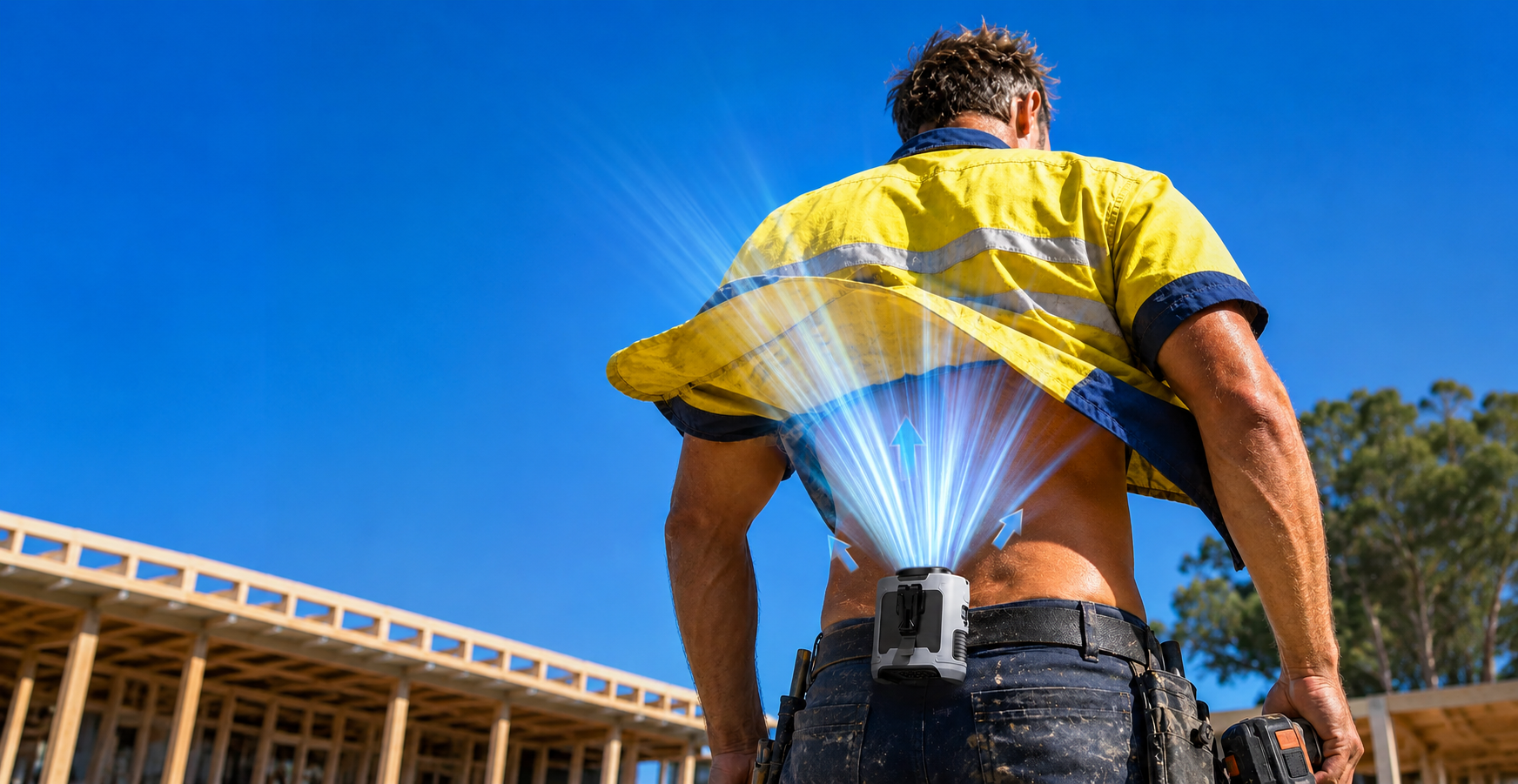
Portable hands-free airflow can be particularly useful here because workers need both hands available.
Explore CapyCool cooling fans for tradies →
Mining, FIFO and Resources
Remote environments create a different problem.
Long shifts, hot workshops, machinery, distance from cooling infrastructure and limited access to charging can make runtime and reliability particularly important.
For organisations outfitting crews rather than one person, procurement, charging, spares and equipment consistency all become part of the conversation.
Explore CapyCool Worksite Cooling Solutions →
Warehouses and Factories
Indoor does not automatically mean cool.
Large warehouses can retain heat, particularly around loading areas or heat-producing equipment. Workers may also transition constantly between indoor and outdoor environments.
Fixed industrial ventilation should form the bigger picture, but targeted personal airflow can help in positions where general air movement is limited.
Drivers and Logistics Workers
Vehicle air conditioning is useful while the worker is sitting inside the vehicle.
The problem starts when they leave it.
Delivery drivers, couriers and field technicians repeatedly transition from an air-conditioned cab into hot loading areas, footpaths, warehouses and customer sites.
Portable cooling has one obvious advantage here: it can move with the worker.
Agriculture
Farm work may combine long hours, limited shade, radiant sun and locations far from conventional cooling.
Early starts and rescheduling can become particularly powerful controls.
Events, Sport and Hospitality
Outdoor bars, catering tents, sports grounds, festivals and event bump-ins can expose staff to hours of heat while they are constantly moving.
Explore portable outdoor fans →
Cooling a whole crew?
CapyCool works with Australian businesses across worksites, warehouses, logistics, trade, government and field teams. Business orders can include bulk pricing, formal quotes, ABN invoicing and procurement documentation.
One of the Biggest Mistakes: Treating a Portable Fan Like Portable Air Conditioning
We sell fans.
So this is worth saying very clearly.
A fan does not make hot air cold.
It moves air.
That can be incredibly useful because moving air across the skin can increase evaporation and improve thermal comfort.
But the effect depends on conditions.
This distinction became especially relevant during Europe and America's heatwaves because advice such as "just use a fan" can oversimplify the physiology.
Research involving the University of Sydney's Heat and Health Research Centre has shown that fan use can reduce cardiovascular strain in hot, humid conditions, including in older adults under particular experimental conditions.
The same field of research has also found that fan use can become inappropriate in extremely hot, dry environments where additional convective heat gain may outweigh the benefit gained from increased evaporation.
WHO recommends caution with fan use at very high temperatures and stresses that fans should not be treated as a substitute for a genuinely cooler environment during dangerous heat.
Why isn't there one magic temperature?
Because humidity matters.
Air velocity matters.
Age matters.
Sweat capacity matters.
Hydration matters.
Health status matters.
Activity level matters.
Use personal fans for comfort and airflow, not as permission to ignore dangerous heat.
When the environment itself becomes dangerous, move to a genuinely cooler place.
Sources: New England Journal of Medicine and World Health Organization.
Humid Heat and Dry Heat Require Different Strategies
This will matter a lot in Australia.
A 36°C afternoon in western Sydney can feel different from 36°C in Adelaide.
Brisbane humidity behaves differently again.
Darwin has another heat profile entirely.
In humid environments, evaporation becomes harder because the air already contains more moisture.
Air movement can help sweat evaporate from the skin, which is why airflow often feels particularly useful in humid heat.
In very hot, dry conditions, there may eventually be enough temperature difference between the air and your skin that blasting more hot air across your body increases heat gain rather than improving cooling.
That is exactly why our Interactive Australian Summer Guide breaks the country down by state and region rather than pretending Australia experiences one universal summer.
See Your Region's Summer Outlook →
Cooling Works Best in Layers
Europe's experience reinforces another point.
There is no one perfect cooling product.
The most effective approach is layered.
1. Keep Heat Out First
Use blinds, curtains, shutters, external shade and awnings during the hottest part of the day where practical.
2. Ventilate at the Right Time
Opening everything at 2pm during a 40°C afternoon can simply introduce more heat. Night or early-morning ventilation can be much more useful once outdoor temperatures fall.
3. Cool the Person as Well as the Room
A fan, cool shower, damp skin or cooling towel can improve personal comfort without trying to mechanically cool every cubic metre of a house.
4. Use Air Conditioning Strategically If Available
Air conditioning is extremely valuable in severe heat. Combining sensible temperature settings with air movement can improve perceived comfort and reduce the need to make every room icy cold.
5. Create a Coolest Room
You do not necessarily need every room in the house to feel identical. A shaded, insulated or air-conditioned room can become the place everyone uses during the hottest part of the day.
6. Think About Sleep
Bedding, airflow and bedroom heat matter because overnight recovery affects how you handle the following day.
It is not glamorous.
It works.
Water Plus Airflow Is an Underrated Combination
One of the simplest techniques supported by heat research is skin wetting.
A cool shower.
A wet cloth.
A spray bottle.
A damp cooling towel.
When conditions support evaporation, moving air over wet skin can substantially improve heat loss.
University of Sydney researchers specifically recommend cool-water strategies such as showers, bathing, spraying or dousing the skin, with airflow potentially amplifying the effect.
That is why we like pairing portable airflow with simple evaporative strategies rather than pretending the fan needs to do absolutely everything.
Explore CapyCool cooling accessories and cooling towels →
Source: University of Sydney Heat and Health Research Centre.
What Didn't Work? Waiting for the Crisis
This is probably the biggest theme running through the Northern Hemisphere summer.
People responded.
But often they responded after they were already uncomfortable.
A forecast appears.
Everyone searches for fans.
Stock disappears.
Portable air conditioners sell out.
Air-conditioning installers receive a flood of enquiries.
Businesses start changing working hours.
Public cooling centres activate.
Hospitals prepare for additional demand.
The sequence is understandable.
But it is reactive.
WHO Europe's updated heat-health guidance is essentially built around doing the opposite.
- Prepare warning systems.
- Identify vulnerable people.
- Establish responsibilities.
- Plan healthcare capacity.
- Reduce exposure.
- Monitor outcomes.
- Learn between events.
The same logic works at the household level.
Your family does not need a 272-page heat-health plan.
But knowing what you will do before the first major heatwave is still useful.
Do Not Assume Power Will Always Be Unlimited
Air conditioning becomes extremely valuable during severe heat.
But tens of millions of people switching on cooling simultaneously also creates an infrastructure challenge.
During a July heatwave, PJM Interconnection, which operates the largest electricity grid in the United States, called on emergency conservation measures as demand approached its all-time record.
Demand reached around 162,700 MW on 2 July, just short of the 165,600 MW record.
Europe faced its own energy complications.
French nuclear generation was reduced during June's heatwave as elevated river temperatures and low water availability affected reactor cooling operations, contributing to higher electricity prices and lower exports.
This does not mean Australians should avoid air conditioning.
It means resilience benefits from having more than one cooling method.
- Shade still works during an outage.
- A cooling towel still works.
- A charged battery fan still works.
- A pre-charged power bank still works.
- A well-insulated and well-shaded room takes longer to heat.
If your entire heat strategy depends on one machine plugged into one wall socket, you have a single point of failure.
Sources: Reuters on US grid demand and Reuters on French power generation.
Battery Capacity Matters Much More When a Fan Is Genuinely Part of Your Heat Setup
This is one reason portable fan specifications can become misleading.
A fan that feels powerful for five minutes in a product demo is not necessarily a useful fan after six hours.
If you are taking it to a festival for an afternoon, battery requirements are one thing.
If you are a tradie trying to get through a shift, they are another.
If it lives next to the bed during a run of warm nights, runtime matters again.
Several CapyCool models therefore use substantially larger batteries than tiny novelty fans.
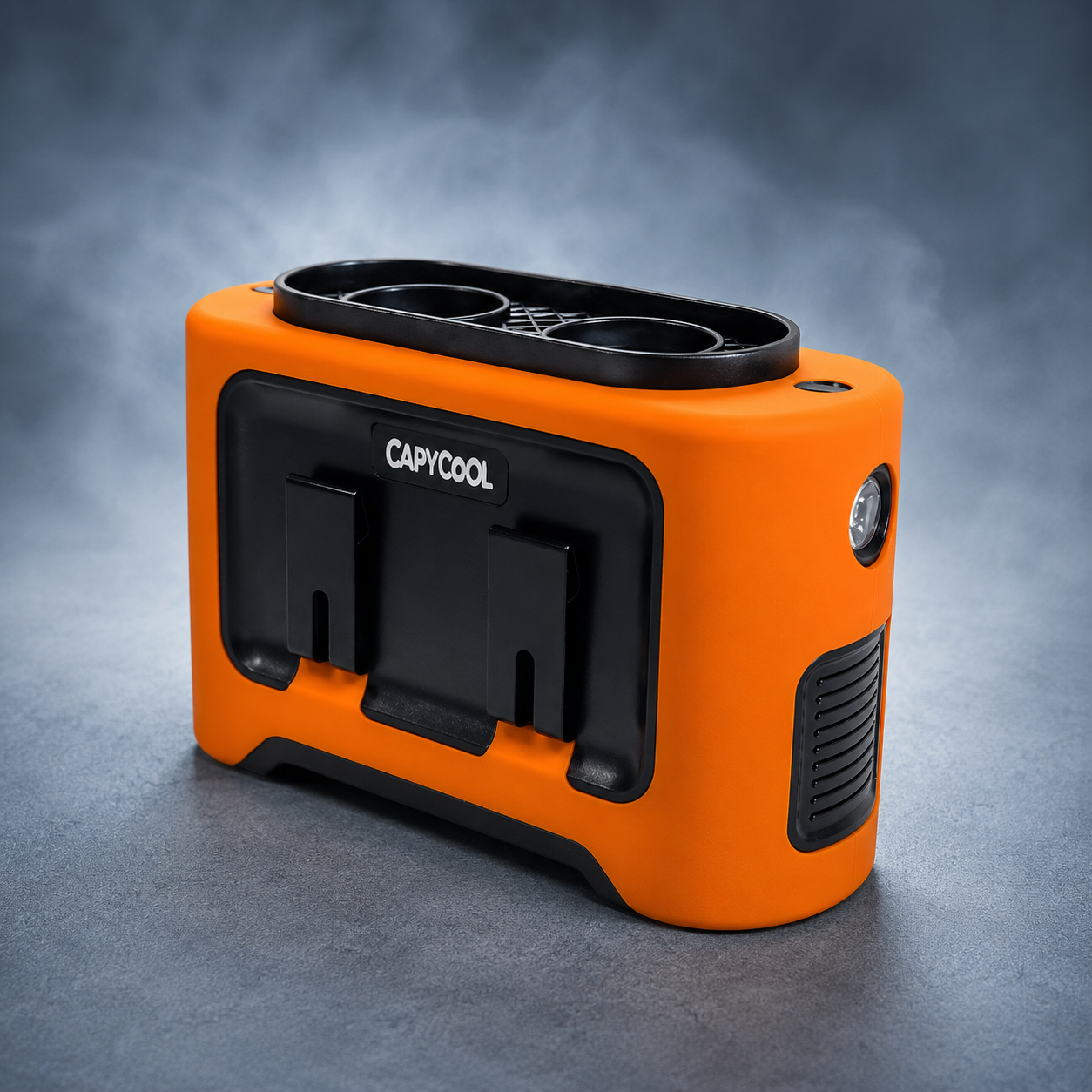
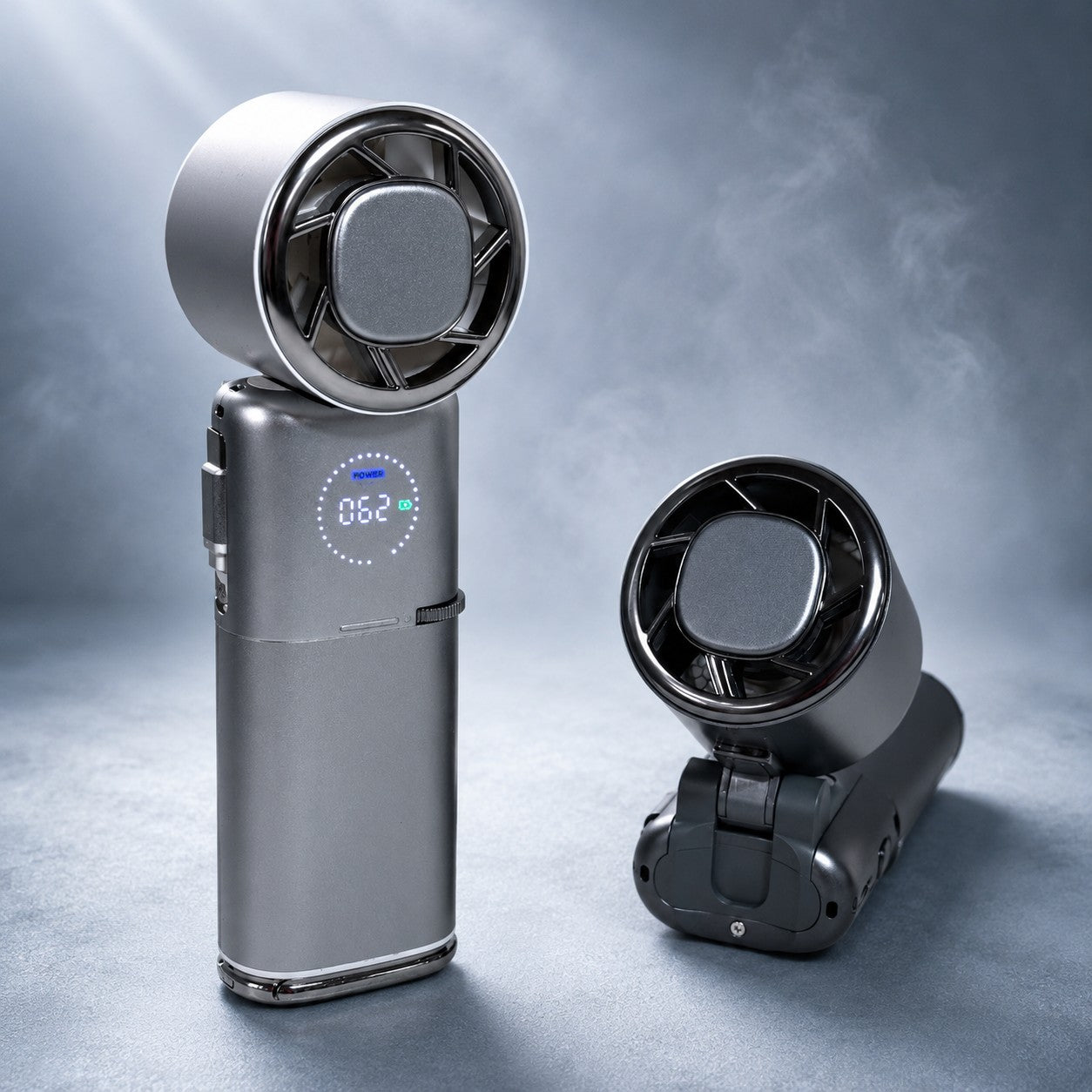
Our waist-fan range includes high-capacity rechargeable models designed around longer use, while larger outdoor camping fans can use still larger batteries for extended campsite and overnight applications.
Don't only ask: "How powerful is the fan?"
Ask: "How long will I actually need it to run at the speed I normally use?"
That is a much more useful buying question.
Explore CapyCool Waist Fans →
Explore CapyCool Camping Fans →
Australia Is Not Europe, So What Does This Actually Mean for Summer 2026-27?
This is where we need to avoid sensationalism.
Europe had an extraordinary summer.
America had an extraordinary July.
That does not prove Australia will experience the same thing.
Weather does not work like that.
Australia's coming summer will be shaped by El Niño, ocean temperatures, the Indian Ocean Dipole, the Southern Annular Mode, soil moisture, rainfall patterns, regional weather systems and plenty of short-term meteorology that cannot yet be predicted in August.
But the latest Australian outlook certainly does not give us a reason to be complacent.
The Bureau's spring forecast says daytime and overnight temperatures are very likely to be above average across most of Australia.
Its August long-range outlook says the strong El Niño is well established and continuing to strengthen, with models expecting further Pacific warming through spring and the event likely peaking as a very strong El Niño in late spring or summer.
NOAA's August ENSO Diagnostic Discussion gives more than a 90% chance of a very strong El Niño during the Northern Hemisphere autumn and winter.
We go into the forecast, state differences and historical comparisons much more deeply here:
Australia's Super El Niño Summer: The Ultimate 2026-27 Guide →
And if you've seen dramatic headlines about the "strongest El Niño in 1,000 years", our guide explains what the forecasts actually say, what they don't say and what Australians should pay attention to instead.
Sources: Bureau of Meteorology and NOAA Climate Prediction Center.
The Europe Lesson Australia Should Pay Special Attention to: Warm Nights
A lot of summer coverage focuses on the afternoon temperature.
42°C.
45°C.
A big red thermometer graphic.
But warm nights could become one of the more important Australian heat stories this summer.
That matters for households because homes get less time to cool.
It matters for workers because sleep quality can deteriorate.
It matters for vulnerable people because the body has less opportunity to recover.
And it matters psychologically because three difficult nights can make the fourth hot day feel considerably harder than the first.
For bedroom cooling, the goal is not necessarily maximum airflow.
Noise, positioning and runtime suddenly become just as important.
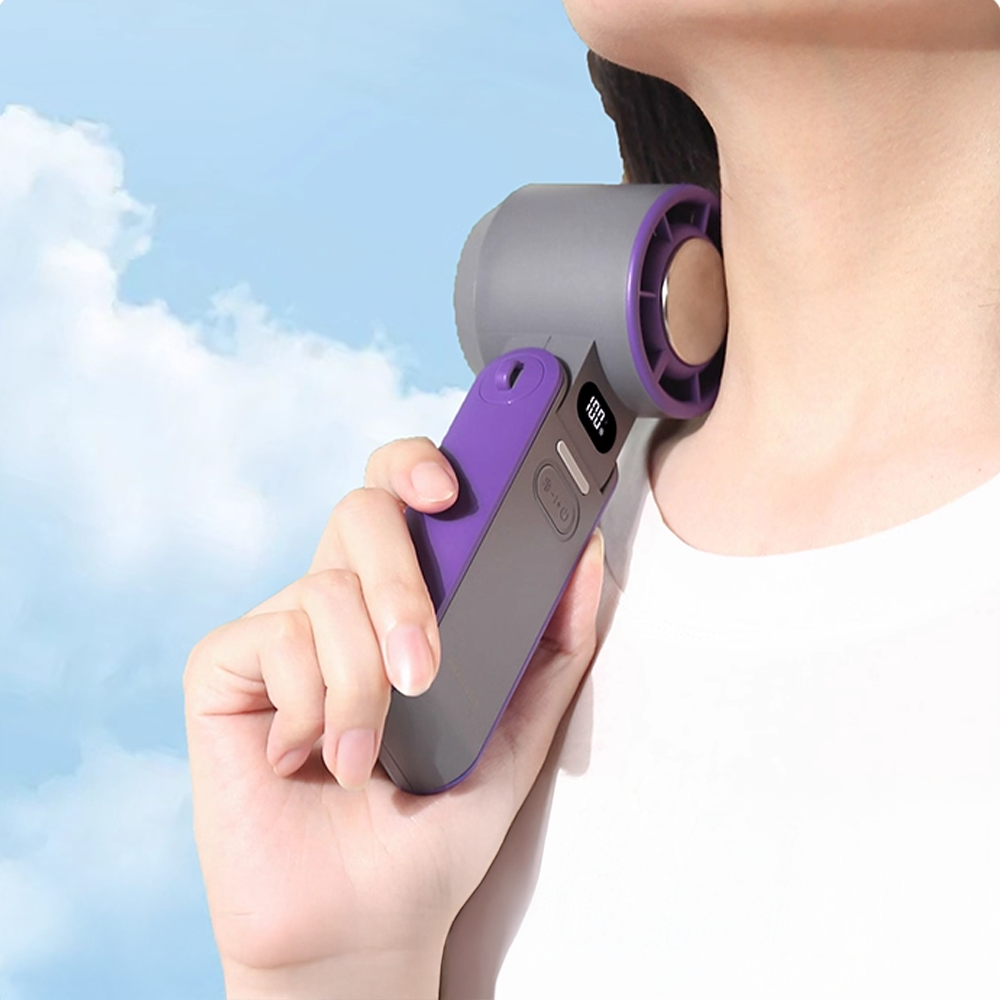
Neck fans are generally more relevant while moving around, while a portable desk or room-positioned fan may make more sense for sedentary evening use.
Browse Portable Fans →
Browse Neck Fans →
Outdoor Recreation Needs a Heat Plan Too
Heat preparedness is not only about surviving work.
Australia spends summer outdoors.
Camping.
Fishing.
Cricket.
Festivals.
Road trips.
Beaches.
Caravan parks.
Backyard BBQs.
Kids' sport.
A lot of the same lessons apply.
- Start strenuous activities earlier.
- Take shade seriously.
- Bring more water than you think you will need.
- Know where a genuinely cool environment is located.
- Do not rely on a small fan as your only protection in extreme heat.
- Keep rechargeable equipment topped up before leaving.
- Remember that tents and enclosed vehicles can become dramatically hotter than the surrounding environment.
For camping specifically, larger batteries and flexible positioning can be more useful than simply carrying the smallest possible fan.
Explore Camping Fans →
Explore Travel Fans →
Explore Outdoor Fans →
So What Should Australians Actually Do Before Summer?
Here is the preparation checklist we would use.
At Home
- Check the air conditioner before you actually need it.
- Clean filters.
- Test older fans.
- Charge rechargeable equipment.
- Replace anything that has clearly reached the end of its useful life.
- Work out which room stays coolest.
- Check blinds and curtains on western-facing windows.
- Think about bedroom airflow before hot nights arrive.
- Have easy access to drinking water.
- Know where you could go locally if your home becomes too hot.
If you live with older people, young children or someone who is more vulnerable to heat, plan around their needs rather than the needs of the healthiest person in the household.
At Work
Do not wait for the first extreme-heat warning.
- Review your heat-risk assessment.
- Identify the hottest tasks and locations.
- Determine whether jobs can move to earlier hours.
- Create cool or shaded break areas.
- Check drinking-water availability.
- Review uniforms and PPE where possible.
- Work out how workers will communicate symptoms.
- Train supervisors to recognise heat illness.
- Consider airflow and personal cooling where appropriate.
- Review arrangements for new, temporary or unacclimatised workers.
For Businesses Buying Cooling Equipment
Calculate your requirements now, not on the hottest Tuesday in January.
Think about whether each worker needs personal cooling or whether certain work zones need shared equipment.
Consider charging infrastructure.
Decide whether spare units are required.
Choose equipment around the actual shift length.
Do not assume a cheap fan with a tiny battery will last eight hours simply because the listing says "portable".
Need 5 fans or 500?
CapyCool's business team supports bulk orders, formal quotes, ABN invoicing, purchase orders and worksite cooling recommendations.
The "Summer Kit" Approach Makes More Sense Than One Miracle Gadget
If 2026 has taught us anything, it is that heat is too complex for one miracle solution.
A practical summer kit might contain:
Shade: Hat, shelter, blinds or canopy.
Hydration: Reliable access to drinking water.
Personal airflow: Rechargeable fan suited to the activity.
Evaporative cooling: Cooling towel, spray bottle or access to cool water.
Sun protection: Suitable clothing, sunscreen and shade.
Backup power: Charged batteries or a power bank where appropriate.
Forecast information: Current Bureau warnings rather than assumptions.
A cooler destination: Air-conditioned home, office, shopping centre, library, workplace rest area or another suitable environment when conditions become dangerous.
That is much more resilient than trying to make one product solve everything.
What Europe's Fan Shortage Really Tells Us
It would be easy for a fan company to look at a 3,000% increase in fan sales and say:
"See? Everyone needs a fan."
The more interesting lesson is about human behaviour.
We systematically underestimate future discomfort.
On a mild spring afternoon, a heatwave feels abstract.
You think:
"I'll deal with it then."
Then the bedroom is still 29°C at midnight.
Your child cannot sleep.
The warehouse is roasting.
The old fan starts rattling.
The forecast shows another four hot days.
Now cooling has gone from a theoretical future purchase to something you want today.
Unfortunately, thousands of other people have had exactly the same thought.
That is why stock disappears.
Australia sees versions of this cycle every summer.
The Northern Hemisphere just showed us how extreme it can become.
Preparing Early Does Not Mean Panicking Early
There is an important difference.
We are not suggesting everybody needs to install whole-home air conditioning, buy six fans and start building a bunker because El Niño exists.
Preparation can be boring.
That is usually a good thing.
- Check what you already own.
- Replace what is broken.
- Understand your house.
- Watch the forecasts.
- Plan your work routines.
- Have shade.
- Have water.
- Have a few cooling options.
- Understand the limitations of each.
If you need equipment, buying it while you can compare products properly is generally a much better experience than taking whatever happens to be left during a heatwave.
That is preparation.
Not panic.
Frequently Asked Questions: Heatwaves, El Niño and Preparing for Australian Summer 2026-27
Below are answers to some of the most common questions Australians are asking as summer 2026-27 approaches.
Was summer 2026 unusually hot in Europe?
Yes. Copernicus reported that western Europe experienced its hottest June on record in 2026. The combined June-July period was also the hottest recorded for western Europe in the ERA5 dataset, with temperatures well above the 1991-2020 average.
Was July 2026 the hottest month ever recorded in the United States?
For the contiguous United States, yes. NOAA calculated July 2026 as the warmest month in its national record extending back to 1895.
Were nights unusually hot too?
Yes. Average July minimum temperatures across the contiguous United States were the warmest recorded for any month. Warm nights are particularly important because the body, buildings and workplaces receive less opportunity to cool and recover between hot days.
Did fans really sell out during the European heatwaves?
Yes. Several major retailers reported extraordinary demand and stock pressure. Currys said fan sales rose almost 3,000% during one heatwave weekend, while TechRadar reported that Meaco's tabletop and pedestal fan range had completely sold out during an earlier heatwave.
Why do fans sell out so quickly during heatwaves?
Cooling purchases tend to be highly reactive. When forecasts suddenly show extreme temperatures, large numbers of consumers search for the same products at almost exactly the same time. That creates short, sharp demand spikes that normal retail inventory is not designed to absorb.
Should I buy a fan before summer?
If you already know you regularly use a fan during summer, testing or replacing it before the first major heatwave gives you more product choice and reduces the risk of trying to buy during a sudden demand spike.
Do portable fans actually cool you down?
Portable fans move air across the skin. Under suitable conditions this can improve sweat evaporation and thermal comfort. They do not reduce the ambient air temperature in the way an air conditioner does.
Can a fan be dangerous when it is extremely hot?
Potentially. In very hot environments, particularly extremely hot and dry conditions, moving air that is hotter than the skin across the body can increase heat gain. The effect depends on temperature, humidity, age, sweating capacity, health and activity. Fans should not be treated as a substitute for accessing a genuinely cooler environment during dangerous heat.
Do fans work better in humid weather?
Air movement can be particularly useful in hot, humid conditions because it helps support evaporation from the skin. Research involving the University of Sydney has demonstrated benefits from fan use under particular hot and humid experimental conditions.
Do cooling towels work?
Cooling towels primarily rely on water, evaporation and heat transfer. Wetting the skin is supported by heat-health research as a simple cooling strategy, and airflow can increase evaporation under suitable conditions.
Can I use a fan and air conditioning together?
Yes. Air conditioning reduces room temperature while a fan increases air movement. Using the two together can improve perceived comfort and may allow a comfortable environment without setting the air conditioner excessively cold.
Why are warm nights important during a heatwave?
Warm nights reduce the opportunity for homes and bodies to cool after the day. They can impair sleep and contribute to cumulative fatigue. This becomes particularly important when several hot days occur consecutively.
Is there a legal maximum temperature for working in Australia?
There is no single national "stop work" temperature under Australia's model work health and safety framework. Safe Work Australia explains that heat risk depends on factors including temperature, humidity, radiant heat, airflow, workload, clothing and acclimatisation. Businesses must instead eliminate or minimise risks so far as reasonably practicable.
What are the best ways to protect outdoor workers from heat?
Start by reducing exposure where practical. This can include rescheduling strenuous work, creating shade, reducing workload, introducing cooled rest areas, providing drinking water and increasing air movement where appropriate. Personal cooling equipment can then supplement those controls.
Which workers are most vulnerable to heat stress?
Outdoor workers, people performing heavy physical work, workers wearing heat-retaining PPE, people working around hot machinery and workers who have not acclimatised to the conditions can face increased risk. Individual health and medication can also affect heat tolerance.
Does heat affect worker productivity?
Yes. WHO cites evidence linking increasing occupational heat stress with reduced worker output and increased health and safety risks. The exact effect depends heavily on the environment, workload, acclimatisation and controls in place.
Is Australia heading into El Niño for summer 2026-27?
El Niño is already established. The Bureau of Meteorology says the event is strong and continuing to strengthen, with models expecting it to peak as a very strong event around late spring or summer.
Is this going to be a "Super El Niño"?
"Super El Niño" is an informal media term rather than an official Bureau of Meteorology classification. However, current international forecasts indicate a significant probability of the 2026 event reaching very strong levels. The exact strength and its eventual Australian impacts remain uncertain.
Does a very strong El Niño guarantee an extreme Australian summer?
No. The strength of El Niño in the tropical Pacific does not translate directly into an equally strong impact everywhere in Australia. El Niño changes probabilities, while regional weather is also shaped by other oceanic and atmospheric conditions.
Is Australia expected to be hotter than average in spring 2026?
The Bureau of Meteorology's late-August outlook favours above-average daytime and overnight temperatures across much of Australia during spring. Forecasts will continue to evolve as summer gets closer.
What should I buy for an Australian heatwave?
There is no universal product list. Start with shade, hydration, access to a genuinely cooler environment and an understanding of your local conditions. Depending on your situation, portable fans, waist fans, cooling towels, larger outdoor fans or air conditioning may form part of the solution.
What is the best portable fan for working outdoors?
The best format depends on the job, but outdoor workers often benefit from cooling that is hands-free, durable and capable of operating for the length of the work period. Waist and shirt fans can be useful because they allow targeted airflow while keeping both hands available.
Shop Tradie Cooling → | Shop Waist Fans →
What is the best fan for camping?
Camping generally rewards long battery life and flexible positioning more than extreme compactness. Rechargeable tent and campsite fans with larger batteries can be useful when access to mains electricity is limited.
Explore CapyCool Camping Fans →
When should Australian businesses start planning for summer heat?
Before sustained hot weather arrives. Reviewing heat procedures, schedules, hydration, shade, cooling equipment and procurement during winter or spring provides significantly more flexibility than trying to solve those problems during an active heatwave.
The Big Lesson From 2026
Europe's summer did not become extraordinary because one thermometer briefly showed a scary number.
The real impact came from the combination.
Heat beginning early.
Warm nights.
Repeated heatwaves.
Dry conditions.
Wildfires.
Buildings retaining heat.
Workers facing long exposures.
Electricity demand surging.
Cooling equipment disappearing from shelves.
Businesses changing schedules.
People improvising solutions after conditions had already become uncomfortable.
America told a similar story in a different climate.
And now Australia is heading towards spring with a strong and strengthening El Niño and above-average temperatures favoured across much of the country.
We do not yet know exactly what January will look like.
We do know enough to prepare.
Check your cooling before you need it.
Think about the night, not just the afternoon.
Have more than one way to cool down.
Understand whether you are dealing with humid heat or extreme dry heat.
For workers, control the heat exposure rather than simply asking people to push through it.
And if something is part of your summer setup every year, buying it before everyone else suddenly wants one is usually a pretty sensible move.
Because if Europe's extraordinary spike in fan sales taught us anything, it is this:
The worst time to start shopping for a fan is when everybody suddenly wants a fan.
Stay cool. Stay prepared. Stay capy.
Continue Reading
For the complete Australian summer forecast:
Australia's Super El Niño Summer: The Ultimate 2026-27 Guide →
For a faster local breakdown:
Australia's Interactive Summer 2026-27 State-by-State Guide →
Explore Cooling by Situation
General summer cooling
Portable Fans
Work, trades and worksites
Waist & Shirt Fans ·
Tradie Fans ·
Worksite Cooling Solutions
Camping and outdoors
Camping Fans ·
Outdoor Fans
Travel
Travel Fans
Wearable cooling
Waist Fans ·
Neck Fans
Cooling accessories
Cooling Towels & Accessories
Research and Sources
This guide draws on current climate, heat-health and workplace guidance from the Bureau of Meteorology, NOAA, Copernicus Climate Change Service, World Health Organization, Safe Work Australia and heat researchers, alongside reporting on the commercial and operational impacts of the 2026 Northern Hemisphere heatwaves.
- Copernicus Climate Change Service: Surface Air Temperature, June 2026
- Copernicus Climate Change Service: Surface Air Temperature, July 2026
- NOAA National Centers for Environmental Information: July 2026 US Climate
- Reuters: European businesses adapt to heatwave
- The Guardian: Fan and air-conditioner shortages during UK heat
- ERT: Heatwave sends fan demand soaring
- WHO Europe: Extreme Heat Statement
- WHO: Workplace Heat Stress
- Safe Work Australia: Managing Risks From Working in Heat
- New England Journal of Medicine: Electric Fan Use in Extreme Heat
- University of Sydney: Heatwave Cooling Advice
- Bureau of Meteorology: August 2026 Long-Range Outlook
- NOAA Climate Prediction Center: ENSO Diagnostic Discussion
- Reuters: US Heatwave Electricity Demand
- Reuters: European Heatwave and French Electricity Generation
Important: This article provides general information about heat preparation and cooling. It is not medical, emergency or workplace safety advice. Follow current Bureau of Meteorology warnings, health authority advice, product instructions and applicable workplace safety requirements during severe heat. Personal fans and cooling accessories should not be relied upon as substitutes for moving to a genuinely cooler environment when conditions become dangerous.








Share:
How to Choose the Right Portable Fan: The Complete Buying Guide
Heat Kills More People Than We Think. What Australia Can Learn From NPR’s Investigation