




Peltier cooling plate, semiconductor cooling plate, thermoelectric cooler, TEC, cold plate, cooling plate, Ice Plate, ice compress. There are a lot of names for technology that, in portable cooling products, can describe a surprisingly simple idea: using electricity and semiconductor technology to create a cold surface you can place directly against your skin.
This guide explains what a Peltier cooling plate actually is, how semiconductor cooling works, why one side gets cold while the other gets hot, what an Ice Plate can and cannot cool, why it uses additional battery power, what affects its temperature, and how the technology is being used in portable personal cooling products.
Most importantly, we will separate the useful technology from some of the more confusing marketing around it. A cold-touch plate can feel genuinely cold against your skin. That does not automatically mean a portable fan is producing refrigerated air or working like a household air conditioner.
You can see this technology in the CapyMini , CapyPivot , Foldable Turbo Fan and CapyUltra .
Key Takeaways
If you only want the important parts, start here.
Cooling Plate Terminology Explained
One reason this technology sounds more complicated than it is comes down to terminology. Engineers, manufacturers, retailers and customers often use different words for the same technology or for different parts of the same cooling system.
| Term | What it usually means | Useful distinction |
|---|---|---|
| Peltier effect | The thermoelectric phenomenon that allows electrical current to move heat. | This describes the physical effect behind the cooling. |
| Peltier cooler | A cooling device or module using the Peltier effect. | Also commonly called a thermoelectric cooler. |
| Thermoelectric cooler | A semiconductor device that pumps heat from one side to another. | Often abbreviated to TEC. |
| TEC | Thermoelectric cooler. | Common technical abbreviation. |
| Semiconductor cooling | A broader description of cooling using semiconductor thermoelectric technology. | Common in product specifications and technical descriptions. |
| Semiconductor cooling plate | A consumer-friendly description of a plate cooled by a thermoelectric system. | The visible metal plate is usually part of a larger thermal system. |
| Cooling plate | A generic term for a cold surface used to transfer heat away from something. | Not every cooling plate in engineering uses Peltier technology. |
| Cold plate | A general engineering term for a cooled surface. | Also widely used for liquid-cooled industrial systems, so the term is broad. |
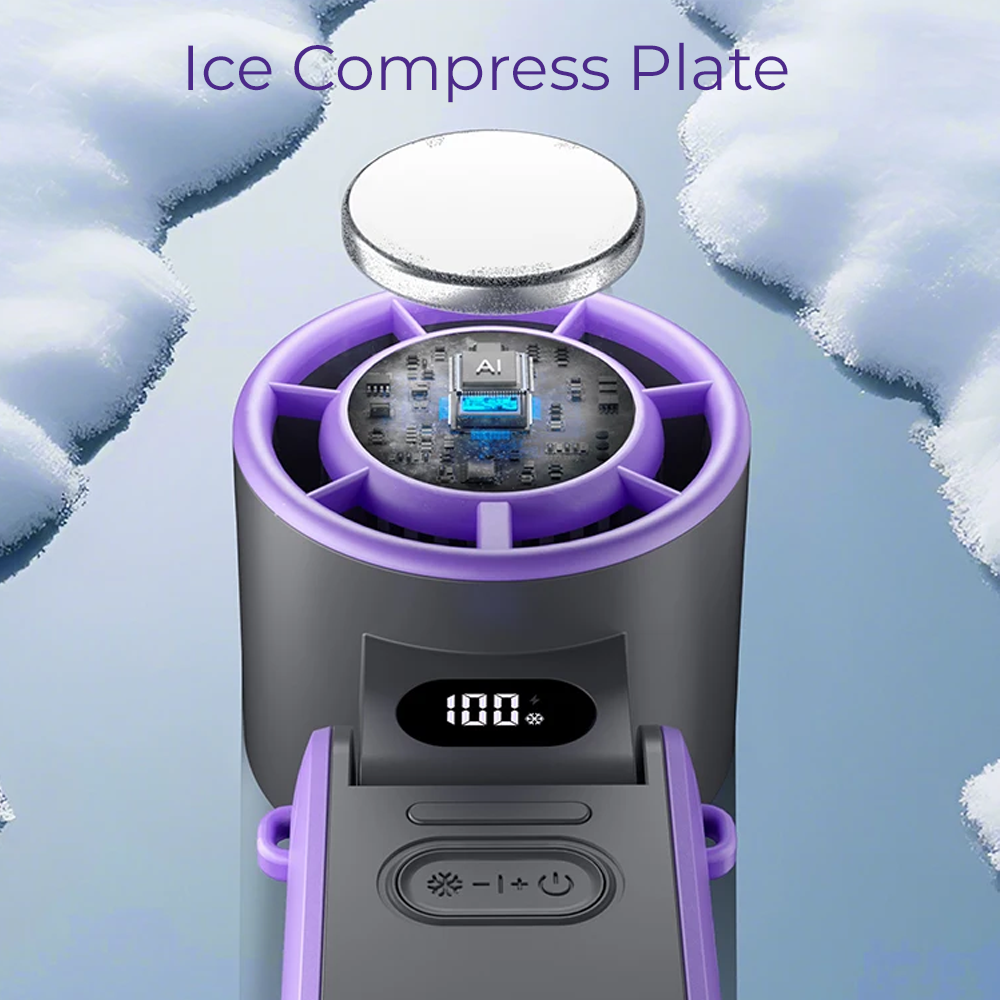
| Ice Plate | A simple consumer term for a cold-touch plate built into a personal cooling product. | It does not mean actual ice is inside the plate. |
| Ice compress | A term used on some portable cooling products for an electronically cooled contact plate. | It should not be confused with a traditional frozen medical cold pack. |
What Is a Peltier Cooling Plate?
A Peltier cooling plate uses a thermoelectric cooling system to create a temperature difference between two sides of a semiconductor module. When direct-current electricity is supplied to the module, heat is moved from one side to the other.
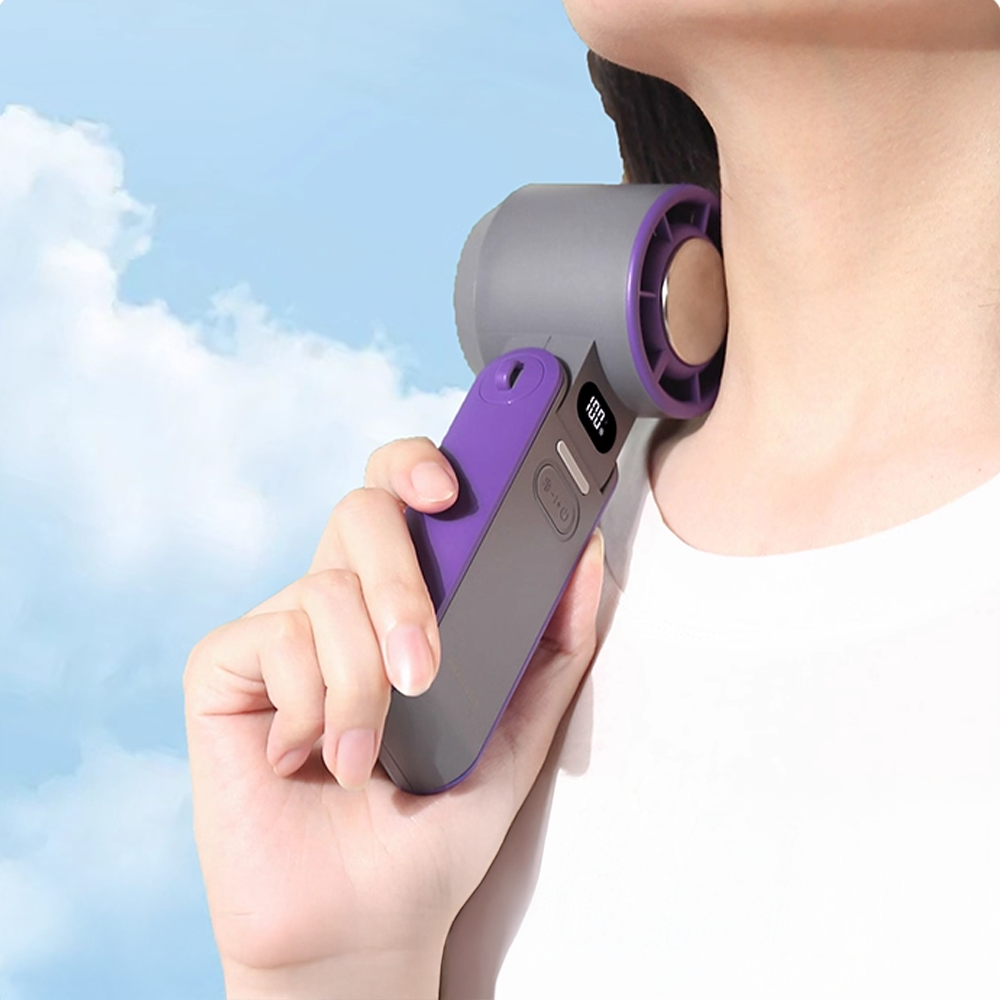
That gives the system a cold side and a hot side. In a personal cooling device, the cold side can be connected to a smooth metal surface that is designed to make contact with your skin.
You may also see this described as a semiconductor cooling plate, thermoelectric cooling plate, TEC cooling plate or simply a cold-touch cooling plate.
Why is it called the Peltier effect?
The name comes from French physicist Jean Charles Athanase Peltier, whose work in the 1830s helped establish the relationship between electric current and heating or cooling at the junction of different materials.
Modern thermoelectric coolers use semiconductor materials, but the underlying thermoelectric principle carries the Peltier name.
Is Peltier cooling the same as thermoelectric cooling?
For the type of compact personal cooling products discussed here, the terms are commonly used interchangeably. A thermoelectric cooler or TEC is the modern semiconductor device used to take advantage of the Peltier effect.
How Does Semiconductor Cooling Actually Work?
The easiest way to understand a semiconductor cooling plate is to stop thinking about "making cold" and start thinking about moving heat.
1. Electricity powers the thermoelectric module
A battery supplies DC electrical power to the thermoelectric cooler. The module itself is a compact semiconductor component with no compressor and no circulating liquid refrigerant.
2. Heat is moved away from the cold side
When current flows through the module, thermal energy is transferred from one face of the thermoelectric cooler to the other. As heat leaves one side, that side becomes colder.
3. The cold side chills the contact surface
In a portable personal cooling product, the thermoelectric module is normally connected thermally to the metal surface that the user can see and touch. The accessible surface becomes the cold-contact plate.
4. The other side gets hot
The system has not destroyed the heat. It has transferred it. The opposite side of the thermoelectric module therefore becomes warmer.
The electrical energy used by the cooler also contributes additional heat that the system must manage.
5. The hot side needs somewhere to release that heat
This is why the engineering around a Peltier module matters. Heat sinks, thermal interfaces, ventilation and airflow can all affect how successfully the hot side gets rid of heat.
A Peltier chip on its own is only one component. The final performance depends on the complete thermal system built around it.

Peltier Cooling in Plain English
Think of a Peltier module as a tiny electric heat mover.
It pulls heat away from one surface and pushes that heat toward the other side. The first surface gets colder. The second surface gets hotter.
Put the cold surface against warmer skin and heat flows away from the contact area, which is why the plate feels cold.
No ice cube needs to be frozen. No gel pack needs to go in the freezer. The cold surface is produced electronically while the device has enough power to operate.
Why Does a Semiconductor Cooling Plate Feel So Cold?
A fan and a cooling plate interact with your skin differently.
A fan moves air across your skin. This can improve comfort and can help sweat evaporate. A cooling plate uses direct conductive heat transfer. Your warmer skin touches a colder solid surface, so thermal energy moves from the warmer area toward the colder plate.
That direct contact is why even a relatively small plate can create a pronounced cold sensation in the exact spot where it touches you.
| Fan airflow | Peltier cooling plate |
|---|---|
| Moves air across the skin | Touches the skin directly |
| Can help evaporation | Transfers heat through direct contact |
| Can cover a wider area | Targets a smaller contact area |
| Air is generally close to surrounding air temperature | The plate can operate below ambient temperature |
| Usually uses less power than running fan plus TEC cooling together | Adds another electrical load to the device |

Does a Peltier Cooling Plate Make a Fan Blow Cold Air?
Not necessarily.
This is one of the most important distinctions to understand when comparing portable fans with cooling plates.
In CapyCool's current handheld cooling-plate products, the fan and the Ice Plate perform different jobs:
- The fan provides airflow.
- The cooling plate provides direct cold-touch cooling.
The plate becoming cold does not automatically mean the air travelling through the fan has been refrigerated.
CapyCool currently uses cold-touch Ice Plate technology across multiple portable fan designs.
Shop CapyMini Shop CapyUltraIs a Peltier Cooling Plate the Same as Air Conditioning?
No. A portable product containing a thermoelectric cooling plate should not automatically be treated as an air conditioner.
Most conventional household air conditioners use a vapour-compression system with a compressor, refrigerant, evaporator and condenser. Their job is to remove heat from a much larger amount of air and move that heat elsewhere.
A small Peltier cooler works differently. It is particularly useful when you want to control the temperature of a relatively small surface or component.
In personal cooling, that makes it well suited to creating a compact cold-contact surface. It does not mean the product can lower the temperature of an entire room.
How Cold Can a Peltier Cooling Plate Get?
There is no single temperature that applies to every Peltier cooling plate.
Thermoelectric modules can produce substantial temperature differences in controlled conditions, but a complete consumer product behaves very differently from an unloaded module being tested in a laboratory.
Factors that affect cooling plate temperature
- Ambient air temperature
- The thermoelectric module selected
- Electrical power supplied to the module
- The size and material of the contact plate
- Heat-sink and ventilation design
- Airflow across the hot side
- How efficiently components transfer heat between each other
- Whether the plate is touching warm skin or another heat source
- Battery state and electronic control
- How long the device has been operating
Plate temperature and temperature drop are not the same measurement
Cooling claims can become confusing when a number such as "15°C cooling" appears without context.
That phrase could potentially refer to a plate reaching 15°C, dropping by 15°C from its starting temperature, or operating 15°C below another reference temperature. Those claims are not equivalent.
A useful cooling-temperature test should therefore explain the starting conditions, ambient temperature, measurement location, test duration and whether the plate was under a heat load.


Does Semiconductor Cooling Use More Battery?
Generally, yes.
If a portable device is running both a fan motor and a thermoelectric cooling module, it has more electrical work to do than when the fan motor is operating alone.
This is why battery runtime should always be considered alongside cooling-plate use and fan speed. Higher fan speeds require more motor power, and turning on the Peltier system creates another electrical load.
There is nothing unusual about this trade-off. Stronger cooling functions require energy.
Why heat-sink efficiency matters too
A thermoelectric cooler must release heat from its hot side. If that heat cannot escape efficiently, the temperature difference the device can maintain may be reduced.
This is one reason the surrounding thermal design can matter just as much as the Peltier module itself.
Why Can Condensation Form on a Cooling Plate?
If a cooling plate becomes cold enough relative to the temperature and humidity of the surrounding air, moisture can condense on the cold surface.
It is the same basic reason water droplets can appear on the outside of a cold drink.
The exact point at which condensation begins depends on the air's dew point. In hot and humid conditions, the dew point can be relatively high, so a sufficiently cold exposed surface may collect moisture.
Thermoelectric system designers therefore need to consider moisture when a component is intended to operate below ambient temperature.
Peltier Cooling Plate vs Ice Pack vs Cold Compress vs Fan
These products can all feel cooling, but they achieve that effect differently.
| Feature | Peltier plate | Traditional ice pack | Portable fan |
|---|---|---|---|
| Needs a freezer | No | Usually | No |
| Needs electricity | Yes | No | Yes |
| Direct cold contact | Yes | Yes | No |
| Provides airflow | Only when built into a fan product | No | Yes |
| Can remain electronically cooled | While powered and within system limits | No, gradually warms | Not applicable |
| Must refreeze before reuse | No | Usually | No |
| Main strength | Targeted cold contact | Simple passive cold storage | Continuous personal airflow |
What a Peltier Cooling Plate Can and Cannot Do
What It Can Do
- Create an electronically cooled surface
- Operate below ambient temperature in suitable conditions
- Provide targeted cold contact against the skin
- Begin cooling without first being stored in a freezer
- Complement the airflow from a portable fan
- Fit inside relatively compact electronic devices
- Be controlled electronically
- Continue operating while the system has sufficient electrical power
What It Cannot Do
- Make heat disappear without releasing it elsewhere
- Guarantee one exact temperature in every environment
- Cool an entire room simply because the contact plate is cold
- Automatically refrigerate all air coming from a fan
- Operate indefinitely without consuming power
- Make a small handheld device equivalent to household air conditioning
- Replace sensible heat-safety measures in extreme conditions
Peltier Cooling Advantages and Limitations
Advantages of thermoelectric cooling
Peltier systems are attractive for compact products because the thermoelectric module itself is solid-state, compact and electronically controllable. It does not require the compressor and circulating refrigerant loop found in conventional air-conditioning systems.
For personal cooling, one particularly useful advantage is the ability to create a local cold surface without asking the user to carry frozen gel or prepare an ice pack in advance.
Limitations of thermoelectric cooling
Thermoelectric cooling is not free cooling. It requires electrical energy, creates a hot side that must be managed, and is generally better suited to smaller targeted thermal loads than cooling a large room.
Performance is also highly dependent on the complete system. Two products using the words "Peltier cooling" can perform differently because their batteries, module selection, contact surfaces, heat sinks, thermal interfaces, controls and ventilation are different.

Where Can You Use a Cold-Touch Cooling Plate?
On a handheld personal cooling device, the plate is generally most useful where you can easily make direct contact with exposed skin.
Common examples include the neck, wrists, forehead and cheeks, depending on the shape and instructions of the particular product.
This is about targeted comfort rather than treating a medical condition. If the plate becomes uncomfortably cold, move it away rather than holding it against the same spot indefinitely.
What Does CapyCool Mean by "Ice Plate"?
You will see several terms used across the portable cooling industry, including Peltier plate, thermoelectric cooling plate, semiconductor cooling plate, cooling plate, cold plate and ice compress.
At CapyCool, Ice Plate is our simple consumer-facing way of describing the electronically cooled contact surface built into selected personal cooling products.
The technology behind that surface is semiconductor thermoelectric cooling.
Some earlier CapyCool product names and product URLs use the term Ice Compress. In these products, the feature refers to an electronically cooled contact plate rather than a traditional frozen compress containing ice or gel.
CapyCool® Ice Plate = consumer-facing feature name
Cold-touch cooling plate = plain-English description
Semiconductor thermoelectric cooling plate = technical description
Peltier / TEC cooling = underlying technology
From pocket-sized personal cooling through to our premium CapyUltra, the same general cold-contact principle can be built into very different fan formats.
CapyPivot CapyMini Foldable Turbo CapyUltraCapyCool Fans With Ice Plate Cooling Technology
CapyCool now uses cold-touch cooling plate technology across several portable fan formats, from genuinely pocket-sized fans through to premium higher-capacity models.
The important distinction across the range remains the same: the fan provides personal airflow, while the Ice Plate is designed to give you a cold surface for direct contact with the skin.

CapyPivot Portable Fan with Instant Cooling Plate
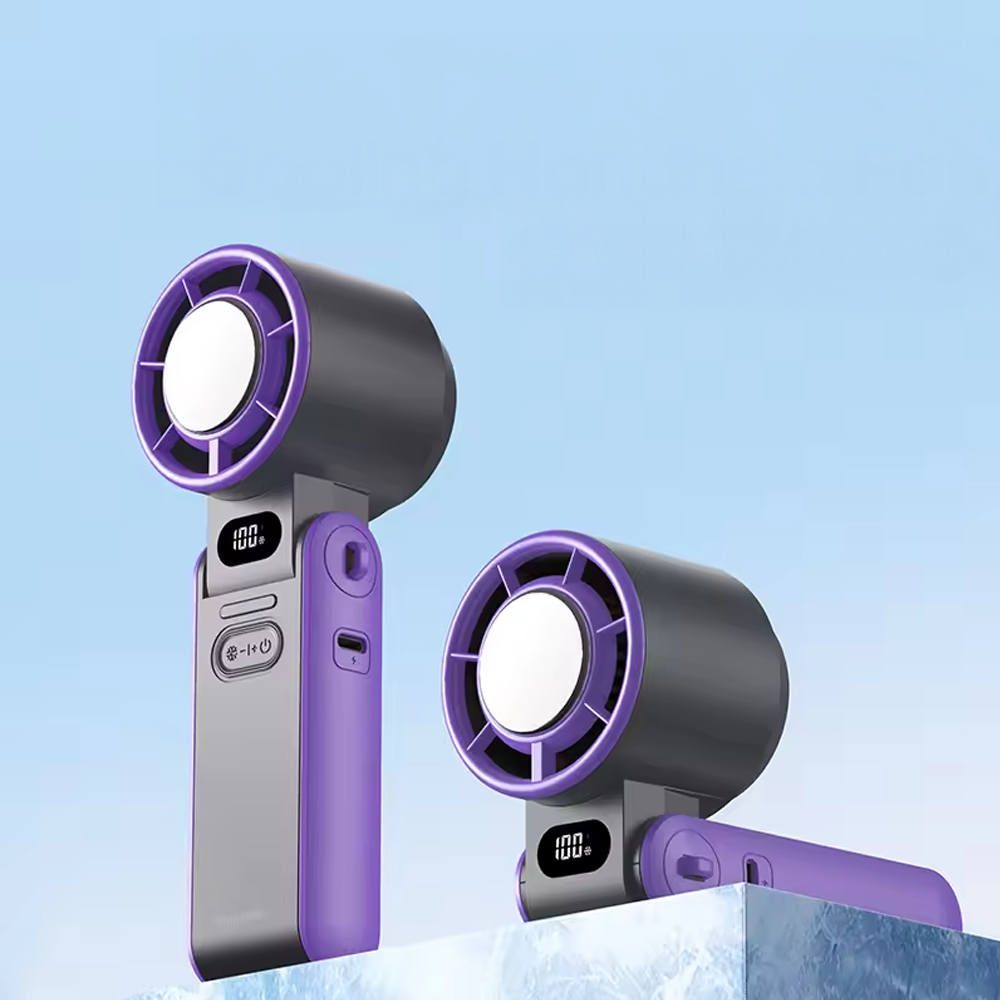
CapyPivot pairs a compact portable fan format with a pivoting head and a built-in cold-touch cooling plate, giving you both directional personal airflow and direct-contact cooling in a refined everyday-carry design.
Explore CapyPivot →
CapyMini Turbo Fan with Ice Compress
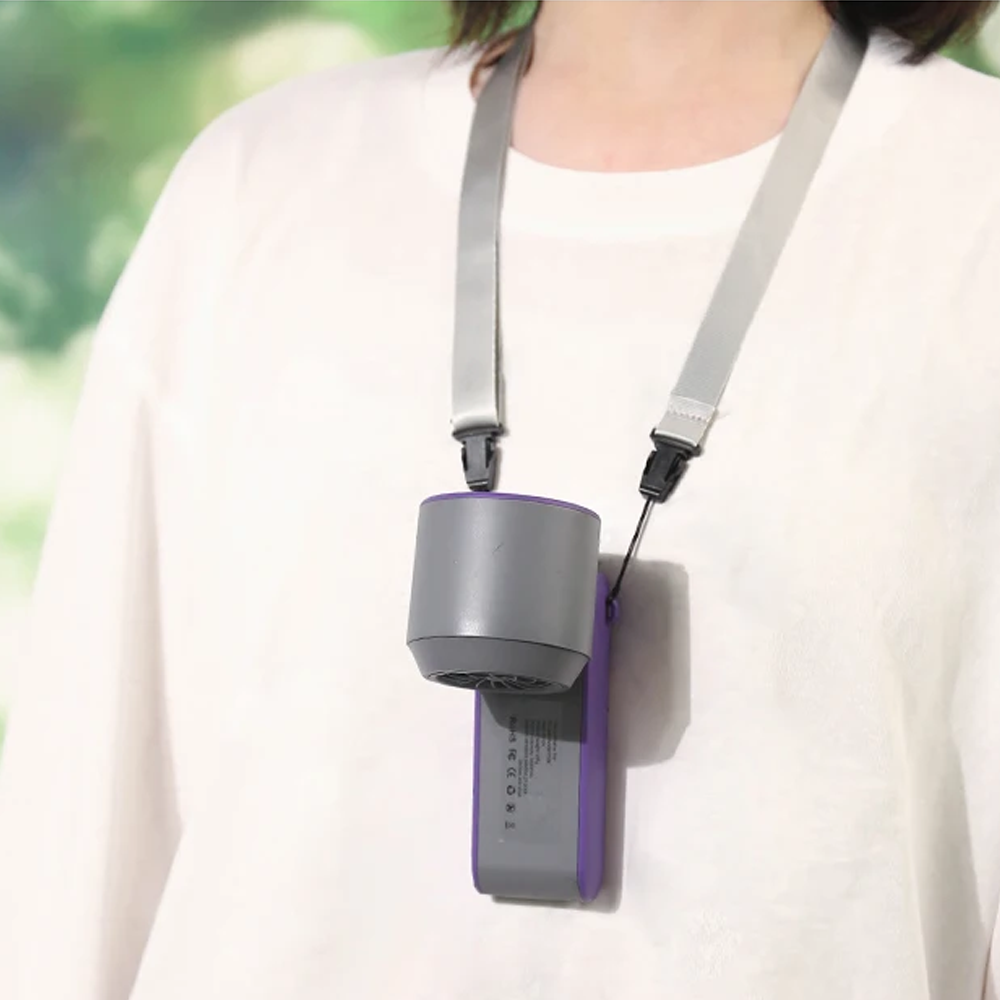
CapyMini puts focused airflow, a cold-touch plate, foldable desk mode and lanyard use into a genuinely compact format. It weighs around 90g and is designed to be small enough for everyday bag and pocket carry.
Explore CapyMini →
Foldable Turbo Fan with Ice Compress
The Foldable Turbo Fan combines adjustable turbo airflow with a front cold-contact plate, a foldable desk-friendly body and lanyard use. Its 3600mAh battery provides up to six hours depending on fan speed, cooling plate use and conditions.
Explore the Foldable Turbo Fan →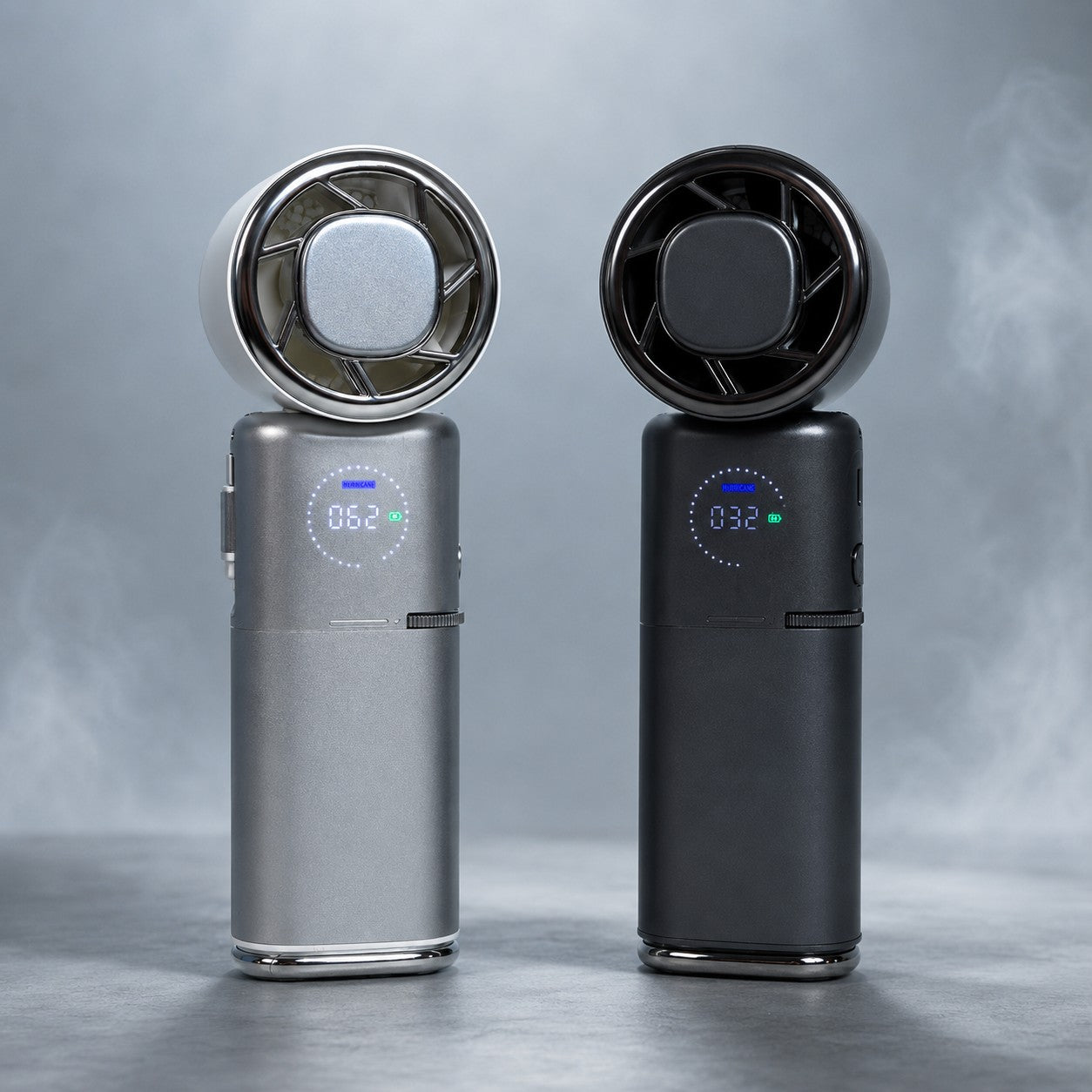
CapyUltra Portable Turbo Fan with Ice Compress
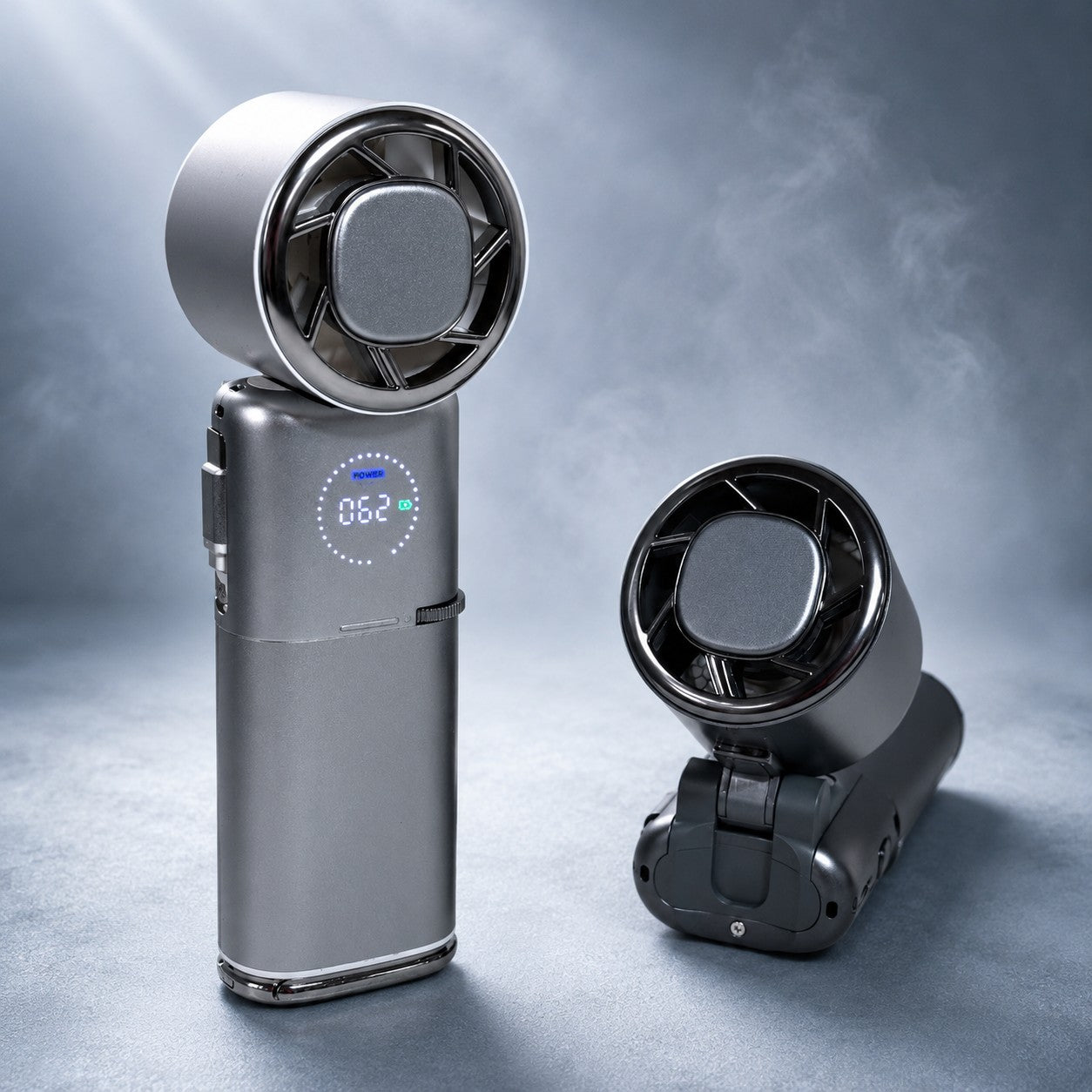
CapyUltra is the premium step up in the handheld range, combining powerful airflow and a metal Ice Plate with a 9000mAh dual-cell battery, 100-level speed control, power-bank capability and an integrated retractable charging cable.
Explore CapyUltra →Why Peltier Cooling Is Useful in Personal Cooling Devices
The most interesting thing about combining a fan and a semiconductor cooling plate is that the two features solve different problems.
Airflow is useful when you want a continuous breeze across a broader area. Contact cooling is useful when you want a small surface that feels physically cold against a targeted area.
Combining both in one portable device gives the user a choice rather than asking one cooling mechanism to do everything.
That is also why it is important not to oversell the plate as "air conditioning". Its strength is direct cold contact.

Why the Hot Side Matters
People naturally focus on the cold side because that is the part they can feel. From an engineering perspective, the hot side is just as important.
If heat is being pumped away from the cold side, that heat has to arrive somewhere. The thermoelectric module moves it toward the hot side, where a heat-dissipation system then needs to transfer it into the surrounding environment.
If the hot side becomes excessively warm and cannot shed heat effectively, the temperature difference between the two sides can fall. That can reduce the cooling available at the cold side.
This relationship is why a complete thermoelectric product needs more than simply attaching a battery to a Peltier chip.
Does Peltier Cooling Work in Hot or Humid Weather?
Thermoelectric cooling does not depend on evaporating sweat in exactly the same way that fan comfort often does, but ambient conditions still matter.
A hotter environment increases the challenge of rejecting heat from the hot side of the system. Humidity also affects condensation because humid air can have a higher dew point.
On a combined fan and cooling-plate product, these two cooling modes can therefore behave differently in the same weather.
The fan continues to move air across the skin. The cold plate continues to provide direct conductive cooling where it touches you, subject to the limits of the thermoelectric system.
Where Else Is Peltier Cooling Used?
Thermoelectric cooling is not unique to portable fans. The same broad class of technology is used in applications where compact, localised or electronically controlled temperature management is useful.
Applications can include electronics, sensors, optical equipment, scientific instruments, temperature-control systems, small coolers and specialised refrigeration equipment.
The personal cooling application is simply one way of using an established thermoelectric principle.
Peltier and Semiconductor Cooling Glossary
Peltier Cooling Plate FAQ
What is a Peltier cooling plate?
A Peltier cooling plate uses a semiconductor thermoelectric cooler to move heat from one side of a module to the other. This allows one side to become colder while the opposite side becomes warmer. In personal cooling products, the cold side can be connected to a metal contact plate.
What is a semiconductor cooling plate?
It is a cooling surface whose temperature is reduced using semiconductor thermoelectric technology. In many compact devices this means a Peltier or TEC module sits behind the visible contact surface.
Is Peltier cooling the same as thermoelectric cooling?
In common product use, yes. Modern Peltier coolers are thermoelectric semiconductor devices, and TEC is short for thermoelectric cooler.
What does TEC mean?
TEC stands for thermoelectric cooler. It is a common technical abbreviation for the semiconductor module used in Peltier cooling systems.
Is an Ice Plate actually made from ice?
No. On an electronic personal cooling product, Ice Plate is a simple name for a cold-touch surface that is cooled electronically. You do not need to put it in the freezer.
Does a Peltier plate need refrigerant?
The thermoelectric module itself does not rely on the circulating liquid or gaseous refrigerant loop used by a conventional compressor-based air conditioner. It uses semiconductor materials and electrical power to move heat.
Does a cooling plate make a portable fan blow cold air?
Not automatically. On CapyCool's current cooling-plate fans, the fan provides airflow and the plate provides separate direct-contact cooling. The plate is not claimed to refrigerate the fan's outgoing airflow.
Is a Peltier cooling fan an air conditioner?
A small personal fan with a Peltier plate should not be confused with a household air conditioner. It is designed for local personal airflow and targeted contact cooling rather than cooling the air throughout a room.
How cold can a Peltier plate get?
There is no universal temperature. Real-world performance depends on the thermoelectric module, power input, ambient temperature, heat-sink design, thermal load, contact with skin and other system factors.
Why does one side of a Peltier cooler get hot?
Because the system is moving heat rather than destroying it. Heat removed from the cold side is transported to the hot side, where it must then be released into the surrounding environment.
Why does a cooling plate sometimes get wet?
A sufficiently cold surface can fall below the surrounding air's dew point. Moisture in the air can then condense on the plate, similar to droplets forming on the outside of a cold drink.
Does Peltier cooling use a lot of battery?
It uses additional electrical power, so running a cooling plate can reduce battery runtime compared with fan-only operation. The exact impact depends on the product and its power-management system.
Can a Peltier cooling plate operate below room temperature?
Yes. Creating a cold side below ambient temperature is one of the useful characteristics of thermoelectric cooling. The achievable temperature depends on the complete system and operating conditions.
Why does the plate feel colder when I press it against my skin?
Your skin is warmer than the cooled plate, so heat transfers from your skin toward the colder surface through direct contact. That conductive heat transfer creates the cold-touch sensation.
Is a Peltier plate better than an ice pack?
They solve similar problems differently. A Peltier plate needs electricity but can cool electronically without a freezer. An ice pack requires no battery but must usually be frozen again once it warms.
Where can I use a portable cooling plate?
Depending on the product design, common contact areas include the neck, wrists, forehead and cheeks. Follow the instructions for the particular device and move the plate if the cold becomes uncomfortable.
What is the difference between a cooling plate and a cold plate?
Both are broad terms. Cold plate is especially common in industrial liquid cooling, while cooling plate can describe many different kinds of cooled surfaces. Neither phrase alone guarantees that the device uses Peltier technology.
What does CapyCool mean by Ice Plate?
Ice Plate is CapyCool's consumer-facing term for the cold-touch contact surface in selected products. The underlying technology is semiconductor thermoelectric cooling.
Which CapyCool products currently have cooling plates?
The current range includes CapyPivot Portable Fan with Instant Cooling Plate , CapyMini Turbo Fan , Foldable Turbo Fan and CapyUltra Portable Turbo Fan . This guide is designed to be updated as more CapyCool products adopt Ice Plate technology.
Can a cooling plate cool an entire room?
No. The compact plates used in personal cooling products are intended for localised contact cooling. They are not designed to remove enough heat from a room to replace a conventional room-cooling system.
The Bottom Line
Peltier cooling sounds highly technical, but the basic idea is straightforward. Electricity powers a semiconductor thermoelectric module. Heat moves away from one side and toward the other. One side gets cold, the other gets hot, and the heat still needs somewhere to go.
In a portable personal cooling device, that cold side can be connected to a smooth metal plate that gives you direct cold contact against the skin.
It is not magic, it is not frozen gel, and it does not automatically turn a handheld fan into an air conditioner.
What it does offer is something an ordinary fan cannot: a genuinely cold surface that can operate electronically while you are on the move.
That is the idea behind CapyCool Ice Plate technology, and as we add more cooling-plate products to the range, this guide will continue to be updated with new products, testing and real-world information.
Choose the format that suits how you cool down, from ultra-compact everyday carry through to premium long-runtime personal cooling.
CapyPivot CapyMini Foldable Turbo CapyUltra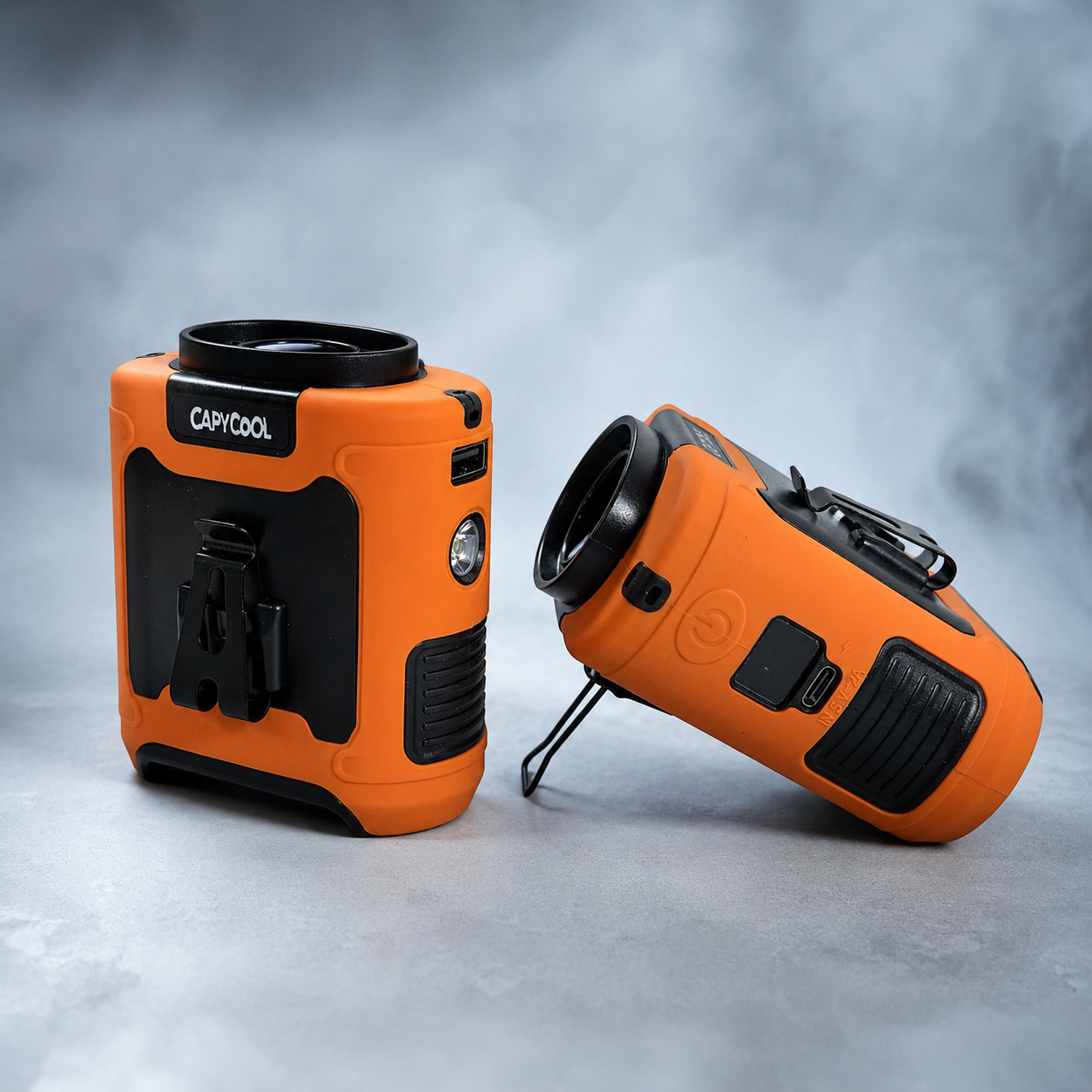










Share:
Do Fans Help With Menopause Hot Flushes?