



The Complete Wearable Cooling Guide
What Is a Shirt Fan? The Complete Guide to Undershirt Cooling
What is a shirt fan, how does it work, and is blowing air underneath your clothing actually better? Here is everything you need to know about wearable under-shirt cooling.
There is a surprisingly simple idea behind one of the most useful wearable cooling gadgets around:
Instead of pointing a fan at your shirt, why not blow the air underneath it?
That is essentially what a shirt fan does.
Sometimes called an undershirt fan, under-shirt fan, waist fan, belt fan or wearable body fan, these compact rechargeable fans clip around your waist and direct a stream of air underneath your clothing.
The result is very different from holding a small fan in front of your face.
Instead of cooling one exposed area, a shirt fan can circulate air across your torso, underneath the fabric and eventually out through your collar and sleeves. Your shirt effectively becomes part of the airflow system.
For outdoor workers, warehouse staff, gardeners, campers, travellers and anyone else who regularly finds themselves overheating, that simple change can make personal cooling considerably more practical.
And perhaps most importantly, you keep both hands free.
Quick Answer: What Is a Shirt Fan?
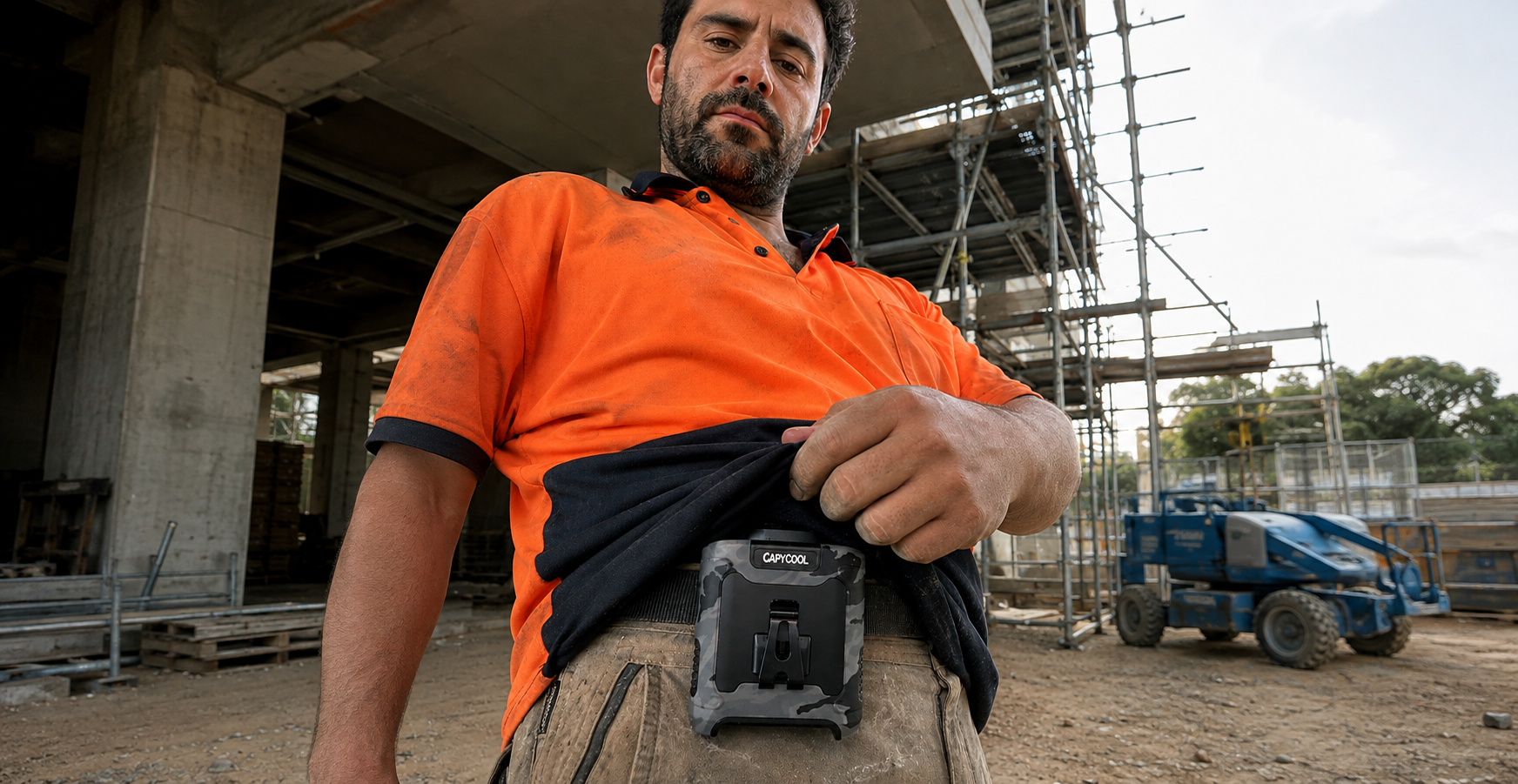
A shirt fan is a small wearable fan designed to direct airflow underneath your shirt. Most designs clip onto your belt, waistband or clothing. The intake stays exposed outside your clothes, while the outlet points upward underneath your shirt.
If you have ever searched for a "fan that blows air up your shirt", this is the product category you are looking for.
What Is an Undershirt Fan?
The terms shirt fan and undershirt fan are often used interchangeably.
An undershirt fan does not necessarily sit underneath an actual undershirt. It generally refers to a wearable fan that sends airflow inside your clothing rather than simply across the outside of it.
Waist and belt clip fans
These are among the most versatile options. The fan clips onto your belt, waistband or clothing, with the air outlet positioned beneath your shirt.
Because the fan itself remains outside your clothing, its intake can pull in fresh surrounding air while the outlet pushes that air upward.
Dedicated clothing fans
Some cooling jackets and workwear have fans built directly into the garment. These can be effective, particularly for specialised industrial applications, but require you to wear the specific garment containing the fan.
Small clothing clip fans
Very compact fans can sometimes be attached directly to a shirt collar or hem. They are lighter, but their smaller batteries and motors may mean less airflow or shorter operating time.
Multi-purpose waist fans
A growing category combines shirt cooling with other uses.
A multi-purpose waist fan may work under your shirt while you are working, around your neck while walking, and then as a desk fan when you stop for lunch.
How Does a Shirt Fan Actually Work?
The easiest way to understand a shirt fan is to think of your clothing as a temporary air channel.
A good waist fan has two important sides:
- The intake, which pulls surrounding air into the fan.
- The outlet, which directs the moving air where you want it.
For under-shirt use, you position the fan so the intake can breathe freely outside your clothing while the outlet points underneath your shirt.
The fan then creates a continuous flow of air around your torso. Air enters near your waist, travels across your skin and eventually escapes through openings around your collar, sleeves and shirt hem.
Why moving air can feel so much cooler
Your body relies heavily on sweat evaporation to release heat in warm conditions.
The problem is that the thin layer of air immediately surrounding sweaty skin can become warm and humid. When air remains stagnant, evaporation becomes less efficient.
Air movement helps remove some of that humid air immediately next to the skin and replace it with moving air.
That is why directing airflow underneath a shirt can feel so different from simply pointing a portable fan at the outside of your clothes.
The aim is not to refrigerate the air. A shirt fan is still a fan, not an air conditioner. Instead, it keeps air moving directly around the areas where you are producing heat and sweat.
Why Shirt Fans Can Be a Game Changer
1. Airflow goes underneath your clothing
If you are wearing a work shirt, uniform or T-shirt, pointing a conventional portable fan at the outside means much of the airflow hits the fabric first.
A shirt fan approaches the problem from the other direction.
Position the outlet underneath your shirt and the airflow has direct access to your torso. You may even feel the shirt gently lift as the air circulates upward.
2. Your hands stay completely free
Holding a fan is fine when you are sitting down. It becomes less useful when you are:
- Carrying tools
- Packing orders
- Gardening
- Fishing
- Walking
- Setting up a campsite
- Working around a warehouse
- Moving equipment
- Attending an outdoor event
A clip-on shirt fan moves with you. Turn it on, position it properly and get back to what you were doing.
3. Airflow can travel across a larger area
A handheld fan usually cools whichever small area you point it toward.
An under-shirt fan creates airflow within the space between your shirt and your skin. Depending on your clothing and the fan's airflow, that air can move across your stomach, chest, sides and back before escaping.
4. It works while you move
There is no desk, wall socket or mounting point required.
A rechargeable waist fan can travel with you from the workshop to the vehicle, from the campsite to the trail or from the garden back inside.
5. You control how much cooling you need
Adjustable fan speeds let you choose between gentler continuous airflow and much stronger airflow when the heat picks up.
This also gives you more control over battery usage.
6. It can be surprisingly discreet
A compact waist fan sits around the beltline. Depending on your shirt and how you position it, much of the fan can remain relatively unobtrusive.
7. Larger batteries make longer cooling practical
Battery life matters enormously in wearable cooling.
A tiny fan that feels great for an hour but dies halfway through your day is not particularly useful to someone working a long shift.
Larger waist fans can accommodate substantially bigger batteries than ultra-small collar fans, making them more suitable for extended use.
Find the Right Waist Fan for You
Explore CapyCool's wearable waist fans, from compact everyday cooling to powerful dual-motor airflow built for tougher conditions.
Shirt Fan vs Waist Fan vs Belt Fan: What's the Difference?
In many cases, there is no meaningful difference.
The terminology usually describes either where the fan sits or how you are using it.
- A waist fan attaches around your waist.
- A belt fan clips onto your belt.
- A shirt fan directs air underneath your shirt.
- An undershirt fan describes essentially the same cooling setup.
A well-designed portable waist fan can often perform all four roles.
Shirt Fan vs Neck Fan
A neck fan primarily directs airflow toward your face, neck and upper chest.
A shirt fan primarily directs airflow upward across your torso.
A shirt fan can be better when:
- You want cooling underneath your clothing
- You do not want weight around your neck
- You already wear hearing protection, hats or other equipment
- You want airflow distributed across more of your torso
- You need both hands free while moving around
Shirt Fan vs Handheld Fan
A handheld fan wins on simplicity. Pick it up, point it at yourself and turn it on.
The compromise is obvious: one hand is now occupied.
For commuting, outdoor work, gardening, events and other activities where you are moving around, the hands-free nature of a shirt fan is usually the bigger advantage.
Who Are Shirt Fans Best For?
Tradespeople and outdoor workers
Builders, electricians, landscapers, mechanics, farmers and other outdoor workers cannot always choose when the hottest part of the job gets done.
A fan that clips around the waist keeps both hands available for tools and equipment.
Warehouse and factory workers
Indoor workplaces can become extremely uncomfortable even without direct sunlight.
If you move between workstations or spend much of your day on your feet, you cannot take a desk fan everywhere with you. A wearable fan follows you instead.
Gardeners and DIYers
Mowing, trimming, digging, painting, working in the garage and tackling weekend projects can turn surprisingly hot.
Camping, fishing and outdoor adventures
When access to mains power is limited, battery capacity becomes important.
A rechargeable shirt fan can provide personal cooling during the day and potentially double as a conventional portable fan when you sit down.
Travel and sightseeing
Hot destinations often involve a frustrating combination of heat and walking.
A wearable fan lets you keep moving without carrying a fan in one hand all afternoon.
Festivals and outdoor events
Crowds, sunshine and limited shade can make events much hotter than expected. Hands-free cooling is useful when you already have a phone, drink and bag to carry.
People who simply run hot
You do not need to be on a worksite to appreciate airflow underneath your shirt.
A shirt fan is ultimately just a convenient way to carry personal airflow with you.
How to Wear a Shirt Fan Properly
The difference between a shirt fan feeling excellent and feeling underwhelming often comes down to positioning.
Keep the intake clear
A fan cannot move much air if it cannot pull air in.
Make sure the intake is not pressed against your body, covered by clothing or buried underneath a tool pouch.
Position the outlet inside your shirt
The outlet should point upward into the gap between your shirt and your body.
Do not completely block the outlet with fabric
If your shirt sits tightly against the outlet, the fabric can restrict airflow. Move the fan slightly or create enough space for the air to travel freely.
Looser shirts generally work better
You do not need an oversized shirt. You simply need enough room for air to circulate.
Try different waist positions
Some people prefer the fan near the front of the waist. Others prefer the side or lower back. Experiment until you find where airflow spreads most comfortably underneath your clothing.
How to Choose the Right Shirt Fan: Buyer's Guide
Search for a shirt fan online and you will find everything from tiny inexpensive clip fans to heavy-duty dual-motor waist fans.
They are not all designed for the same job.
1. Look beyond RPM
RPM tells you how quickly a motor spins. It does not tell you the complete story.
Fan blade design, outlet size, motor torque, ducting and the amount of air the fan can actually move all matter.
For shirt cooling, the real question is simple: can the fan move enough air underneath your clothing for you to actually feel it?
2. Consider airflow volume, not just speed
A tiny outlet can create a fast stream of air but still cool only a small area. Wider or multiple outlets can distribute airflow across more of your clothing.
3. Battery capacity matters
If you are using a fan during a work shift or long day outdoors, runtime becomes critical.
Look for:
- A clearly stated battery capacity
- Runtime information
- Multiple speed settings
- A battery percentage indicator
- USB-C charging where available
Remember that maximum quoted runtime generally refers to lower settings. Running any powerful fan continuously at maximum speed consumes substantially more energy.
4. Check the weight
More battery and larger motors generally mean more weight.
A lighter fan is easier to forget you are wearing. A larger fan can accommodate stronger airflow, bigger batteries and more rugged construction.
5. Look closely at the clip
This is one of the most overlooked features.
A good clip should:
- Grip securely
- Work with your typical belt or waistband
- Hold the fan upright while moving
- Allow the outlet to remain properly positioned
6. Check the intake position
Ideally, the intake remains outside your shirt while the outlet sends air inside. If clothing easily covers both, performance may suffer.
7. Choose adjustable speeds
A low setting may be more comfortable indoors, quieter and easier on the battery. Higher speeds are useful outdoors or during physical work.
8. Consider motor quality
The motor is the engine of the fan. If you expect to use your shirt fan regularly rather than occasionally, internal component quality becomes increasingly important.
9. Think about noise
More airflow creates more sound. At a worksite or outdoor event, this may barely matter. In a quiet office, it can matter considerably.
10. Consider what else the fan can do
A shirt fan does not necessarily have to remain underneath your shirt.
Some waist fans can also function as:
- Desk fans
- Neck or hanging fans
- Portable power banks
- Emergency lights
- Vehicle fans when combined with a suitable mount
Single-Motor or Dual-Motor Shirt Fan?
Choose a single-motor shirt fan if:
- Weight matters
- You want something compact
- You mainly use it casually
- You travel frequently
- You want strong everyday cooling
Choose a dual-motor shirt fan if:
- Maximum airflow is the priority
- You regularly work in demanding heat
- You wear thicker work clothing
- You want airflow spread across a wider area
- Additional weight is an acceptable trade-off
Two CapyCool Shirt Fan Options
Our waist fan collection is designed around this style of hands-free personal cooling.
Both the original CapyCool waist fan and DualForce can be positioned to send airflow underneath your shirt, but they are aimed at slightly different users.
CapyCool OG 3-in-1 Waist Fan: The Everyday All-Rounder
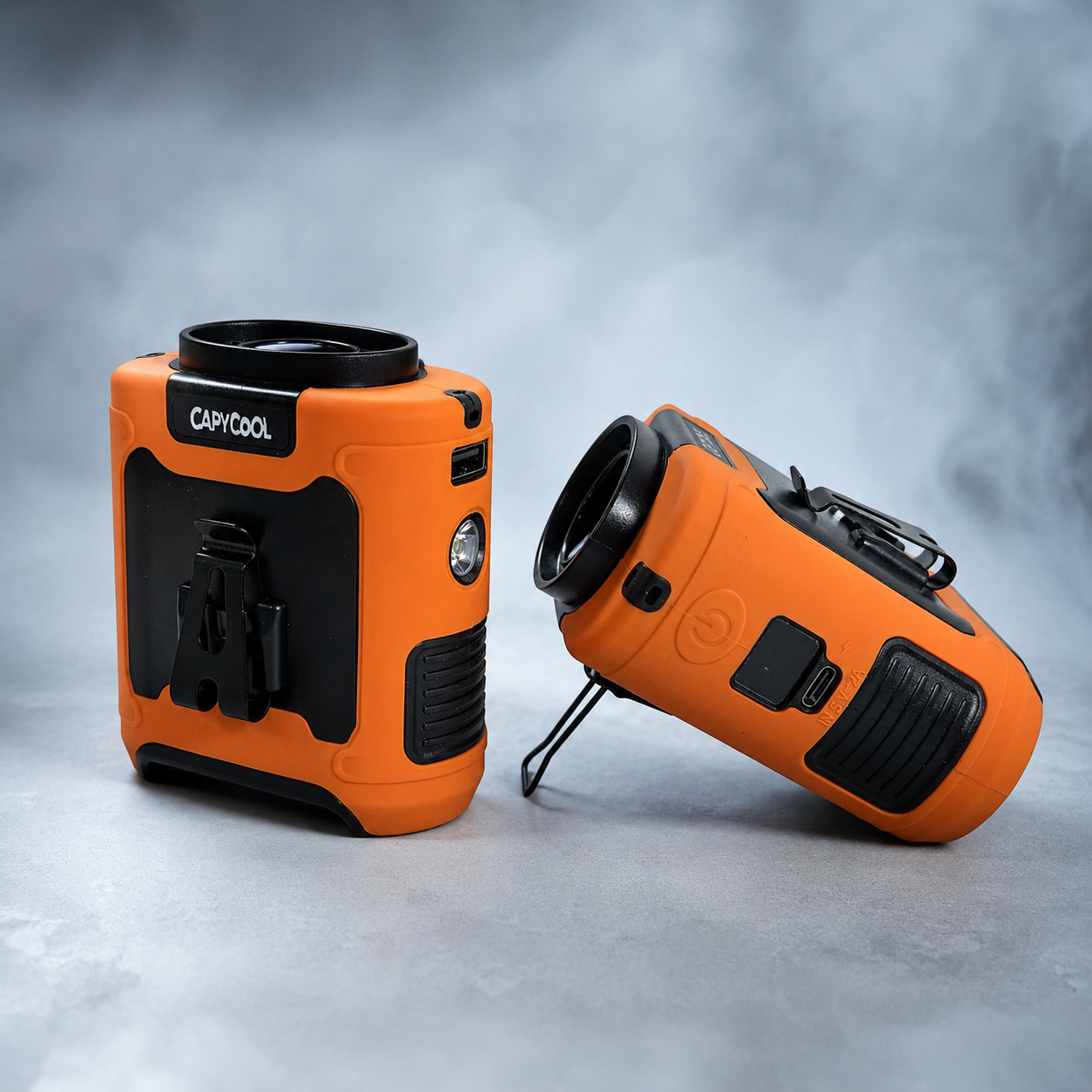
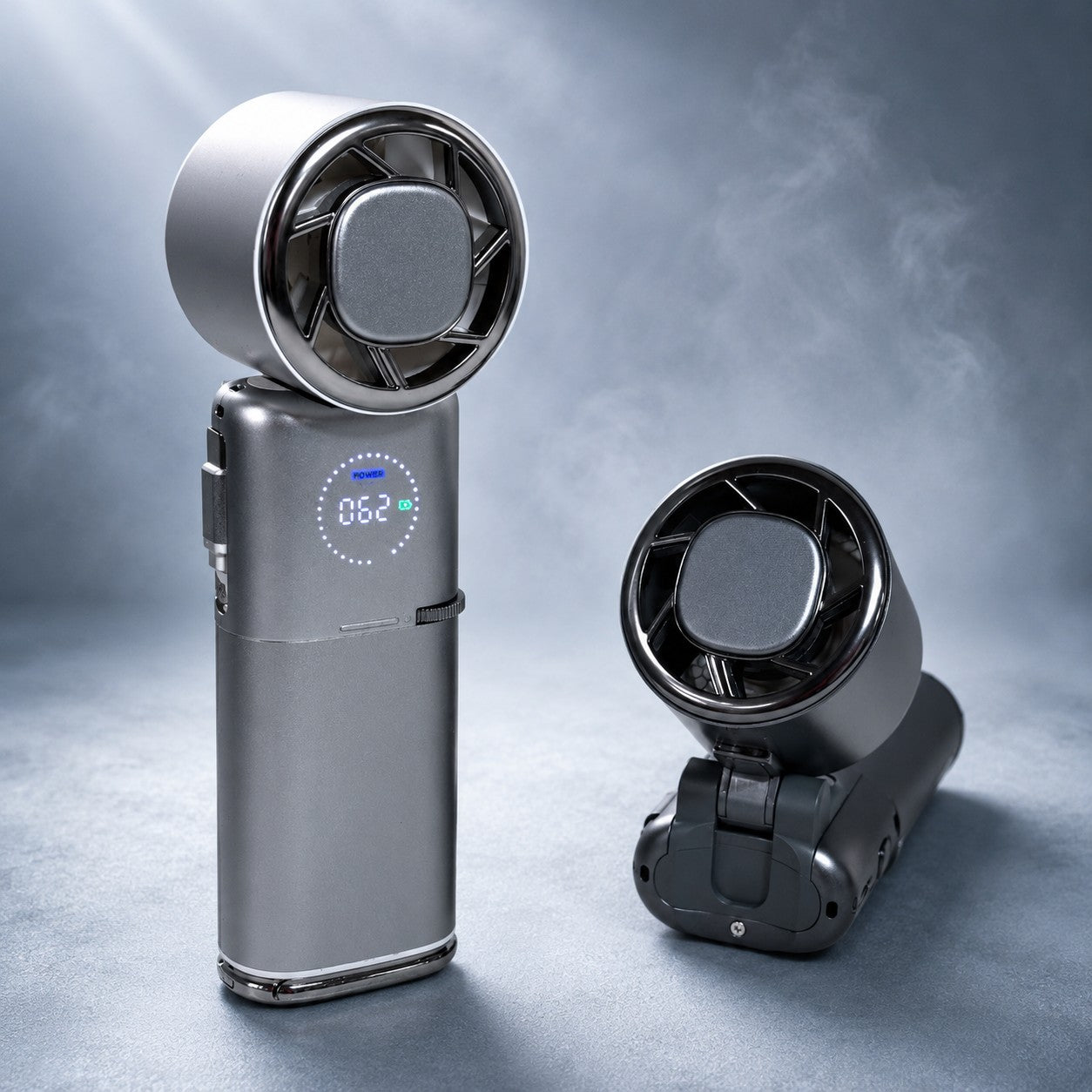
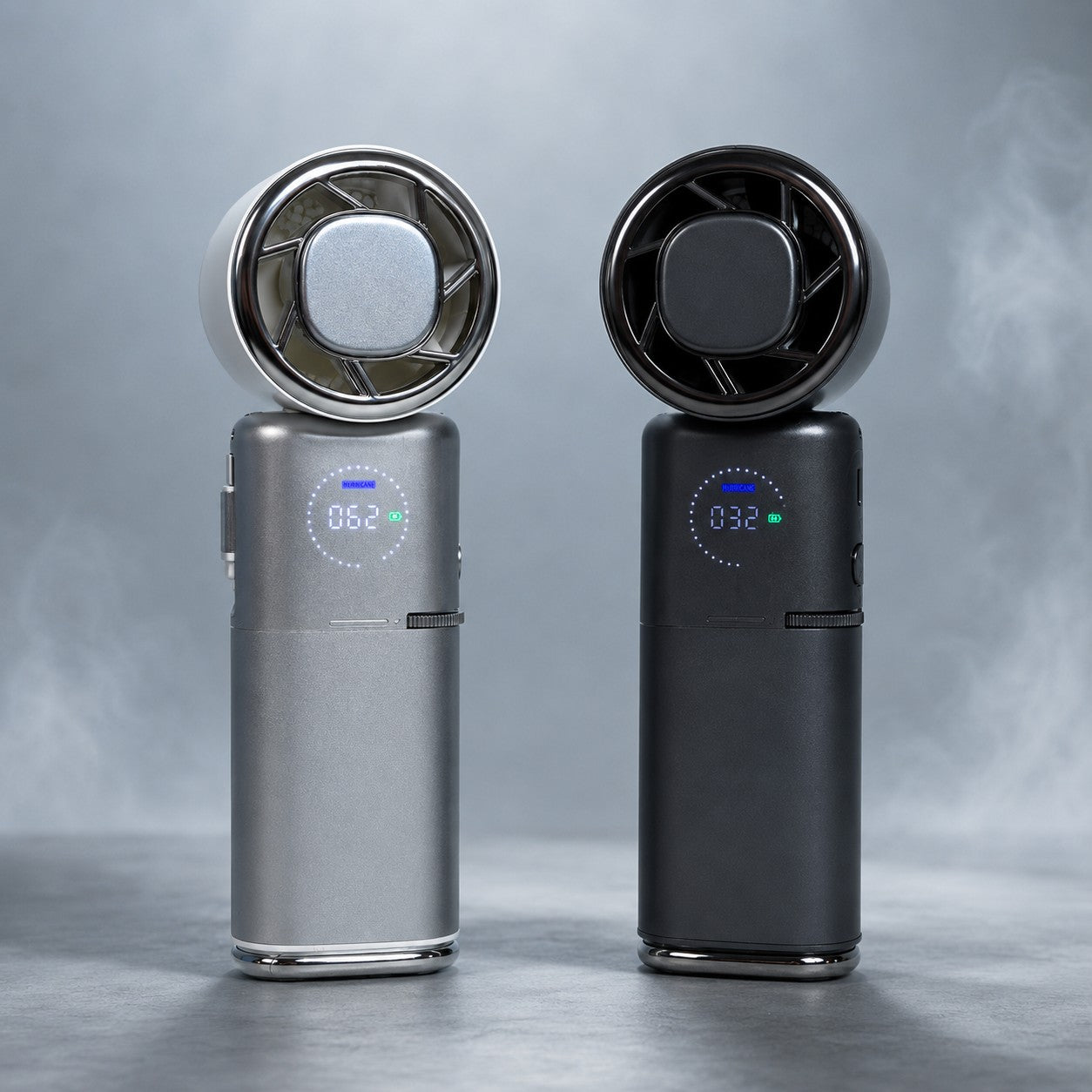
The CapyCool OG 3-in-1 Waist Fan is the lighter and more compact option.
With a 10,000mAh rechargeable battery, five speeds, brushless motor and up to 40 hours of runtime depending on the setting, it is designed to balance strong personal airflow with everyday portability.
It can also be used as a waist fan, hanging fan or desk fan, while the large battery can double as a power bank.
For most people looking for their first serious shirt fan, this is the logical starting point.
CapyCool DualForce: Built for Maximum Airflow
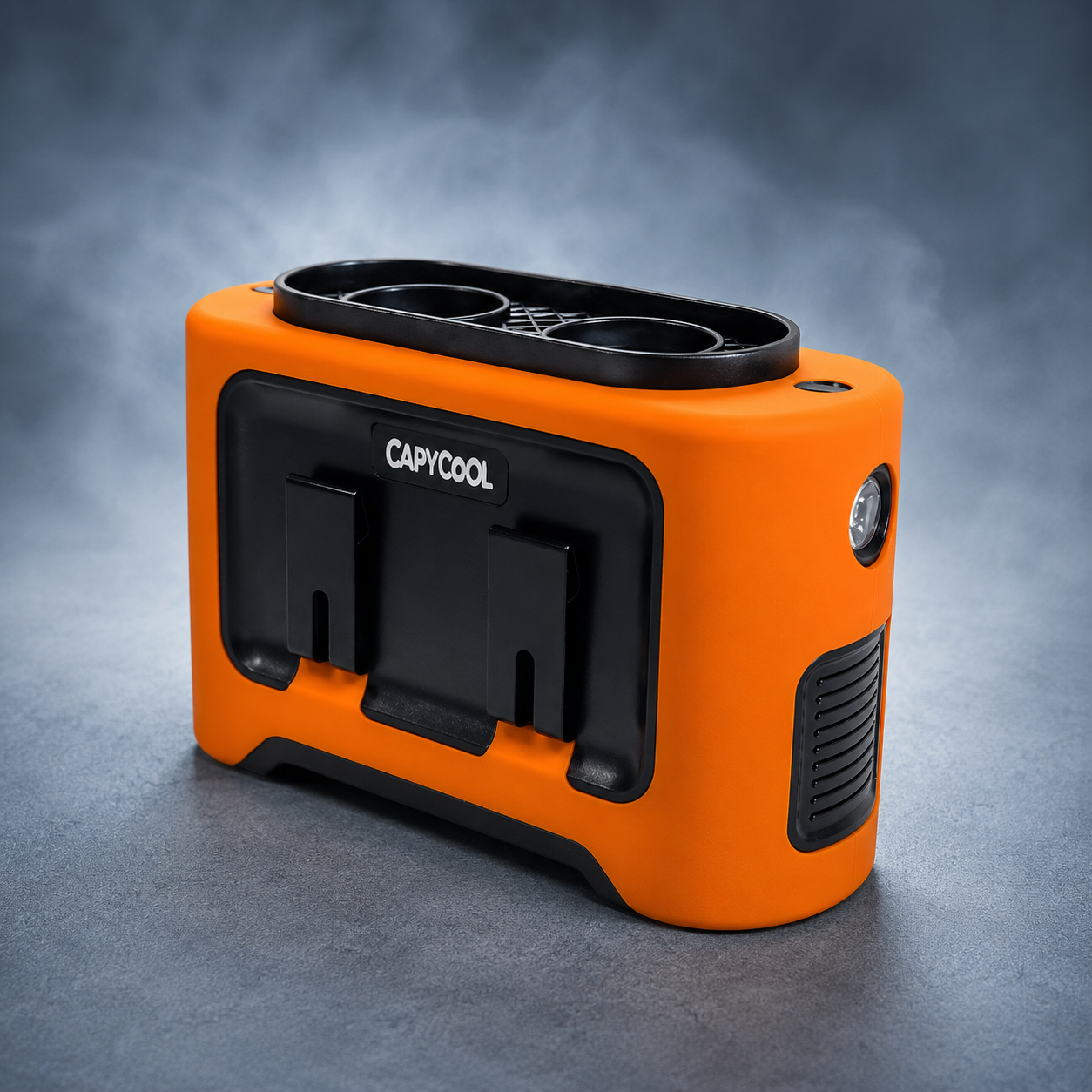
The CapyCool DualForce Waist Fan is built for users who prioritise performance.
Instead of a single airflow outlet, DualForce uses two motors and two outlets, combined with a large 14,500mAh battery and multiple adjustable speeds.
The dual-outlet layout can be particularly useful for under-shirt cooling because the airflow can be spread across a wider area instead of relying on one narrow stream.
CapyCool OG vs DualForce for Shirt Cooling
| Feature | OG 3-in-1 Waist Fan | DualForce |
|---|---|---|
| Best for | Everyday cooling | Maximum-performance cooling |
| Motor system | Single brushless motor | Dual motor system |
| Battery | 10,000mAh | 14,500mAh |
| Max quoted runtime | Up to 40 hours | Up to 40 hours |
| Shirt cooling | Strong everyday airflow | Higher-volume dual airflow |
| Portability | Excellent | Built more for maximum performance |
| Power bank | Yes | Yes |
Which One Should You Choose?
Choose the OG if everyday portability and versatility are your priorities.
Choose DualForce if you regularly deal with demanding heat and want the strongest shirt-cooling setup of the two.
Do Shirt Fans Work in Humid Weather?
Yes, but humidity changes how effective any fan feels.
Moving air still helps prevent warm, moisture-heavy air from sitting stagnant around your skin.
However, very high humidity makes it harder for sweat to evaporate because the surrounding air already contains a large amount of moisture.
That means the same shirt fan may feel more effective on a dry hot day than during extremely humid conditions.
An Important Note About Extreme Heat
A shirt fan is a personal comfort device, not an air conditioner and not protective equipment against heat illness.
Fans move surrounding air. They do not reduce the actual temperature of that air.
In extreme heat, especially when combined with physical exertion, direct sunlight or very high humidity, do not rely on a portable fan as your only heat-management strategy.
Water, shade, rest breaks, suitable clothing and access to cooler environments remain important.
Shirt Fan FAQs
Do shirt fans actually work?
Yes. A shirt fan creates moving air underneath your clothing, which can improve comfort by circulating air over your skin and helping sweat evaporate when environmental conditions allow.
What is the difference between a shirt fan and an undershirt fan?
Usually very little. Shirt fan, undershirt fan, under-shirt fan, waist fan and belt fan are often different terms used for the same general style of wearable cooling product.
How does a waist fan blow air under your shirt?
The fan clips around your waist with its intake exposed outside your clothing. The air outlet sits underneath the bottom of your shirt and points upward, circulating air across your torso.
Is an under-shirt fan better than a handheld fan?
It depends on how you use it. A handheld fan is easy to aim, while an under-shirt fan keeps both hands free and can distribute airflow beneath your clothing while you move around.
Is a waist fan better than a neck fan?
Neither is automatically better. Neck fans focus primarily on your face and neck, while waist-mounted shirt fans send airflow across your torso.
Can I use a shirt fan with a tucked-in shirt?
It may work, but a tightly tucked shirt can restrict the airflow path. Untucked or partially untucked clothing generally makes it easier for air to enter, circulate and escape.
What clothing works best with an undershirt fan?
Slightly loose, breathable shirts usually work best because they leave enough room for air to circulate. Very tight clothing can reduce airflow.
Can you use a shirt fan with hi-vis clothing?
Yes, provided the intake remains exposed and the outlet can sit underneath the garment. More powerful airflow can be particularly helpful with heavier work clothing.
How powerful should a shirt fan be?
For casual use, a compact single-motor waist fan may provide plenty of airflow. For physical work, heavier clothing or consistently hot environments, a higher-output or dual-motor design may make more sense.
How long do shirt fans last on one charge?
Runtime varies considerably based on battery capacity and fan speed. Higher fan speeds consume much more energy, so compare expected runtime at the speeds you are actually likely to use.
Are shirt fans loud?
Every fan creates some noise. Higher-powered settings are generally more noticeable. Multiple speed settings are useful because they allow quieter operation when maximum airflow is unnecessary.
Can a shirt fan cool the actual air?
No. A conventional shirt fan does not refrigerate the air like an air conditioner. It moves surrounding air across your body, which can improve comfort and support sweat evaporation.
Does an undershirt fan work when you are already sweating?
Moving air can be particularly noticeable when you are sweating because it helps replace stagnant, humid air around your skin. Very high humidity can still reduce how readily sweat evaporates.
Should I buy a single or dual shirt fan?
For everyday use and travel, a quality single-motor fan will suit many people. A dual-motor fan makes more sense when maximum airflow, demanding work or heavier clothing are priorities.
Are cheap shirt fans worth buying?
They may be adequate for occasional use. If you plan to rely on your fan frequently, battery quality, motor construction, clips, electronics and overall durability become much more important.
Is a Shirt Fan Worth It?
If you spend most hot days sitting beside an air conditioner, probably not.
If you regularly find yourself working, walking, gardening, travelling, camping or simply spending time somewhere hot without convenient cooling, a shirt fan starts making much more sense.
Its biggest advantage is not that it magically creates cold air.
It is that it puts moving air exactly where you need it while asking almost nothing from you in return.
Clip it on. Direct the outlet underneath your shirt. Choose a speed. Then get on with your day.
That combination of hands-free cooling, direct under-shirt airflow and true portability is what makes the humble shirt fan such a useful piece of summer gear.
Find the Right Shirt Fan for You
Start with the complete CapyCool waist fan range, choose the compact OG for everyday versatility, or step up to DualForce when maximum airflow is the priority.











Share:
Australia's Super El Nino Summer: The Ultimate 2026-27 Guide
Strongest El Niño in 1,000 Years? What Australia Could Face