



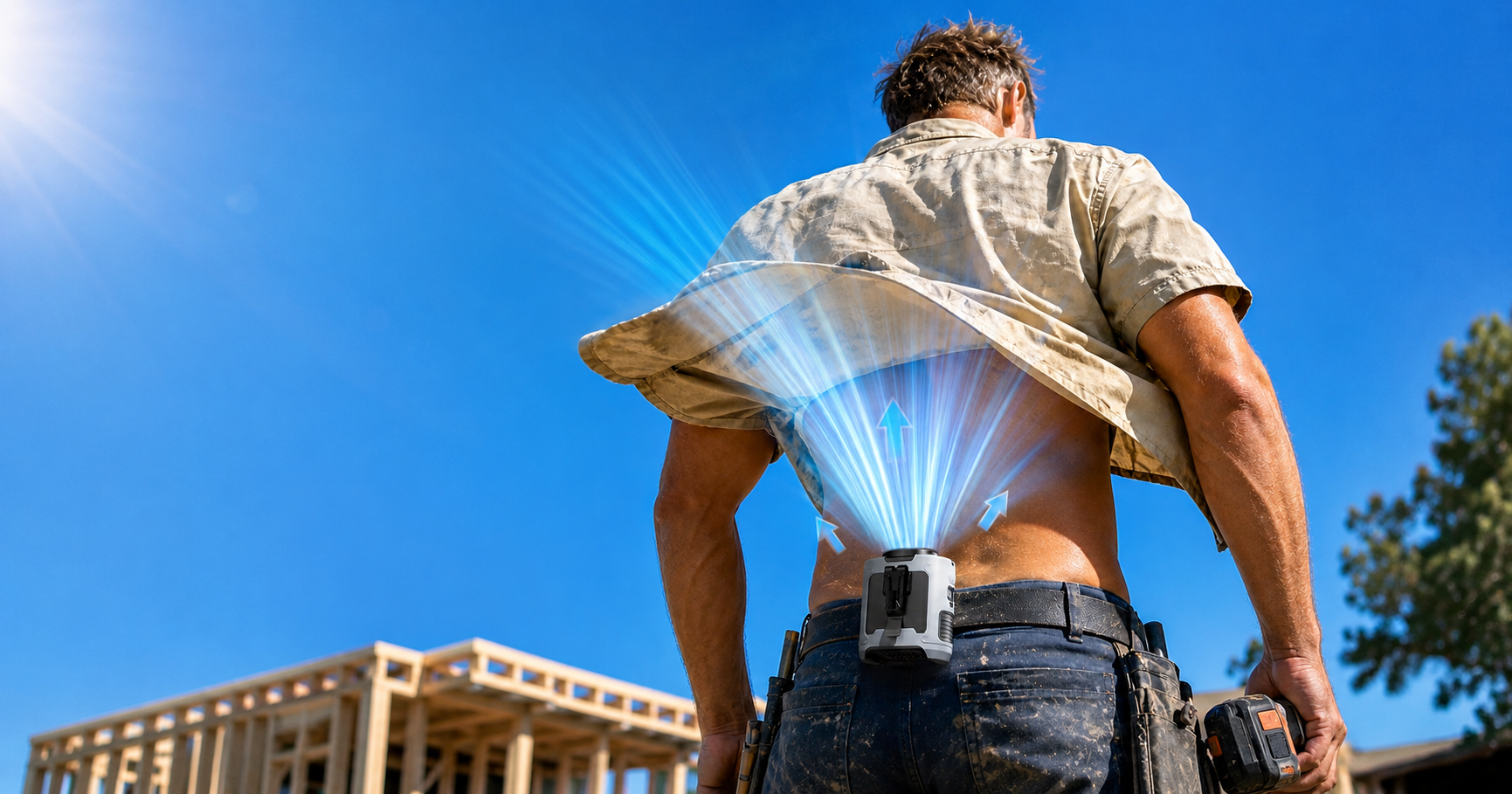
A waist fan works by speeding up the two ways your body already sheds heat: evaporation of sweat and convection across the skin. By pushing a steady stream of air over your torso, it pulls heat away from your body faster than still air ever could, which is why you feel cooler within seconds of switching one on.
That is the short answer. The longer answer is more interesting, and it explains exactly when a waist fan earns its place and when it does not. If you have ever asked "do waist fans actually work, or is it just hype", this post gives you the real physiology, the real numbers, and an honest account of the limits. We will also share what we hear from our own customers, because after more than 15,000 customers and 900 reviews, the lab science and the feedback from building sites, warehouses and people going through menopause line up almost perfectly.
Key Takeaways
- A waist fan does not produce cold air. It moves air, and moving air speeds up evaporative and convective heat loss across your torso. That is the entire mechanism, and it is genuinely effective.
- Sweat cools you because evaporation pulls heat from your skin. Every gram of sweat that evaporates removes roughly 2,260 joules of heat from your body.
- Your torso has a high density of sweat glands and blood vessels near the surface, which makes it an efficient place to shed heat. Airflow across it does more work than airflow across a smaller area like the neck.
- Waist fans help most in dry to moderate conditions. In high humidity sweat evaporates slowly, so the cooling effect is reduced.
- A fan is a comfort and heat-loss aid, not a replacement for shade, rest and water in dangerous heat.
- The single most effective cooling position our customers report is airflow circulated up under the shirt, across the torso, which matches the physiology rather than aiming air at the face alone.
How your body cools itself
Your body holds its core temperature at roughly 37 degrees Celsius. That number barely moves, even when the air around you swings by 20 degrees, because your body is constantly balancing the heat it produces against the heat it loses. When you work, exercise or simply sit in a hot room, you produce more heat than you shed, and your core starts to creep up. Your body responds with its most powerful cooling tool: sweat.
Sweating itself does not cool you. A film of sweat sitting on your skin does almost nothing. The cooling happens when that sweat evaporates. Turning liquid water into vapour takes a large amount of energy, and that energy is drawn directly from your skin as heat. The technical term is the latent heat of vaporisation, and for water it is about 2,257 kilojoules per kilogram, or roughly 2,260 joules for every single gram of sweat that evaporates.
That is a remarkable amount of cooling packed into a tiny volume of liquid. It is the same principle that makes you feel cold stepping out of a pool on a breezy day, and the same physics behind evaporative coolers and the humble wet cloth on the back of the neck. Scientific American has explained evaporative cooling in exactly these terms, and it sits at the centre of standard human thermoregulation physiology taught in every exercise science course.
The catch is that evaporation needs somewhere for the water vapour to go. Once the air immediately against your skin becomes saturated with moisture, evaporation slows to a crawl. This is why sitting still in humid heat feels so oppressive. Your sweat glands keep working, your shirt gets damp, but the cooling pay-off shrinks because the vapour has nowhere to escape. This is the single most important fact for understanding what a fan does and does not do.
Why airflow over the torso works
A fan solves the saturation problem. By moving air across your skin, it sweeps away the thin, humid layer sitting against you and replaces it with drier air that can absorb more moisture. Evaporation speeds back up, and heat loss climbs with it. At the same time, moving air carries heat away directly by convection, the same way blowing across a hot spoonful of soup cools it. So a fan attacks heat on two fronts at once: faster evaporation and faster convection.
The torso is a smart place to aim that airflow. Your trunk carries a high density of sweat glands and a rich network of blood vessels close to the skin surface. Warm blood from your core flows out toward the skin, where it can give up heat to the passing air before circulating back. A peer-reviewed 2026 paper in Experimental Physiology, published by Wiley, examined the thermodynamics of evaporative cooling on the body and reinforced what physiologists have long understood: directing airflow across a large, well-perfused, sweat-rich surface is an efficient way to shed heat. The torso fits that description better than almost any other easily reachable part of the body.
This is the core reason we built our fans to clip at the waist and blow up and across the chest and stomach, rather than aiming air at one narrow spot. You are not cooling a single patch of skin. You are accelerating heat loss across a wide, active surface, hands-free, while you keep working or moving.
We see this in our own data. When we analysed more than 900 verified reviews in June 2026, the cooling position our customers describe again and again is airflow travelling up under the shirt across the torso, not air pointed at the face. Two reviews sum it up:
"This fan has changed my life. No more suffering in hot venues as a sound engineer. This fan has grit and the battery life is incredible."
Aiesha B. — OG 3-in-1 Waist Fan ★★★★★
"I work in a mining parts warehouse in WA. Big tin shed, no real airflow. Having airflow on your core makes a huge difference. Battery easily lasts two full shifts on medium."
Mark H. — DualForce Tradie Waist Fan ★★★★★
That is the physiology in everyday language.
One honest clarification matters here. A waist fan does not lower your core body temperature in the clinical sense the way a cold shower or an ice bath might. What it does is speed up heat loss from your skin and make you feel meaningfully cooler and more comfortable. In practical terms that is what most people are after on a hot day, but it is worth being precise: the fan is enhancing a process your body already runs, not refrigerating your insides.
Where waist fans help most, and their limits
A waist fan is at its best in dry to moderate heat. When the surrounding air is not already loaded with moisture, evaporation runs fast, the fan keeps the air against your skin fresh, and the cooling effect is strong and immediate. Think of a building site on a dry 34 degree day, a warehouse with no air conditioning, a long walk, a festival, or a stuffy commute. These are the conditions where wearable airflow shines.
The limit is humidity. When the air is already close to saturated, as it often is in coastal and tropical parts of Australia during a muggy summer, there is less room for your sweat to evaporate no matter how much air you move. The fan still helps, because convection and the feeling of a breeze still count for something, but the evaporative half of the equation is muted. We would rather be straight with you about this. A waist fan will take the edge off a humid Brisbane afternoon, but it will not transform it.
Our customers say the same thing in their own words, and we are proud that they do, because it is part of why our reviews are trusted. Plenty of them write that it is not an air conditioner and that on a still, extremely hot day it can push warm air, while in shade, indoors, or with air flowing under the shirt the cooling is strong. We did not put those words in their mouths. They match the science exactly: a fan moves air, it does not chill it.
The other limit is more important for safety. A personal fan is a comfort and heat-loss aid, not a medical cooling device. In genuinely dangerous heat, research has also shown that above certain extreme combinations of temperature and humidity, fans can stop helping and may even add heat stress. So in extreme conditions a fan should sit alongside the basics that actually keep you safe: shade, rest, loose clothing and plenty of water. Use the fan to stay comfortable and functional, not as a reason to push through heat you should be getting out of.
Waist fan vs neck fan vs handheld
People often weigh up a waist fan against a neck fan or a handheld fan, so here is how they differ in plain terms. We cover this in more depth in our guide Waist Fans vs Neck Fans vs Handheld Fans, but the short version is below.
A handheld fan gives you a strong, directed breeze wherever you point it, which is great for a quick blast to the face. The drawback is obvious: one hand is always occupied, and the cooling stops the moment you put it down or need both hands.
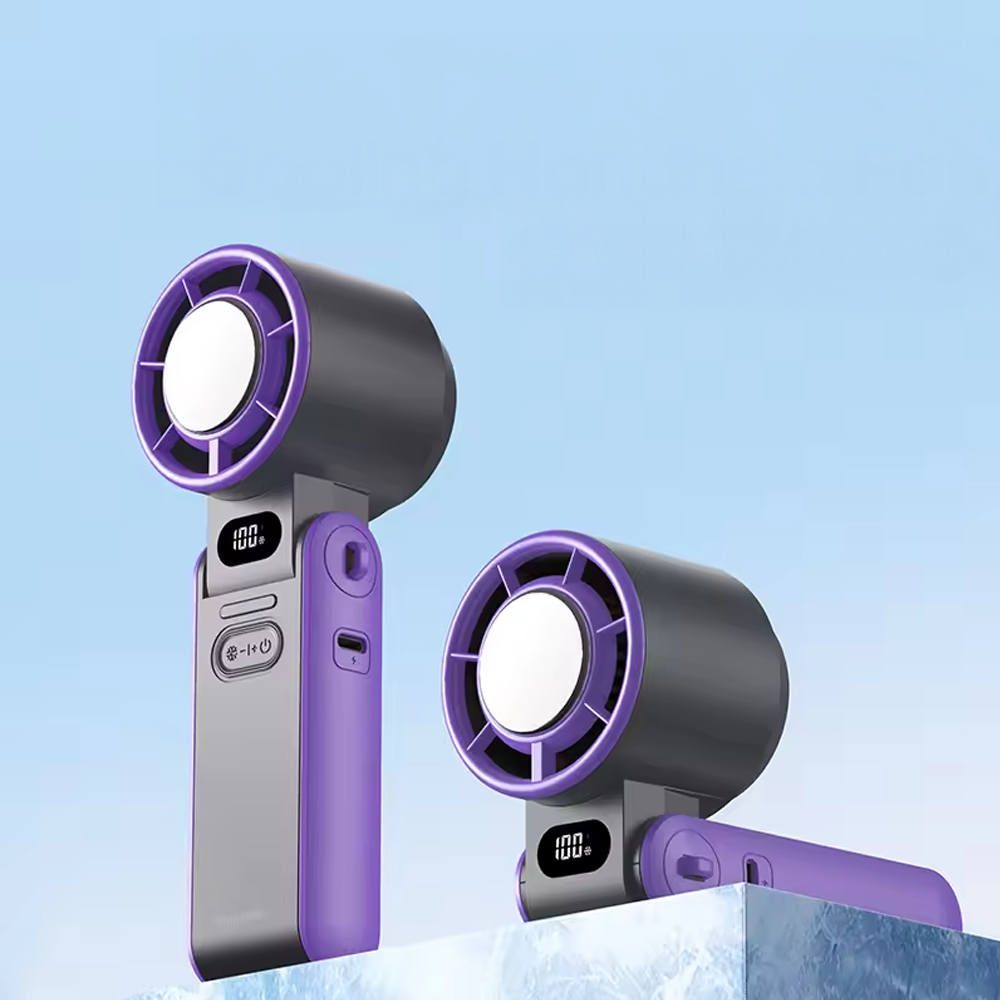
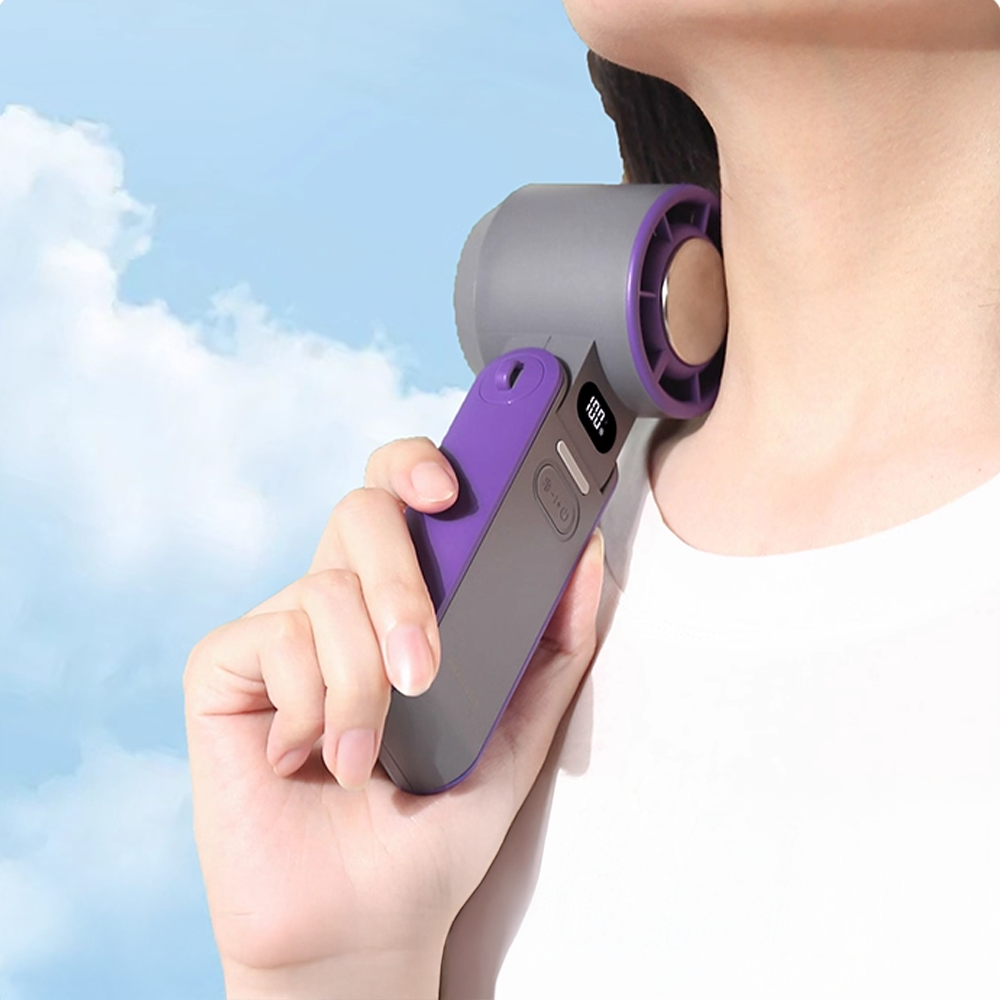
A neck fan sits on your shoulders and directs air up toward your face and neck, hands-free. The neck is a sensitive comfort zone, so a neck fan can feel pleasantly refreshing fast. It is worth being accurate, though: cooling the neck is mostly about comfort and easing the sense of effort in heat. It is a small surface, so it does less whole-body heat loss than airflow across the larger torso.
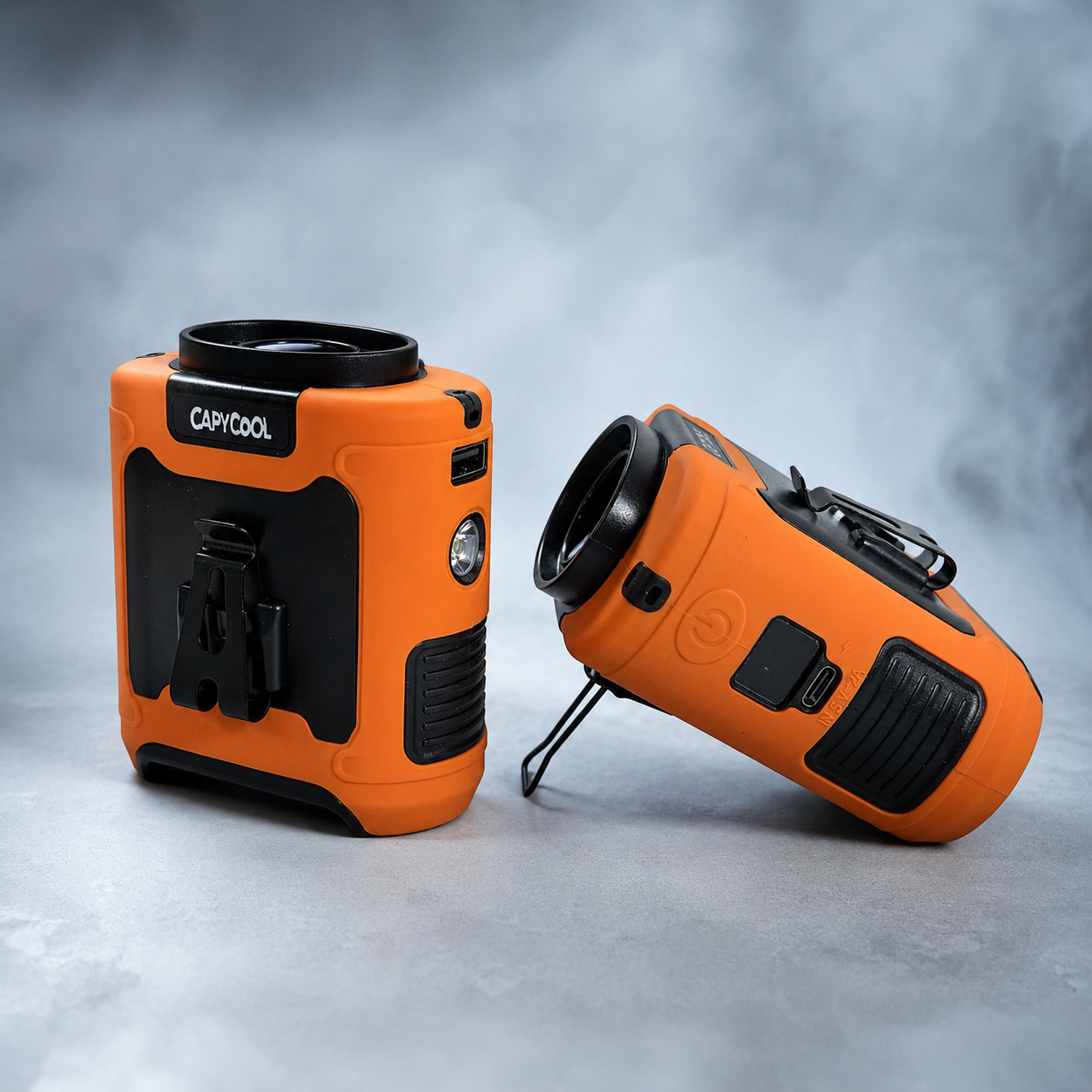
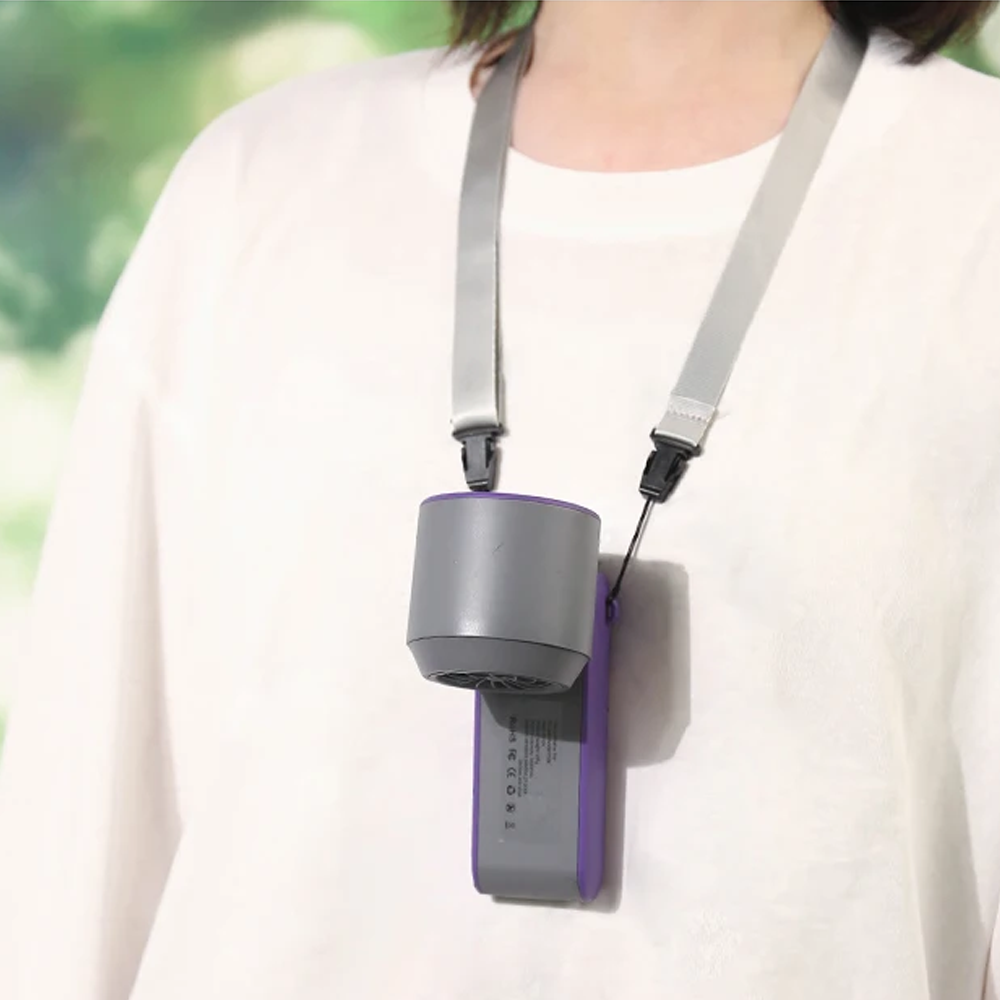
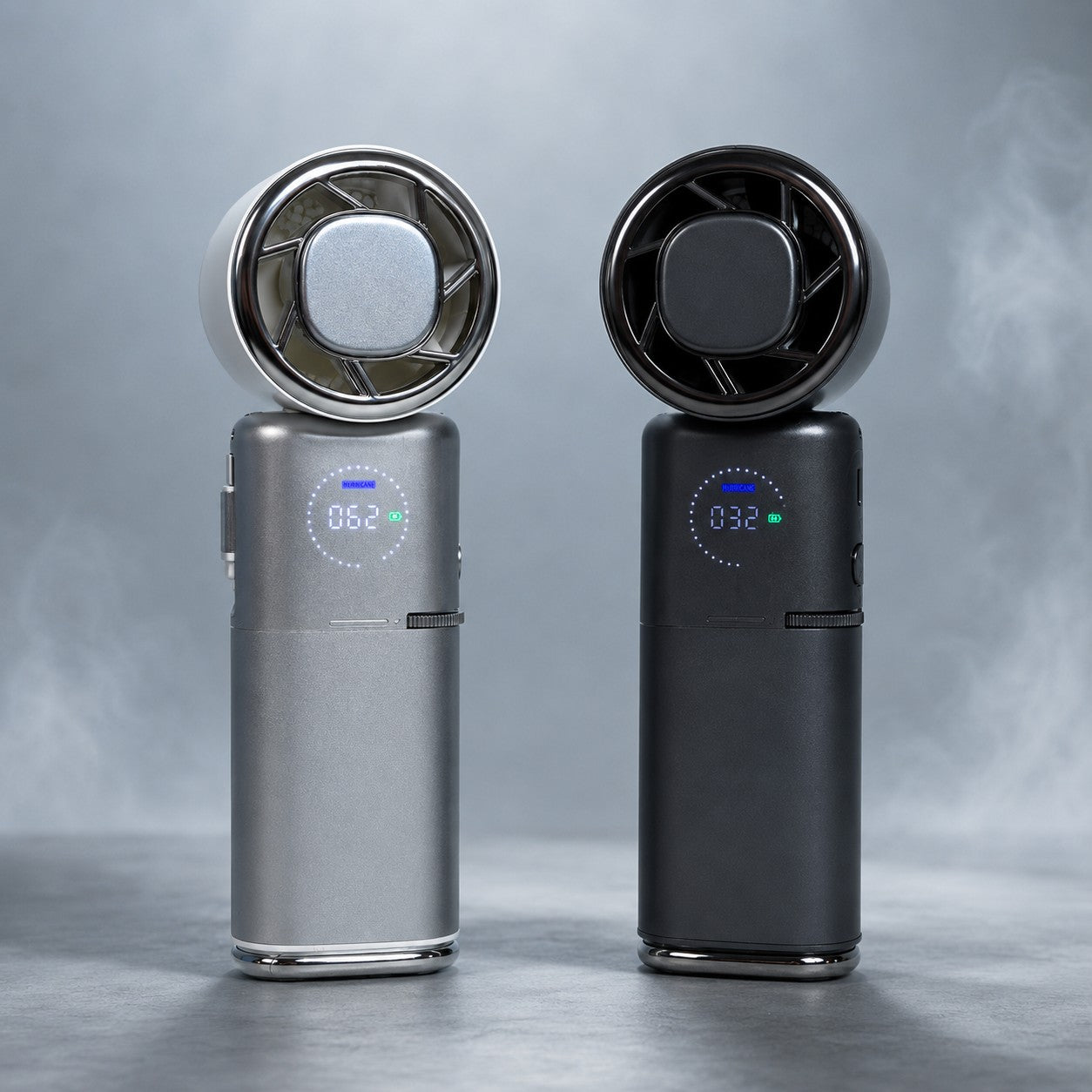
A waist fan trades the targeted face breeze for broad, hands-free torso cooling across a much larger and more sweat-active surface. That is why we think it does the most useful real-world cooling of the three for someone who is working, moving or out in the heat for hours. It is also the most versatile. Our OG 3-in-1 Waist Fan clips to your belt or waistband, and its lanyard lets you hang it from your neck when you do want air on your face instead. A good number of customers who wear it that way tell us it beats the dedicated neck fans they have owned.
If you want one device that covers the most situations, a waist fan is usually the pick. If discretion and a face breeze matter most, a neck fan has its place. You can compare the full range on our waist fan category page.
What our customers tell us about real-world cooling
The science explains how a waist fan should work. Two and a bit years of customer feedback tells us how it actually holds up. When we analysed our review base in June 2026, more than 900 verified reviews collected since 2024 with a 4.9 out of 5 average, a few clear patterns stood out that are worth knowing before you buy.
Battery life is what people remember. It is the single most mentioned feature in our reviews, named in around 28% of detailed reviews, ahead of airflow, build quality and price. This matters for cooling because a fan only cools while it is running. An underpowered fan that dies mid-shift is no help at all.
"On setting 2 it kept going for a full 23 hours across three days. On the highest setting it ran for about 8 hours."
Callum O. — OG 3-in-1 Waist Fan ★★★★★
"Start the day on 100% and it'll still be on 70% at end of shift, while my iPhone would be on 10%."
Sam P. — Waist fan owner ★★★★★
Airflow strength comes next. It is praised in about one in five detailed reviews, second only to battery. Customers reach for the same words over and over: powerful, strong, and for the twin-motor DualForce, "air cannon". That perceived power is the convection and evaporation doing their work across the torso.
The sceptics tend to convert. Around one in sixteen of our reviews follow the same arc: saw it on a Facebook or Instagram ad, had doubts, bought it anyway, and got won over once a hot day arrived. We like that pattern because it is honest. People do not expect much, then the product changes their mind.
"Night and day difference between this fan vs the cheap Temu crap I bought last year. High quality materials, actually insane battery life and a fan I can really feel working."
Ibrahim N. — OG 3-in-1 Waist Fan ★★★★★
And we hear the trade-offs too. Noise at the top one or two speeds is the most common single criticism, and customers almost always pair it with the same workaround: lower settings indoors, full power outdoors where there is more ambient noise to cover it. Weight comes up as well, and gets reframed by customers themselves as proof of a bigger battery and a sturdier build. About one in twenty reviewers compare the fan directly to a cheap import, and they land on our side for battery and build every time.
How to get the most from your waist fan
A few small habits make a real difference to how cool your fan keeps you.
Start with speed. Use a lower speed for steady all-day comfort and battery life, and save the top speed for when you are working hard or the heat spikes. On the OG 3-in-1, low speed can run for a good chunk of the day, while max output is stronger but draws the battery down faster. Match the setting to the moment rather than running flat out the whole time.
Placement matters more than people expect, and our reviews prove it. Several customers independently discovered that airflow feels weak if the shirt covers the outlet, then excellent once they repositioned it. Clip the fan so the outlet is not buried under heavy fabric. Airflow works best when it can actually reach your skin and travel up under a loose shirt, drawing the warm, damp air out at the collar. A fan pressed flat against a thick layer with nowhere for the air to go will feel weaker than one with a clear path across the skin. The customers who worked this out became some of our happiest reviewers.
Layering is part of the equation too. A light, loose shirt lets the airflow circulate and carry moisture away. A tight or heavy layer traps the humid air the fan is trying to move. If you are wearing hi-vis or a uniform, position the fan so air can still flow into the gap between the garment and your body.
Finally, pair it with the basics. A fan plus a damp cooling towel works well in dry heat, because you are giving the airflow more moisture to evaporate. And in serious heat, keep drinking water and find shade. The fan does its job best as part of a sensible approach to the heat, not as a solo fix.
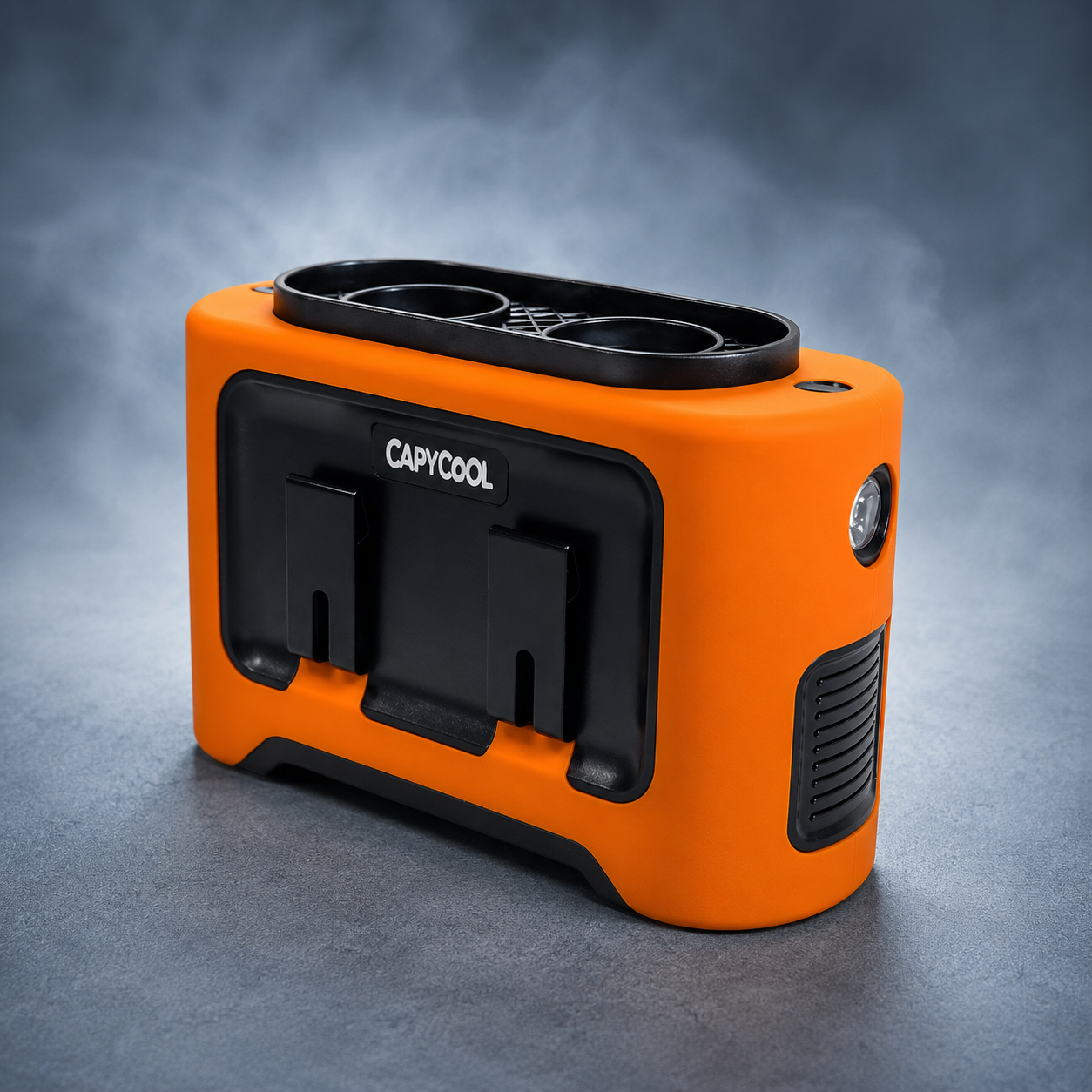
For heavier or longer days, our DualForce Tradie Waist Fan steps things up with twin motors and a larger 14,500mAh battery, which suits people who are out in it from early until knock-off and want airflow that carries further.
The menopause and hot-flush use case
One group we want to call out, because the science applies a little differently, is people managing menopause and hot flushes. Hot flushes are driven by hormonal changes rather than the weather, so the heat comes from inside and arrives without warning. A waist or neck fan gives fast, hands-free relief that does not announce itself, which is why this is one of our most loyal groups of customers, buying year-round rather than only in summer.
"Love my CapyCool fan. I sweat a lot thanks to menopause. It keeps me cool while running around at work."
Susan T. — OG 3-in-1 Waist Fan ★★★★★
The relief here is comfort and fast perceived cooling, delivered discreetly, which is exactly what the job calls for.
FAQ
Do waist fans really work?
Yes. A waist fan speeds up the evaporation of sweat and the convective heat loss across your torso, which is genuinely how your body sheds heat. It does not make cold air, and it does not refrigerate your core, but it accelerates a real cooling process and makes you feel noticeably cooler in dry to moderate heat. The effect is strongest where evaporation can run freely. Our waist fans hold a 4.9 out of 5 average across more than 900 verified reviews, and a common review arc is a sceptical buyer who was won over after the first hot day.
Do waist fans work in humidity?
They help, but less. In high humidity the air is already close to saturated, so your sweat evaporates more slowly and the evaporative part of the cooling is reduced. You still get a convective breeze and the comfort that comes with it, so a waist fan is far from useless on a muggy day. Our customers in genuinely humid places like Singapore and far north Queensland tell us the airflow stays strong, while being honest that it is air movement, not refrigeration. It performs best in dry to moderate conditions.
Waist fan or neck fan, which should I get?
Pick a waist fan if you want the most all-round, hands-free cooling, because it moves air across a large, sweat-rich surface and is the most versatile, with a lanyard so it can hang at the neck too. Pick a neck fan if your priority is a discreet face breeze and easy all-day wear, keeping in mind that neck cooling is mostly about comfort rather than large-scale heat loss.
How cold is the air from a waist fan?
It is not chilled air. A waist fan blows ambient air, the same temperature as the room or the outdoors around you. The cooling sensation does not come from the air being cold. It comes from that moving air speeding up evaporation and carrying heat away from your skin, which is what lowers your skin temperature and makes you feel cooler. Our customers say this themselves in their reviews, with phrases like "don't expect icy cold air", which is part of why our feedback is so trusted.
Is it loud?
On the lower settings it is quiet enough for indoor and office use. At the top one or two speeds it is audible, which is why most customers run it on low indoors and full power outdoors where there is more ambient noise. Noise is the most common criticism in our reviews, but it is rarely treated as a dealbreaker.
Feel the science for yourself
The physics is simple and proven: move air across a warm, sweating surface and you shed heat faster. A waist fan puts that to work across your torso, hands-free, all day. The science and our reviews say the same thing.
Our fans dispatch from Sydney, come with a one-year Australian warranty, and are rated 4.9 out of 5 from more than 900 reviews. Feel the science for yourself. Try a CapyCool waist fan with 30-day returns.











Share:
Why Blowing Air Up at Your Face and Neck Actually Works: The Science Explained
Rechargeable vs Disposable Hand Warmers: Which Is Better?