



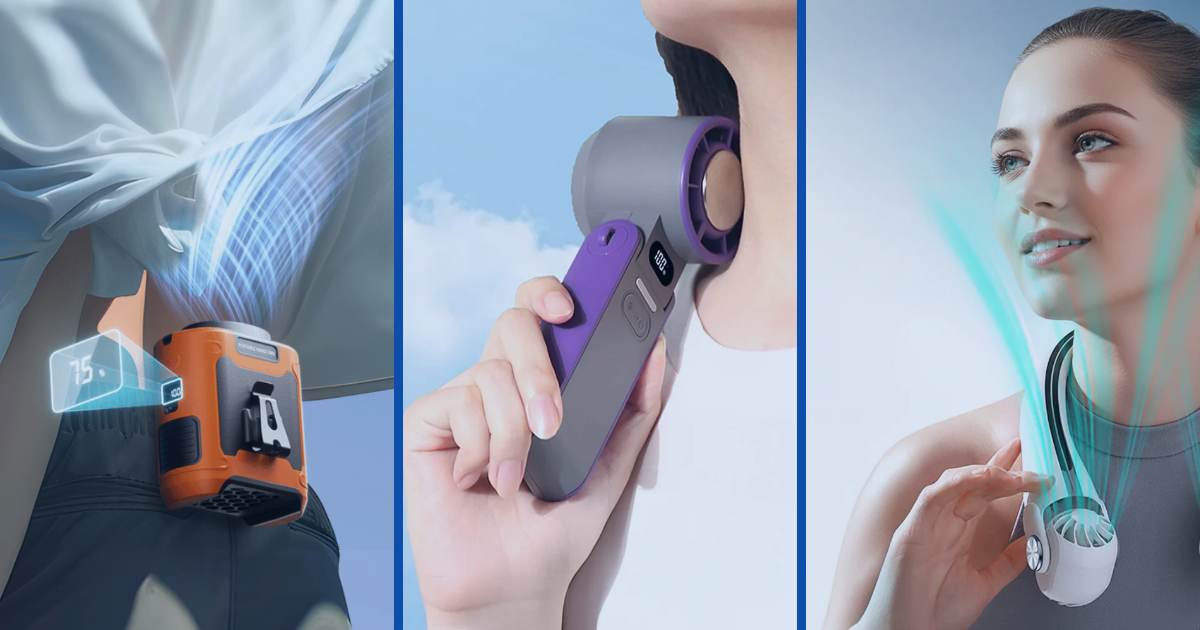
Summer is heating up fast, and portable fans have gone from nice-to-have to absolute lifesavers. From waist-mounted fans to wearable neck coolers and trusty handhelds, each style has its strengths. But what does science say about how airflow actually cools you down and which option delivers the best results for your lifestyle?
Let’s look at the evidence.
How Fans Keep You Cool
When temperatures rise, your body relies on evaporative and convective heat loss — in simpler terms, sweat evaporation and moving air. A breeze speeds up both, helping your body maintain comfort and prevent overheating.
A 2019 study in Energy and Buildings found that localized airflow directly influences perceived comfort and can reduce the required cooling load indoors (Du et al., 2019).
Meanwhile, modeling research published in The Lancet Planetary Health confirmed that electric fans are effective for cooling under most hot conditions, though efficiency drops when temperatures exceed about 35 °C with high humidity (Morris et al., 2021).
In short: the right airflow, directed where your body needs it, can make a real difference.
1. Waist Fans – Hands-Free Cooling That Works From the Core

Best for: Outdoor workers, tradies, hikers, delivery riders, event crews
Waist fans position airflow near your torso — one of the most effective cooling zones because of its blood vessel concentration and sweat distribution. Cooling this region improves heat dissipation across the body.
Research shows that targeted torso cooling can significantly improve thermal comfort and endurance. A review of personal cooling systems found that airflow around the chest and waist lowers overall heat strain and helps maintain performance during physical work in warm environments (He et al., International Journal of Environmental Research and Public Health, 2017).
Pros
-
Hands-free design for active tasks
-
Powerful upward airflow for full-body comfort
-
Long battery life and multiple speeds
-
Can double as a hanging or desk fan
Cons
-
Slightly bulkier than other types
-
Less discreet under tight clothing
✅ Choose this if: You’re constantly on the move or working outdoors and need serious, all-day cooling power.
2. Neck Fans – Personal Microclimate for Everyday Life

Best for: Commuters, office workers, walkers, light exercise
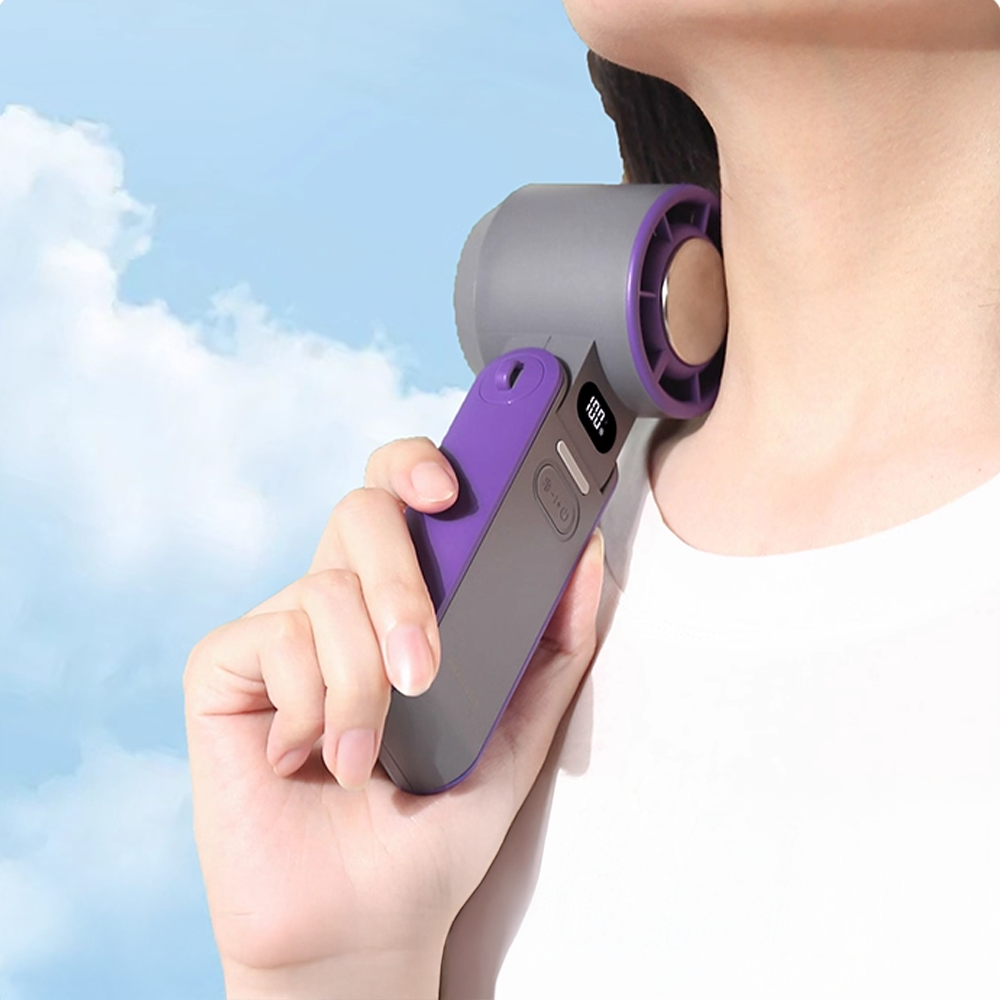
Neck fans are compact, quiet, and designed to move air around your face and shoulders — two of the body’s most temperature-sensitive regions. This type of localized airflow can lower skin temperature and reduce discomfort, even when ambient heat stays constant.
A 2022 study in the Journal of Physiological Anthropology found that airflow direction strongly affects perceived comfort and physiological relaxation. Indirect airflow toward the face (like that produced by neck fans) reduced discomfort and stress indicators compared to stagnant air (Tamura et al., 2022).
Pros
-
Lightweight, wearable, and quiet
-
Continuous airflow for face and neck
-
Safe bladeless designs available
-
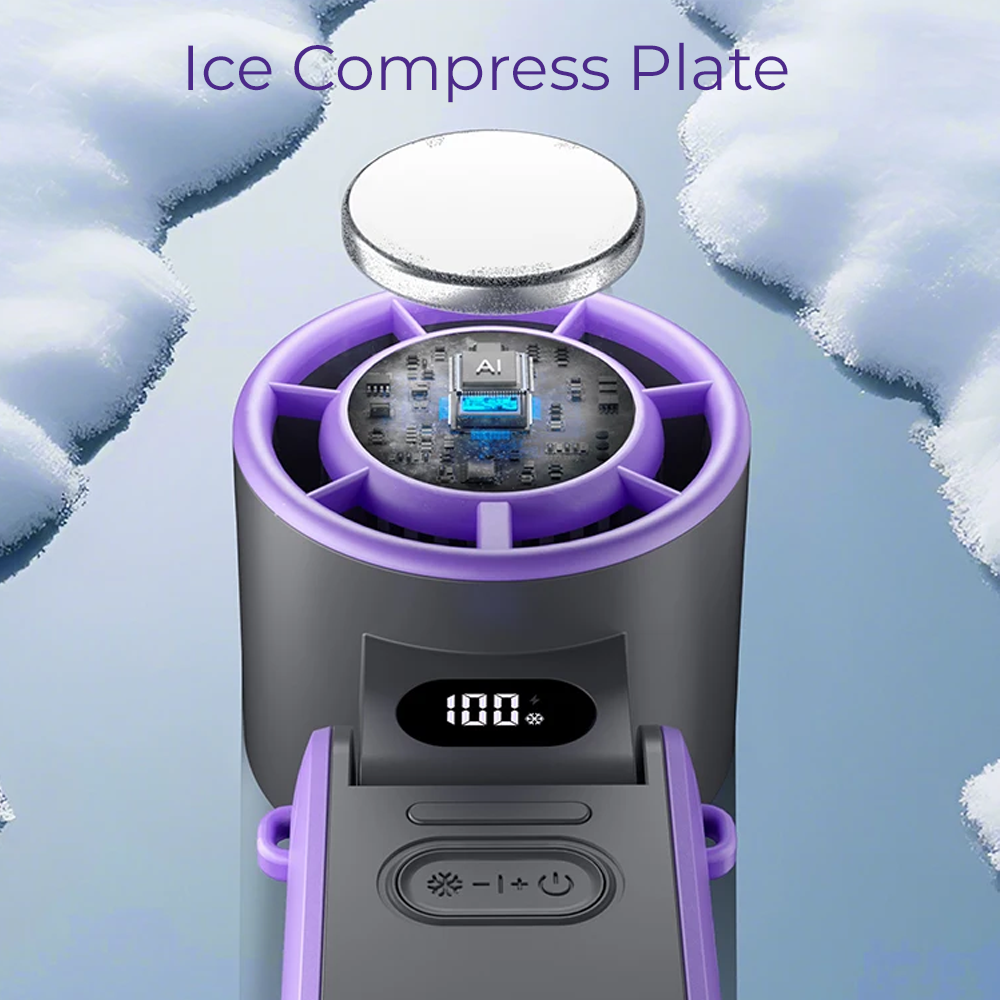
Some include built-in cooling plates or aroma pads
Cons
-
Focused on upper-body cooling only
-
Can feel warm around the collar after long use
✅ Choose this if: You want portable comfort for commutes, desk work, or errands without holding anything.
3. Handheld Fans – Small Size, Big Versatility

Best for: Quick cooling, travel, children, flexible use
The humble handheld fan remains popular for a reason — it’s simple and effective. Directing airflow at your face or neck can rapidly improve comfort in hot or humid air.
A 2020 study in Building and Environment found that even brief, localized airflow around the upper body improved comfort levels and reduced skin temperature compared to stagnant air conditions.
Pros
-
Compact and easy to carry
-
Works instantly for spot cooling
-
Great for travel, kids, or indoor use
-
Can double as a small desk fan
Cons
-
Not hands-free
-
Lower battery capacity
-
Limited cooling area
✅ Choose this if: You need quick relief in short bursts or want a backup fan that fits anywhere.
Choosing Smarter Cooling
For long workdays or outdoor heat, waist fans offer full-body cooling and freedom of movement. Neck fans strike a balance between comfort and convenience for everyday activities. Handheld fans shine when portability and instant relief matter most.
Whichever you choose, remember that fan cooling works best in dry or moderately humid environments where sweat can evaporate efficiently. In extremely hot and humid conditions, hydration, shade, and rest breaks remain essential.
Quick Tips for Picking the Right Fan
-
Choose battery capacity above 3 000 mAh for lasting use
-
Look for 360-degree adjustable airflow
-
Pick brushless motors for quieter performance
-
Go bladeless if using around kids or pets
-
Check for tripod or clip options for versatility
Cooling smart means matching design to lifestyle and that’s where CapyCool comes in.
Portable fan FAQ
Still choosing between a waist fan, neck fan or handheld fan?
Here’s the practical version: the best portable fan depends on where you want the airflow, how long you need it to last, and whether you need your hands free. Use this FAQ to match the right fan style to work, travel, commuting, camping, events, exercise and everyday heat.
Choose a waist fan if…
You need hands-free airflow for outdoor work, walking, camping, events, delivery shifts or long hot days where battery life and stronger airflow matter most.
Choose a neck fan if…
You want easy everyday comfort around your face and neck for commuting, desk work, errands, light walks, queues or hot flushes.
Choose a handheld fan if…
You want quick spot cooling, simple travel backup, compact storage or a fan you can point exactly where you need it for short bursts.
Quick comparison
Which is better: a waist fan, neck fan or handheld fan?
None of the three is automatically “best” for everyone. They solve different heat problems.
Waist fans are usually best when you need stronger hands-free airflow for longer periods, especially outdoors. Neck fans are usually best for everyday personal comfort because they cool around your face and neck without needing to hold anything. Handheld fans are best for quick, targeted relief when you want something simple, light and easy to pack.
If you are working, walking, camping or sweating through a full day, start with a waist fan. If you are commuting, shopping, sitting at a desk or dealing with hot flushes, start with a neck fan. If you just want instant cooling in your bag, start with a handheld fan.
What is the main difference between waist fans, neck fans and handheld fans?
The main difference is where the airflow goes and how you wear or hold the fan.
- Waist fans clip around your belt, waistband or clothing and usually push airflow upward through your shirt or across your torso.
- Neck fans sit around your neck and direct air toward your face, jawline, neck and upper chest.
- Handheld fans are held in your hand and pointed wherever you want short bursts of air.
That one design difference changes almost everything: comfort, battery size, airflow strength, discretion, portability and how useful the fan is while your hands are busy.
Which portable fan gives the strongest cooling?
For most active outdoor use, a good waist fan will usually feel stronger than a typical neck fan or small handheld fan because it can house a larger motor, bigger battery and more focused upward airflow.
That said, “strongest” is not always the same as “best.” A neck fan may feel more useful if your face gets hot easily. A handheld fan may feel stronger for a few seconds because you can aim it directly at one spot. A waist fan is usually better when you want sustained airflow while moving around, working or wearing it for longer periods.
Which type of fan is best for all-day use?
A waist fan is usually the best choice for all-day use because it is designed for longer wear, larger battery capacity and hands-free airflow. This makes it better for work shifts, markets, festivals, delivery routes, outdoor events, camping and long walks.
Neck fans can also work well for longer periods, but the comfort depends on the weight, fit and how warm the collar area feels after hours of use. Handheld fans are usually better for short bursts because you have to hold them, and smaller models often have smaller batteries.
Which portable fan is best if I hate holding things?
Choose either a waist fan or a neck fan. Both are hands-free, but they suit different situations.
A waist fan is better if you are working, carrying tools, pushing a pram, walking the dog, hiking, setting up camp or doing anything where your hands are busy. A neck fan is better if you want something lightweight and simple for commuting, errands, office use or casual walks.
A handheld fan is the least convenient option if your hands are already full, although it can still be useful as a backup fan in a bag.
Which fan is easiest to carry?
Handheld fans are usually the easiest to carry because they are compact and can fit into a handbag, backpack, pram organiser or travel pouch. Neck fans are also easy because they sit around your neck, but they take up more space when packed.
Waist fans are generally bulkier, but they make up for it with stronger airflow, larger batteries and better hands-free use. So the trade-off is simple: handheld fans win for storage, neck fans win for convenience, and waist fans win for serious cooling power.
Waist fans
What is a waist fan?
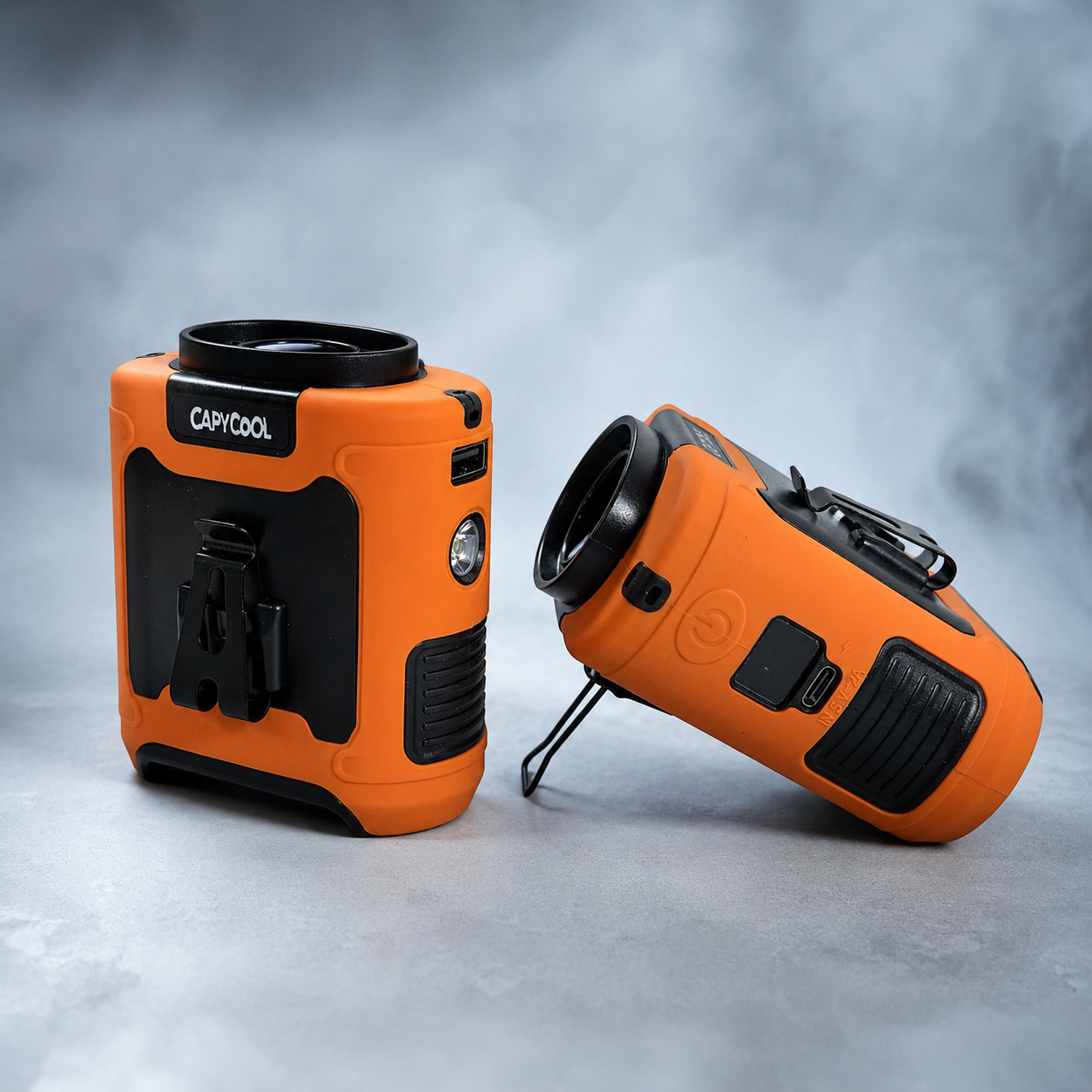
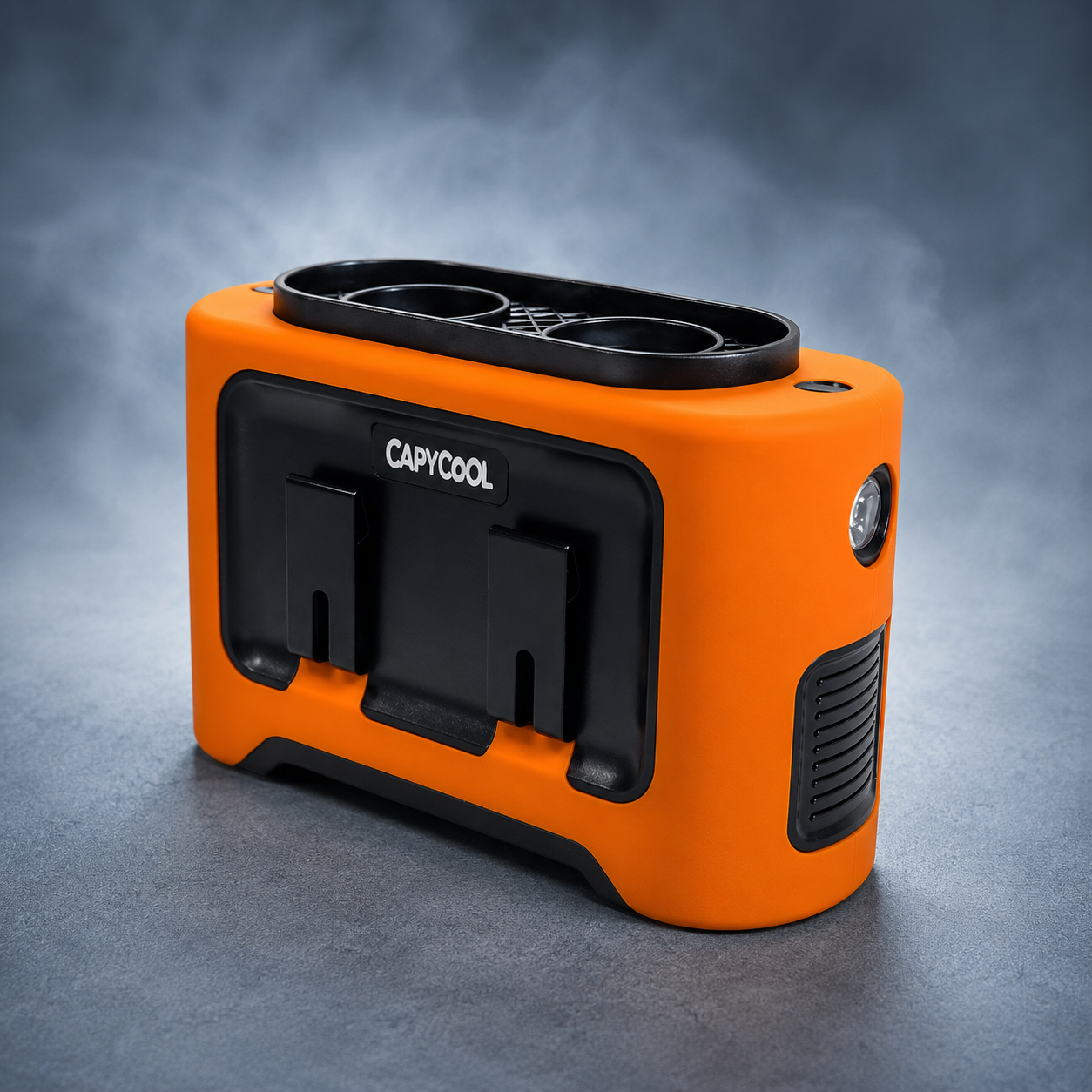
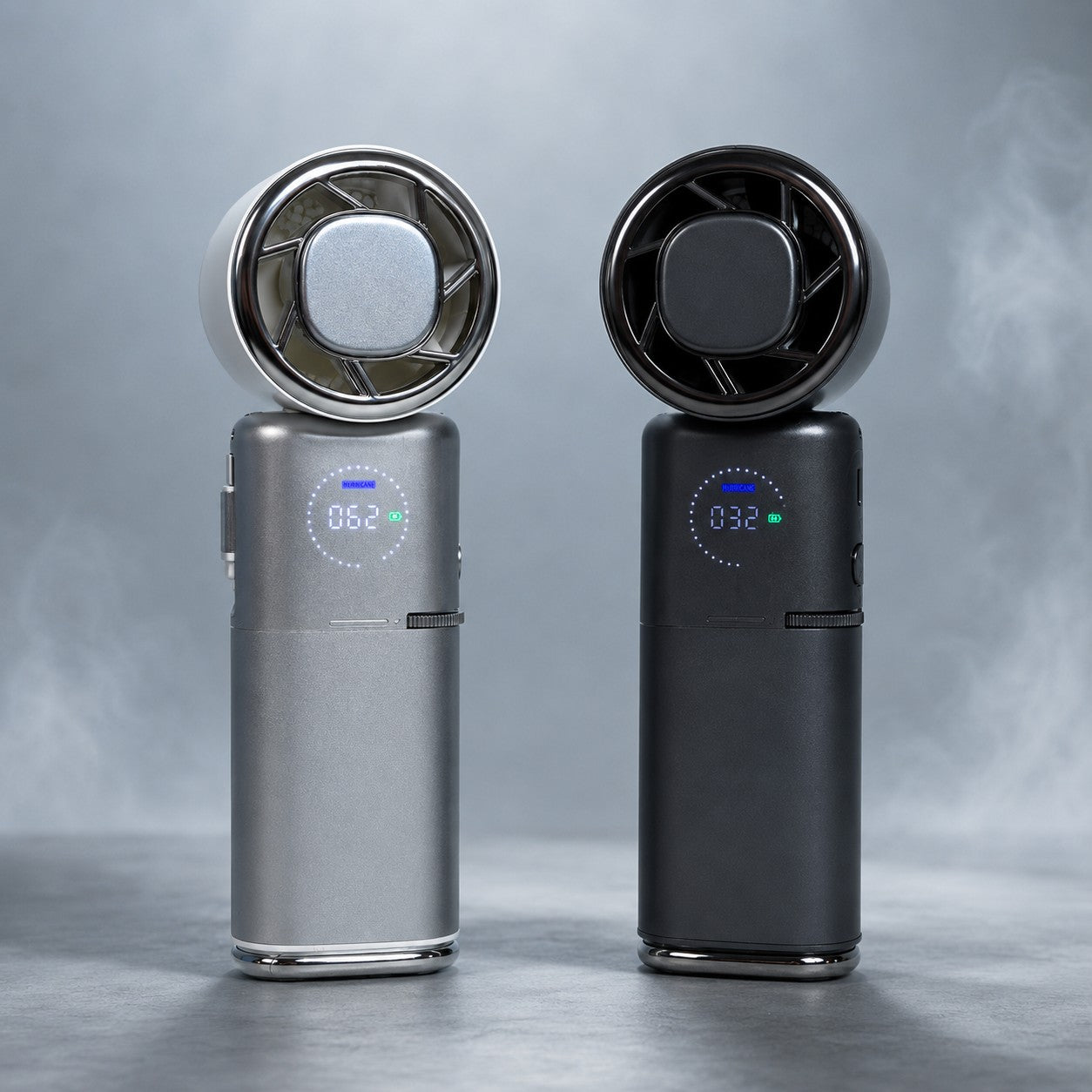
A waist fan is a portable wearable fan that clips to your belt, waistband, pants, shorts or shirt. Many models are designed to blow air upward, either under your shirt or across your torso, creating a stream of moving air while you walk, work or stand outside.
Waist fans are especially popular with tradies, warehouse workers, gardeners, campers, delivery riders, event staff, hikers and anyone who spends long periods in heat while needing both hands free.
Are waist fans actually effective?
Yes, waist fans can be very effective when used in the right conditions. They work by moving air across sweaty or warm skin, helping you feel cooler through airflow and evaporation. Because they sit near your torso, they can create a noticeable cooling effect while you move around.
They are not a replacement for shade, hydration or proper heat safety, but they can make hot tasks feel more manageable, especially when you need portable cooling away from air conditioning.
Who should buy a waist fan?
A waist fan is a smart choice if you regularly get hot while doing active or outdoor tasks. It is especially useful for people who need airflow while keeping both hands free.
Common use cases include construction work, landscaping, gardening, warehouses, festivals, outdoor markets, camping, hiking, fishing, delivery work, theme parks, school pick-up, pram walks, sports sidelines and summer travel.
If your main complaint is “I get hot when I’m moving around and I can’t keep holding a fan,” a waist fan is usually the most practical option.
What are the downsides of waist fans?
The main downside is size. Waist fans are usually larger than handheld fans and more noticeable than neck fans. Some people also find them less discreet under tight clothing or when clipped over formal outfits.
They also need to be positioned properly. If the air outlet is blocked by thick clothing, tucked fabric or a loose shirt that collapses over the intake, performance can drop. For best results, the fan needs a clear intake and a clear path for airflow.
Can you wear a waist fan under your shirt?
Yes, many people use waist fans under a shirt to push air upward across the torso. This can feel especially useful when walking, working outside or standing in humid conditions.
For best results, wear a shirt that allows air to move. Very tight clothing may restrict airflow, while very heavy fabric may reduce the cooling effect. Lightweight work shirts, loose tees and breathable outdoor clothing usually work better.
Can a waist fan be used as a desk fan or hanging fan?
Many waist fans can be used beyond the waist. Depending on the model, they may work as a small desk fan, hanging tent fan, pram-side airflow option, bedside fan, car-camping fan or emergency backup fan.
This is one reason waist fans can be good value: they are wearable when you need hands-free cooling, but still useful around the house, campsite, garage, shed or workbench.
Neck fans
What is a neck fan?
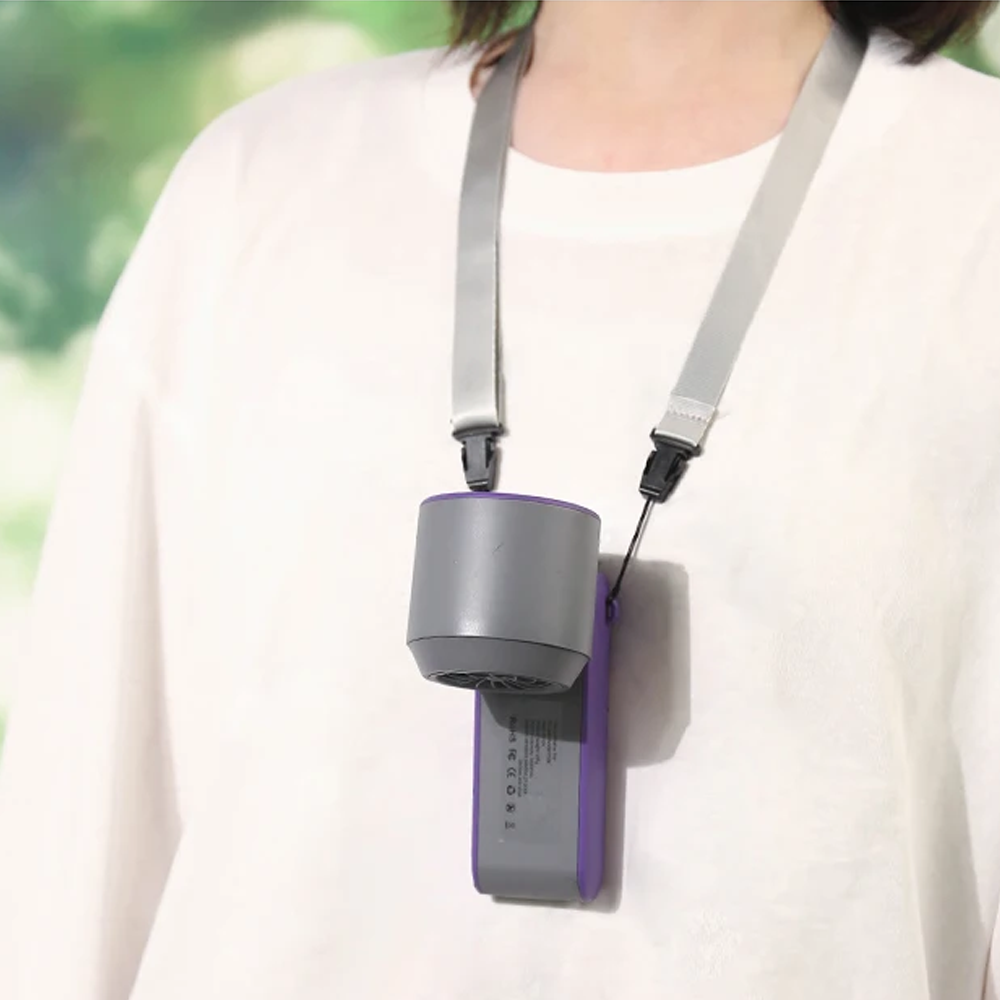
A neck fan is a wearable fan that rests around your neck and directs air toward your face, neck and upper chest. Most modern neck fans use covered or bladeless-style outlets, which makes them easier to wear while walking, commuting or sitting at a desk.
They are designed for personal comfort rather than heavy-duty airflow. The big advantage is convenience: you put it on, turn it on, and keep both hands free.
Are neck fans worth it?
Neck fans are worth it if your main heat discomfort is around your face, neck or head. They are especially useful for commuting, walking, shopping, waiting in queues, light exercise, office use, travel, cooking and hot flushes.
They are less ideal for heavy outdoor work or very sweaty full-body activity, where a waist fan may provide stronger and more practical airflow. Think of a neck fan as everyday comfort, not a worksite cooling machine.
Do neck fans cool your whole body?
Not directly. Neck fans mainly cool the face, jawline, neck and upper chest. Because those areas are sensitive to heat, this can still make your whole body feel more comfortable, but the airflow is not spread across your torso or clothing the way it can be with a waist fan.
If you want upper-body freshness for everyday use, a neck fan is excellent. If you want stronger airflow under your shirt or across your body while working outdoors, a waist fan is usually a better match.
Do neck fans get uncomfortable after a while?
They can, depending on the model, weight, neck shape, weather and how long you wear it. A good neck fan should feel balanced and not pinch. However, because it sits around your collar area, some people may notice warmth, pressure or mild irritation after long sessions.
If you plan to wear a fan for hours during active work, a waist fan may be more comfortable because it keeps weight off your neck. If you want casual personal airflow for shorter periods, a neck fan is usually easy to live with.
Are neck fans safe for hair?
Many modern neck fans use covered air outlets or bladeless-style designs, which can reduce the chance of hair getting caught. Still, long hair should be tied back if the fan has visible side intakes or exposed fan openings.
Always check the product design before use. If you have long hair, kids using the fan, or pets nearby, choose designs with covered blades, protected intakes and clear safety instructions.
Can you wear a neck fan while exercising?
You can use a neck fan for light exercise like walking, gentle cycling paths, warm-ups, stretching or outdoor errands. It can help keep airflow around your face and neck while you move.
For running, high-intensity workouts or rough movement, a neck fan may bounce, shift or feel distracting. For long walks, hiking or active outdoor tasks, a waist fan may feel more secure and practical.
Handheld fans
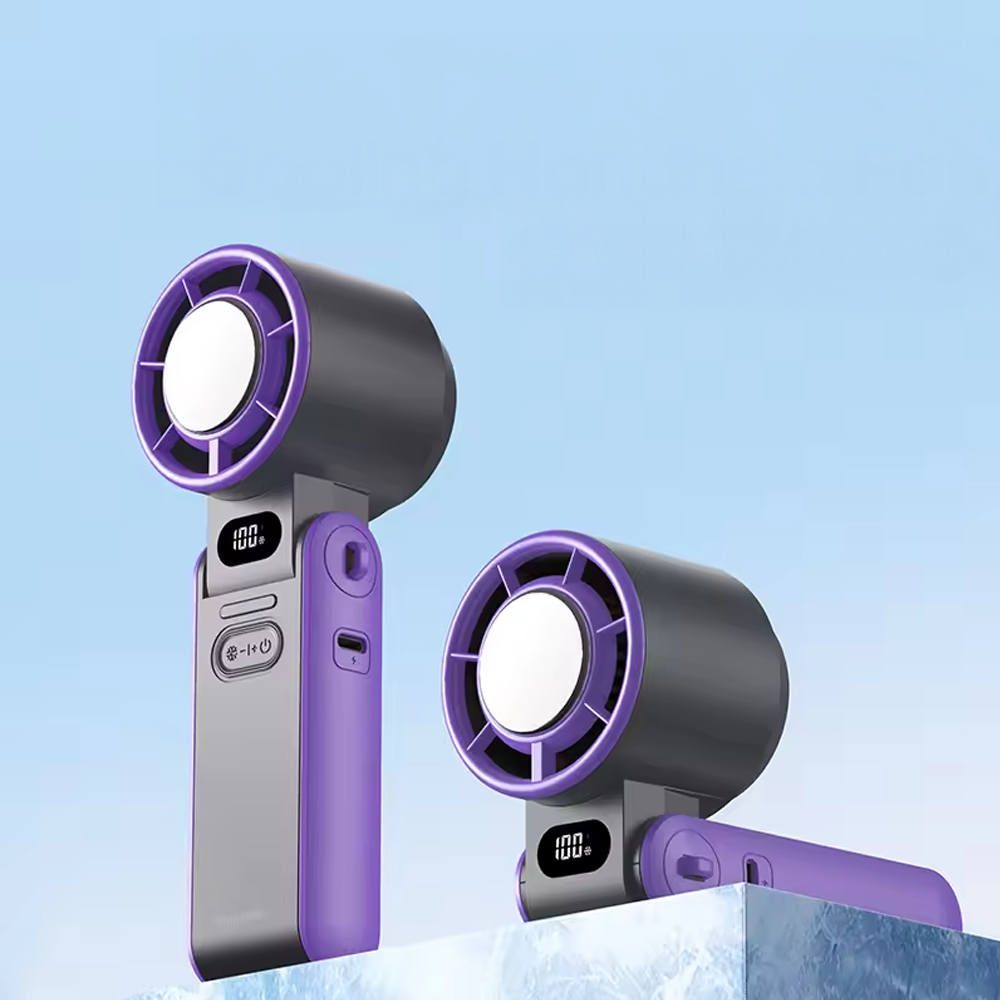
What is a handheld fan best for?
A handheld fan is best for quick, targeted cooling. You can point it directly at your face, neck, chest, hands or wherever you feel hottest. This makes it useful for travel, public transport, makeup touch-ups, school events, prams, theme parks, queues and hot indoor spaces.
The downside is obvious: you have to hold it. That makes handheld fans less useful when you are carrying bags, using tools, pushing a stroller, working with your hands or walking for long periods.
Are handheld fans better than neck fans?
Handheld fans are better when you want precise control. You can aim the airflow exactly where you need it, which is great for fast relief. They are also easy to share or pass between people.
Neck fans are better when you want hands-free comfort. They may not be as precisely targeted, but they are much easier to use while walking, commuting, shopping or carrying things. If you want backup cooling in a bag, choose handheld. If you want wearable everyday airflow, choose neck fan.
Are handheld fans good for kids?
Handheld fans can be useful for kids, but choose carefully. Look for covered blades, soft or protected fan guards, low-noise operation, simple controls and a size that is easy for a child to hold.
Avoid giving young children fans with exposed blades, detachable small parts or anything that could be poked into hair, clothing or fingers. For babies and toddlers, never clip or position a fan where they can pull it down, chew parts or block airflow around their face.
Do handheld fans last long enough for a full day out?
Some do, but many small handheld fans are better for short bursts. Battery life depends on battery capacity, motor efficiency, speed setting and how often you use it.
If you need cooling all day at a theme park, festival, market or sports event, check the battery capacity carefully. A compact handheld fan may be fine as a backup, but a larger waist fan or high-capacity portable fan is often a better choice for long days.
Use cases
What is the best fan for tradies and outdoor workers?
For tradies and outdoor workers, a waist fan is usually the best starting point. It keeps your hands free, can move air under or across your shirt, and is better suited to long hot days than most small handheld fans.
Look for strong airflow, a durable clip, larger battery capacity, multiple speed settings and a design that can handle real-world use. A neck fan can still be useful for breaks or lighter tasks, but for physical work, waist fans are usually more practical.
What is the best fan for camping?
For camping, choose based on how you will use it. A waist fan is great for setting up camp, walking, cooking outside, hiking to the toilet block and staying cool during active tasks. A handheld or foldable fan can be good for sitting at a table, sleeping area airflow or cooling down inside a tent.
If you only want one camping fan, look for versatility: a fan that can clip, stand, hang or run for long periods. Battery capacity matters more than tiny size when you are away from power.
What is the best fan for travel?
For travel, handheld fans and neck fans are usually the easiest to pack. A handheld fan is best if you want a compact backup for queues, airports, sightseeing and public transport. A neck fan is better if you want hands-free cooling while walking around a city or carrying luggage.
A waist fan is still worth considering for tropical travel, theme parks, long outdoor tours, hiking trips or humid destinations where you expect to be hot for hours rather than minutes.
What is the best fan for hot flushes or menopause?
For hot flushes, many people prefer a neck fan or handheld fan because they deliver fast airflow around the face and neck, where heat can feel most intense. A neck fan is useful if you want discreet hands-free airflow during errands, work or public transport.
A handheld fan is useful for fast, direct cooling when a hot flush comes on suddenly. A waist fan can also help if you want longer-lasting airflow during walks, outdoor events or hot workdays, but it is less targeted to the face than a neck or handheld fan.
What is the best fan for commuting?
For commuting, a neck fan is usually the easiest everyday choice. It is hands-free, wearable, and gives airflow around the face and neck while walking to the station, waiting at bus stops or standing on warm platforms.
A handheld fan is also good if you want something smaller in your bag, but you may get tired of holding it. A waist fan is better if your commute involves long walks, cycling, carrying gear or very hot outdoor sections.
What is the best fan for theme parks, zoos and outdoor events?
For long outdoor days, a waist fan is usually the most practical option because you can wear it while walking, waiting in queues, eating, carrying bags or taking photos. A neck fan is also a strong option if you prefer airflow around your face and do not want something clipped to your waist.
A handheld fan is great as a backup, especially for kids or quick relief, but it can become annoying if you need to hold it for hours. If the day is long, battery life should be your main buying factor.
What is the best fan for sleeping?
For sleeping, a wearable fan is not always the best choice. A small desk fan, foldable fan or camping fan positioned safely nearby is usually more comfortable than wearing a neck or waist fan in bed.
If you are camping or travelling and only have a portable fan, use it on a stable surface, keep airflow gentle, and avoid blocking the intake or outlet. Do not sleep with a fan clipped in a way that could press into your body, overheat under bedding or become tangled in clothing.
What is the best fan for elderly people?
The best fan for an elderly person is usually the one that is easiest and safest to use. A lightweight neck fan can be useful if they want hands-free airflow while sitting, walking or doing light chores. A handheld fan can be good if they prefer simple controls and direct airflow.
For anyone with limited mobility, grip strength issues or balance concerns, avoid heavy fans, awkward clips or complicated controls. Also remember that fans support comfort, but they do not replace hydration, shade, air conditioning or medical advice during extreme heat.
What is the best fan for walking the dog?
A waist fan or neck fan is usually best for dog walks because both keep your hands free for the lead, treats, phone and water bottle. A neck fan is lighter and simpler for short walks. A waist fan is better for longer walks, hotter days or stronger airflow while moving.
Do not rely on your personal fan to cool your dog. Dogs overheat differently from humans, so walk during cooler hours, carry water, avoid hot pavement and watch for signs of heat stress.
Battery, noise and performance
What battery size should I look for in a portable fan?
For occasional use, a small battery may be fine. For longer days, look for larger battery capacity and realistic run-time claims across different speed settings.
As a rough buying mindset: handheld fans can get away with smaller batteries because they are often used in short bursts. Neck fans need enough capacity to run comfortably during commutes or errands. Waist fans benefit most from bigger batteries because they are often used for work, travel, camping and full-day outdoor activities.
Why do portable fans have shorter battery life on high speed?
Higher fan speeds demand more power from the motor. That means the fan moves more air, but drains the battery faster. This is normal across waist fans, neck fans and handheld fans.
If you need all-day use, use high speed for peak heat and lower speeds for maintenance cooling. A good portable fan should give you multiple speed settings so you can balance cooling strength and battery life throughout the day.
Are waist fans louder than neck fans?
Waist fans can be louder because they often move more air and may use stronger motors. However, noise depends heavily on motor quality, fan blade design, housing, speed setting and how close the fan is to your ears.
Neck fans sit closer to your ears, so even if they produce less airflow, you may notice the sound more. Handheld fans can sound quiet at low speed but louder when held close to your face. For noise-sensitive use, check low-speed performance rather than just maximum power.
Are brushless motors better in portable fans?
Brushless motors are generally preferred in better portable fans because they can be smoother, more efficient and longer-lasting than basic brushed motors. They can also help reduce vibration and improve low-speed comfort.
That does not mean every brushless fan is automatically good, but it is a useful quality signal. For a fan you plan to use often, motor quality matters because it affects sound, durability, airflow consistency and battery efficiency.
Do portable fans work in humid weather?
Portable fans can still help in humid weather, but they may feel less effective than in dry heat because sweat does not evaporate as easily. Moving air can still improve comfort, especially when you are sweaty, but humidity makes cooling harder.
In very hot and humid conditions, use a fan alongside shade, water, rest breaks, breathable clothing and common sense. If you feel dizzy, confused, faint, nauseous or unusually weak, stop, cool down and seek help if needed.
Do portable fans work in extreme heat?
Fans are comfort tools, not magic shields against extreme heat. They work best when moving air can help sweat evaporate and when the surrounding air is not dangerously hot.
During extreme heat, especially outdoors, do not rely on a fan alone. Hydrate, take breaks, seek shade, use air conditioning where possible, wear sun protection and follow local heat warnings. A portable fan can help you feel more comfortable, but it should be part of a bigger heat-safety plan.
Does more airflow always mean better cooling?
More airflow often helps, but airflow direction matters just as much. A powerful fan pointed at the wrong area may feel less useful than a smaller fan aimed exactly where you need relief.
For example, a neck fan may feel better for facial heat, while a waist fan may feel better for sweaty torso heat. The best fan is not just the one with the highest speed. It is the one that sends airflow to the right part of your body for the situation you are in.
Safety and buying advice
Are portable fans safe to use?
Portable fans are generally safe when used properly, but they are still battery-powered electrical devices with moving air parts. Use the supplied charging cable or a suitable charger, keep the fan dry unless the product specifically says it is water-resistant, and do not block the air intake or outlet.
For kids, pets or long hair, choose protected fan designs and supervise use. For work or outdoor use, avoid placing a fan where it could catch loose clothing, straps, dust, debris or tools.
Can I take a portable fan on a plane?
Most rechargeable portable fans contain lithium batteries, so airline and airport rules may apply. In many cases, small rechargeable devices are carried in hand luggage, but limits depend on the battery size, airline and destination.
Before flying, check your airline’s lithium battery rules. Keep the fan switched off during security and transport, protect the power button from accidental activation, and do not pack damaged batteries.
Can I use a portable fan in the rain?
Do not use a portable fan in rain unless the product is specifically rated for water resistance and the instructions say it is safe. Many rechargeable fans are not waterproof, and water can damage the motor, battery or charging port.
If your fan gets wet, turn it off, dry the outside, avoid charging it while damp and follow the product instructions. For outdoor work or camping, store it in a dry bag when not in use.
What features matter most when buying a portable fan?
The most important features are airflow strength, battery life, motor quality, weight, comfort, charging type, speed settings and how the fan fits your actual lifestyle.
Do not buy purely based on the highest speed claim. Think about where you will use it. A tradie needs durability and battery life. A commuter needs comfort and low noise. A traveller needs compact size. A camper needs versatility. A hot sleeper needs stable placement and gentle airflow.
What mistakes should I avoid when choosing a portable fan?
The biggest mistake is buying the smallest or cheapest fan and expecting it to handle all-day heat. Tiny fans can be great for quick relief, but they often have smaller batteries, weaker motors and less useful airflow.
Another mistake is choosing the wrong fan type for your activity. If you need both hands free, do not rely on a handheld fan. If your face gets hot, do not buy only a waist fan. If you work outdoors all day, do not choose a tiny novelty fan and expect serious cooling.
Should I buy one fan or multiple fan types?
If heat is only an occasional problem, one fan is enough. Choose the fan type that matches your most common use case. For many people, that means a neck fan for daily life, a handheld fan for quick travel relief, or a waist fan for active outdoor use.
If you deal with heat often, multiple fan types can make sense. A waist fan can cover work, walking and outdoor days, while a smaller handheld or neck fan can cover commuting, quick errands, desk use and travel backup.
How do I clean a portable fan?
Turn the fan off before cleaning. Wipe the outside with a soft dry or slightly damp cloth, and use a small soft brush to clear dust from vents or grilles. Do not soak the fan, spray liquid directly into the motor or charging port, or use harsh cleaners.
If you use the fan around worksites, sand, sunscreen, sweat or dust, clean it more often. Keeping intakes and outlets clear helps maintain airflow and may reduce strain on the motor.
How do I make my portable fan last longer?
Keep it clean, avoid dropping it, do not block the airflow, store it dry, and avoid leaving it in extremely hot cars for long periods. Charge it with a suitable charger and avoid using damaged cables.
For battery health, do not leave the fan flat for months. If you store it over winter, give it a top-up charge every now and then. A little care can make a big difference, especially if you rely on your fan for work or travel.
Are cheap portable fans worth it?
Cheap portable fans can be worth it for occasional short use, especially if you just want a backup in a bag. But if you need strong airflow, long battery life, quieter operation or daily reliability, cheaper fans often show their limits quickly.
The better question is not “cheap or expensive?” It is “what happens if this fan does not perform when I actually need it?” For a hot commute, long work shift, festival, camping trip or outdoor job, paying for better airflow and battery life can be worth it.
Which fan should I choose if I only want one?
If you only want one fan, choose based on your hottest regular situation.
- Choose a waist fan if your hottest situation is outdoor work, walking, camping, events, travel days or active movement.
- Choose a neck fan if your hottest situation is commuting, errands, desk work, hot flushes, queues or everyday personal comfort.
- Choose a handheld fan if your hottest situation is short bursts of heat and you want the smallest, simplest backup.
Still unsure? Most people who need serious cooling should start with a waist fan. Most people who want everyday casual comfort should start with a neck fan.
Ready to pick your cooling style?
Whether you need hands-free airflow for hot workdays, wearable comfort for everyday heat or a compact fan for quick relief, CapyCool has portable cooling options built for real Aussie conditions.









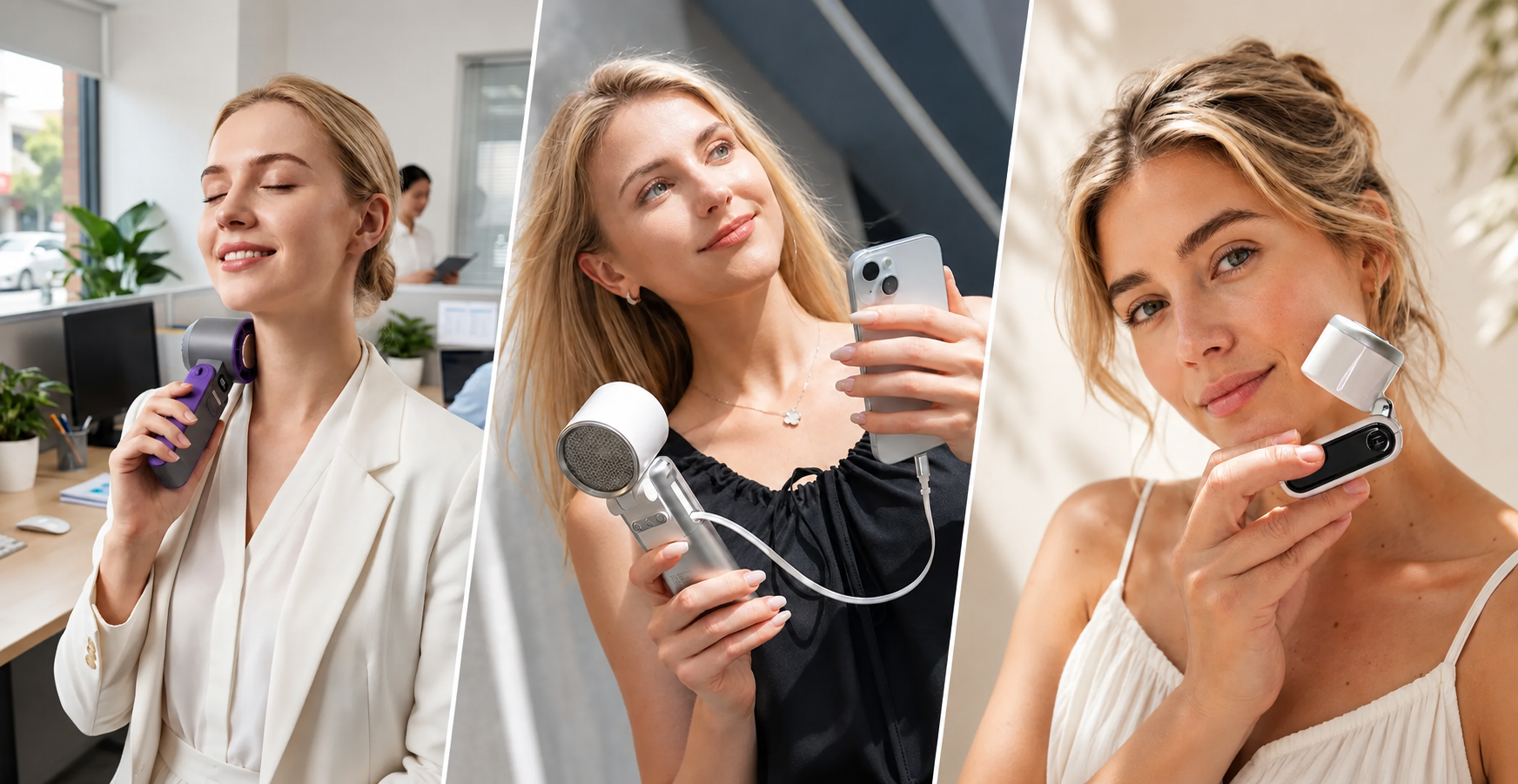
Share:
Why Wearable Cooling Is the Future - New 2025 Study
Coolest 2025 Halloween Gifts in Australia