



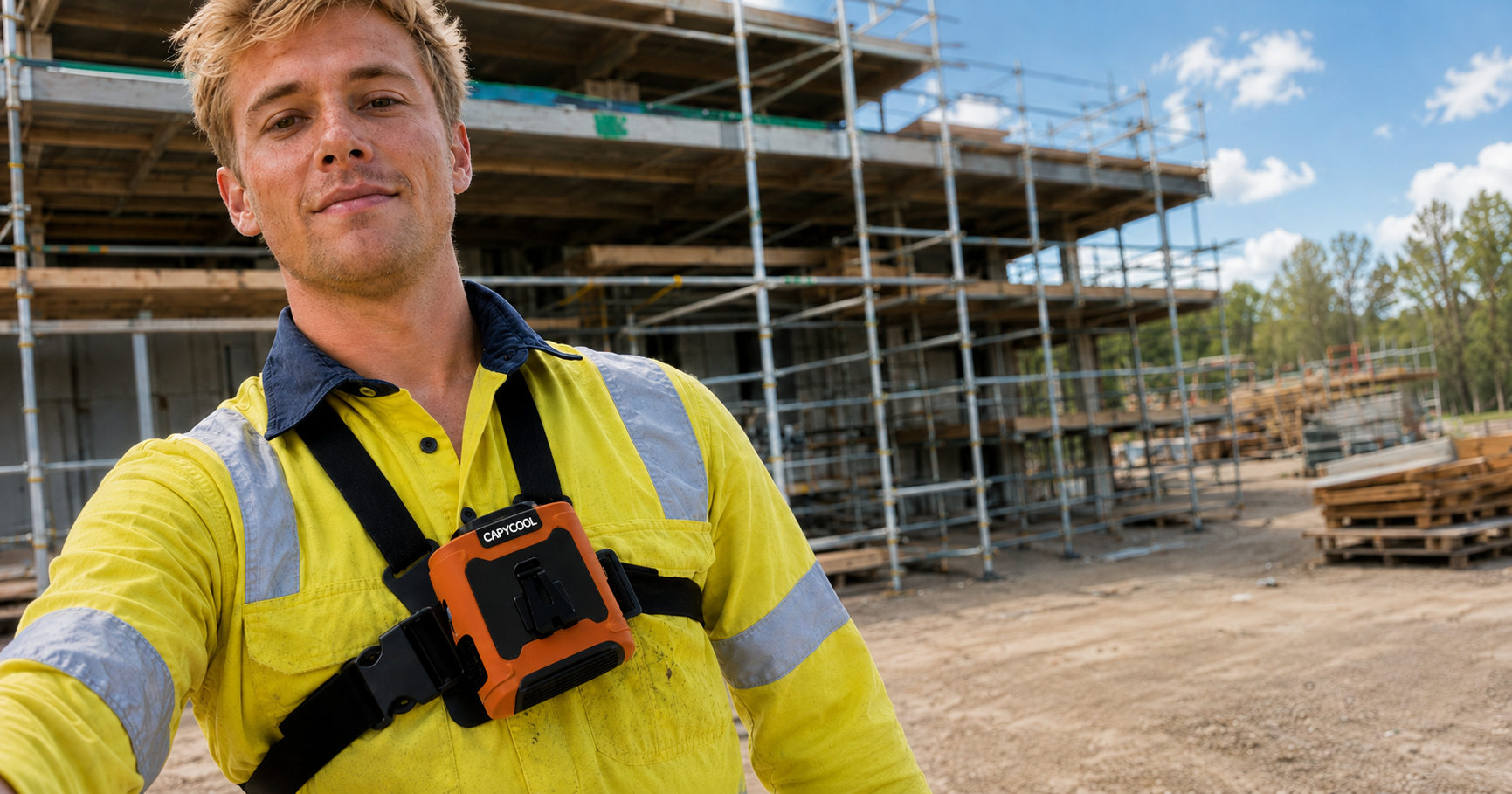
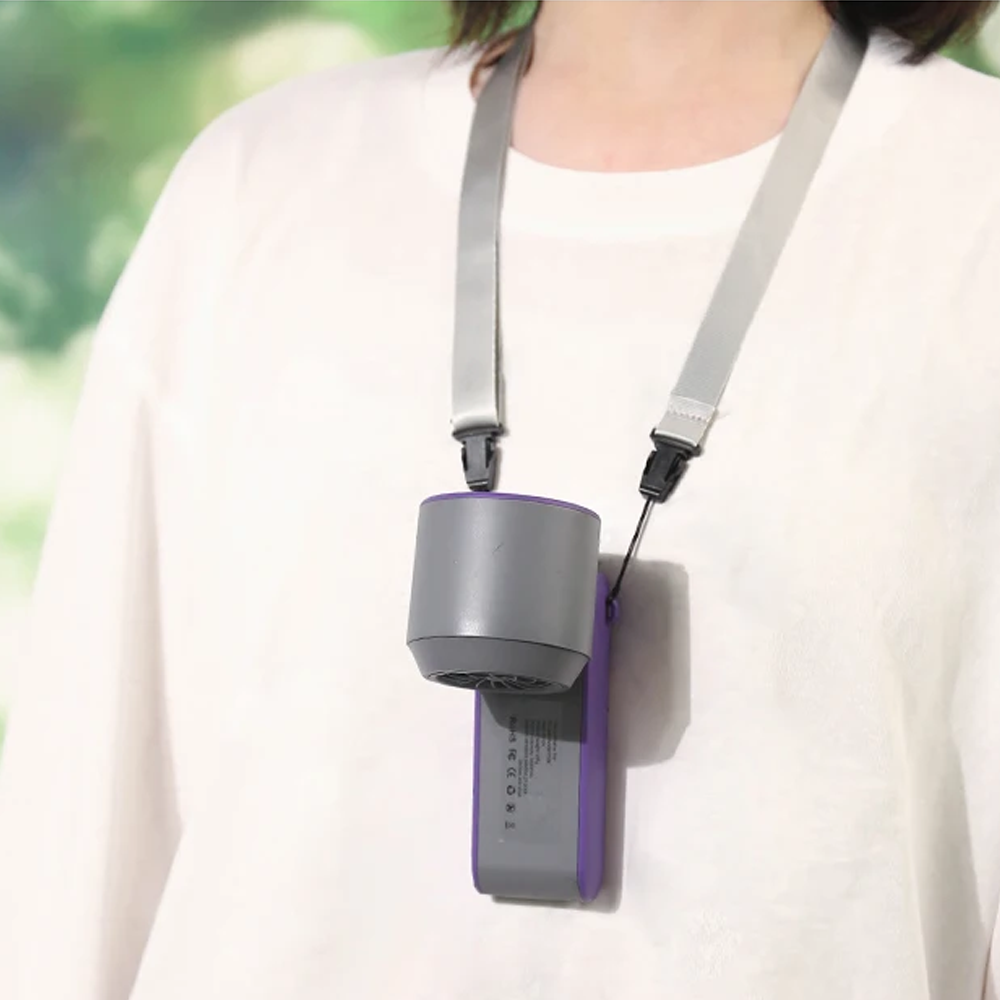
A waist fan on a lanyard is brilliant when you are standing around or sitting at a desk. The trouble starts the moment you actually move. Bend down to pick something up and the fan swings forward and points at the ground. Climb a ladder and it bounces against your stomach. Walk all day and the weight of it slowly settles into the back of your neck. The airflow keeps cutting out exactly when you are working hardest and need it most.
That is the gap the CapyCool waist fan chest strap fills. It holds your fan flat and high on your chest, aimed up toward your face, and keeps it there while you bend, climb, walk and reach. This is a practical look at why a fixed chest position works so much better for active days, the science behind why airflow to your face feels so good, eighteen real situations where it earns its place, an honest comparison with a neck fan, and a full FAQ on head cooling and chest straps.
What the waist fan chest strap actually is
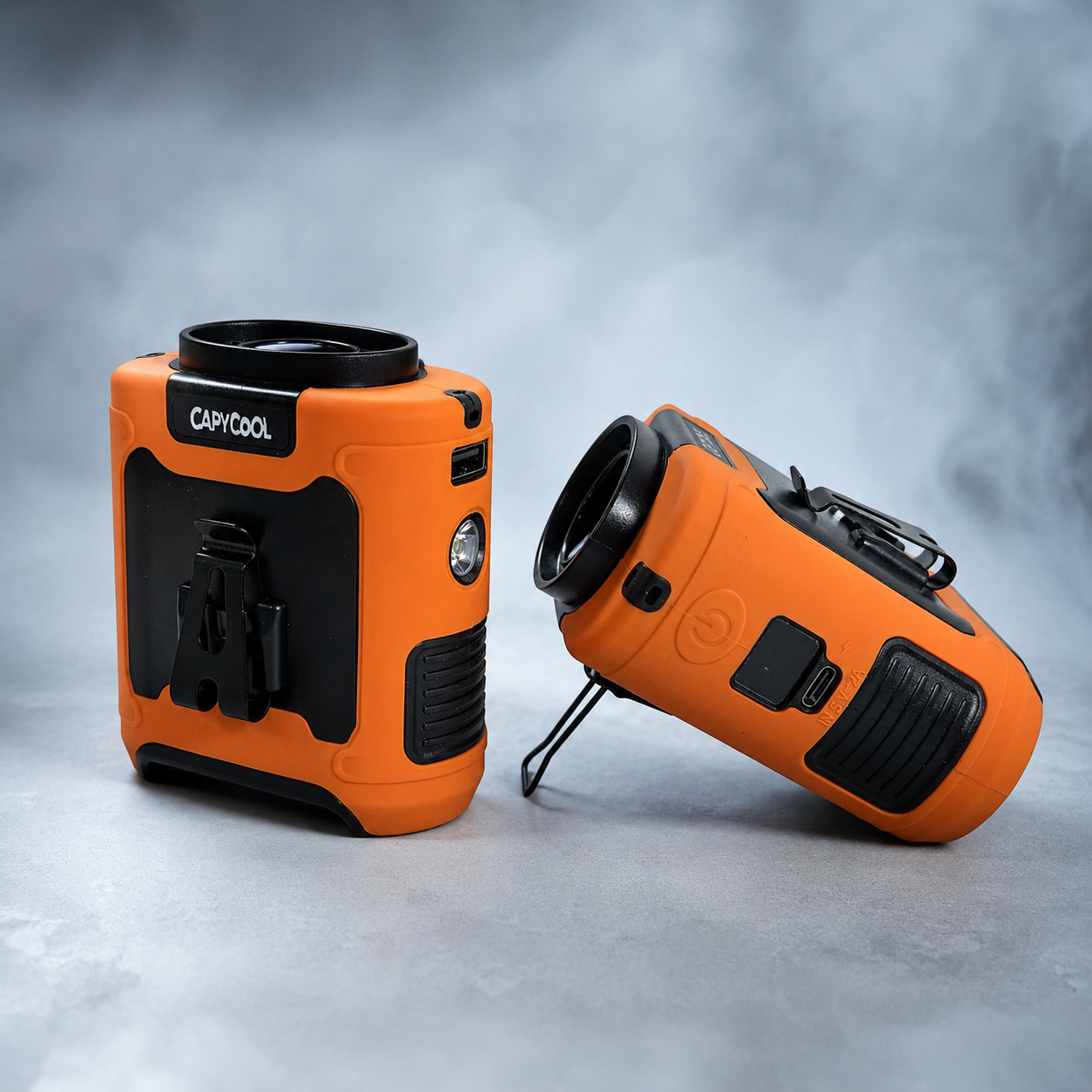
The CapyCool SecureFit chest strap is a simple harness that turns your 3-in-1 Single Waist Fan into a stable, chest-mounted, hands-free fan. A firm central clip holds the fan in place, while adjustable elastic shoulder straps spread the load and stop it shifting around. The fit is unisex and stretchy enough to sit comfortably over or under a layer of clothing.
It came directly from customer requests. Plenty of people loved the included lanyard for everyday use but wanted something steadier for hiking, long shifts and any day spent on the move. At $24.99 it is an inexpensive add-on for anyone who already owns a Single Waist Fan.
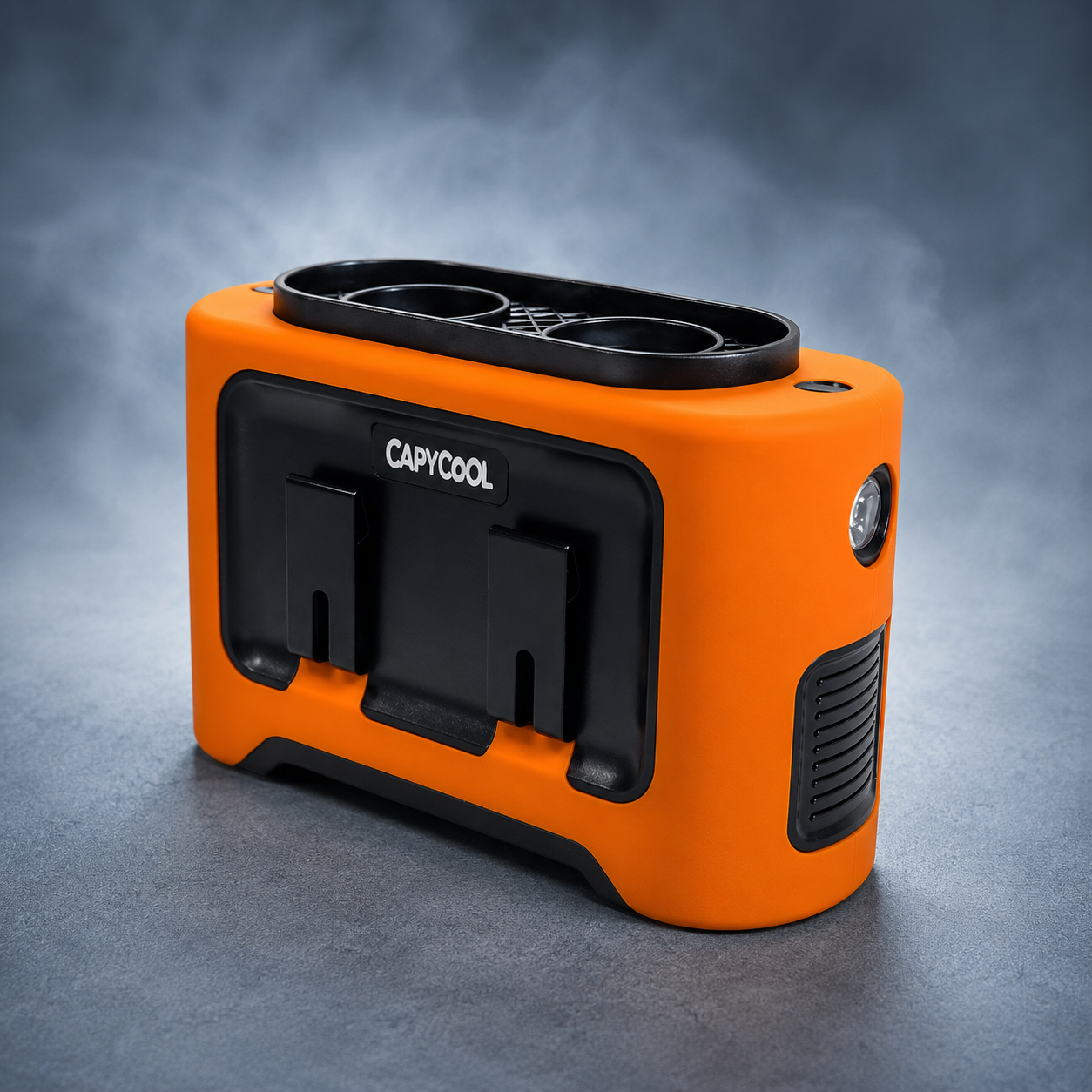
One compatibility note up front: the current strap is built for CapyCool Single Waist Fans only. It does not fit the heavier DualForce at this stage, though a dedicated DualForce version is on the way.

The problem with a swinging lanyard
A lanyard hangs your fan from a single point behind your neck. That is fine standing still, but it has two weaknesses once you get moving.
First, it swings. Lean forward to lift a box, weed a garden bed or set up a tent peg and the fan pivots away from your body and aims at the floor. The breeze that was crossing your chest and face is suddenly pointing at your boots. You end up straightening up just to feel it again, or grabbing the fan with one hand, which defeats the point of hands-free cooling.
Second, all the weight rides on the back of your neck. Over a long, hot day that single pressure point starts to ache, and it pulls and bounces with every step on a track or a worksite.
A chest strap fixes both. It anchors the fan from your shoulders and across your upper chest, so the load is shared across a wider area instead of digging into one spot. The fan stays flat against your torso and keeps pointing up toward your chin and face no matter what your body is doing. The more you move, the bigger the difference. Less swing, less flop, less neck strain, and a steady stream of air that stays where you put it.
Why airflow to your face and head feels so good
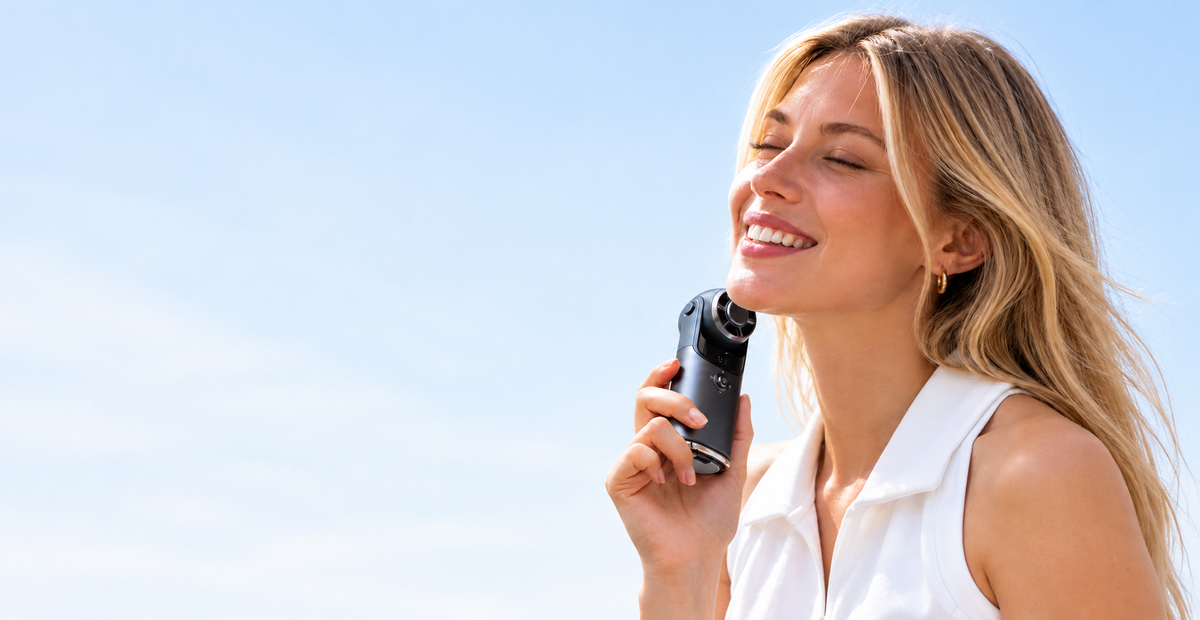
When the fan sits on your chest and aims upward, that stream of air rises across your chest and throat and up over your chin, jaw and face. There is real science behind why that placement feels so refreshing, and it is worth being clear about what airflow does and does not do.
Your face and forehead are packed with temperature-sensitive nerve endings and sweat glands. Moving air across that skin speeds up the evaporation of sweat and carries warm air away from the surface, which is genuine convective and evaporative cooling of the skin you can feel almost instantly. The face is also one of the body's most thermally responsive zones, so air directed at it produces a strong and immediate sense of relief.
Research backs this up. A 2022 study in the Journal of Physiological Anthropology (Tamura et al.) found that airflow directed toward the face reduced discomfort and stress indicators compared with still air, and that the direction of airflow strongly affects how comfortable people feel. Work published in Building and Environment (2020) found that even brief, localised airflow around the upper body improved comfort and lowered skin temperature compared with stagnant conditions. On the torso side, a review in the International Journal of Environmental Research and Public Health (He et al., 2017) found that airflow around the chest and waist helps lower heat strain and maintain performance during physical work in warm conditions, which is exactly the zone a chest-mounted fan covers.
It is just as important to be honest about the limits. Airflow to your face is about comfort and reduced perceived effort plus real cooling of the skin it touches. It does not cool your brain or lower your core body temperature, and you should treat any claim like that with caution. A fan is also not an air conditioner. It moves air and speeds evaporation, so it helps most when there is sweat to evaporate and the air is not already too hot to work with.
The honest limit on hot days. Guidance from the University of Sydney Heat and Health Research Centre indicates that fans help across most hot conditions but can stop being useful in genuinely extreme heat, roughly above 39 degrees for younger adults, around 38 degrees for older adults, and near 37 degrees for older adults on certain medications. Research in The Lancet Planetary Health (Morris et al., 2021) similarly found fan efficiency drops once temperatures climb past about 35 degrees with high humidity. In conditions like that, a fan is a comfort tool, not a safety measure. Get to shade, water and proper cooling.
18 real situations where a chest strap earns its place
This is where a steady, upward-facing stream of air really shows its value. If you are searching for the best way to wear a fan for any of the situations below, the common thread is the same: you are moving, bending or working with both hands, and you want the airflow to stay put and stay aimed at you.
1. Boom lifts, scissor lifts and elevated work platforms
When you are working up high on an EWP, dropping gear is not an option, and you do not want a fan swinging loose while you concentrate on the task. A chest strap keeps the fan secured against your body with airflow rising to your face, so you stay cooler and keep both hands free. To be clear, the strap is a comfort accessory and not fall-protection or safety equipment, so always follow your site rules and PPE requirements at height.
2. Roofing and working at height
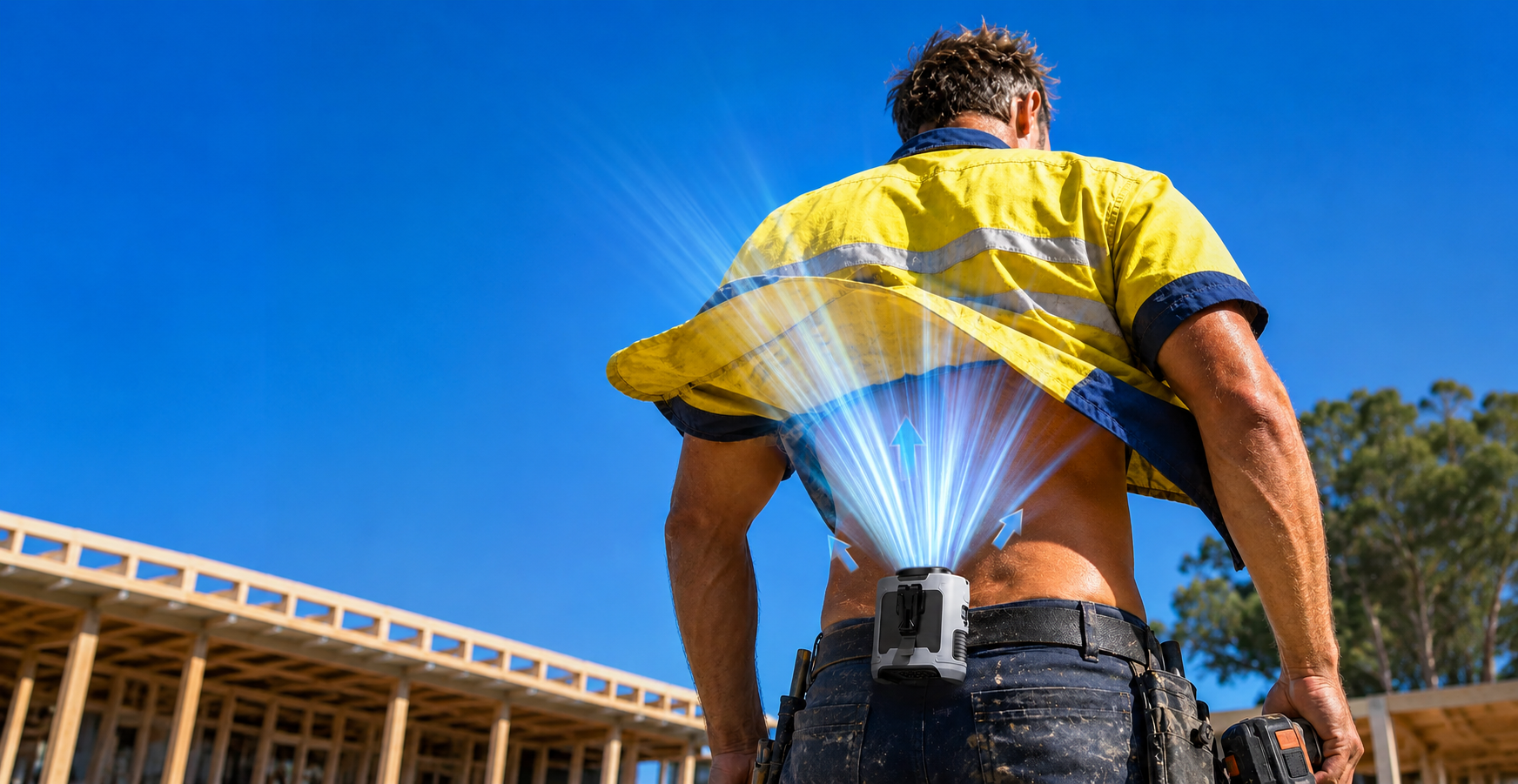
Roofers cop direct sun and radiant heat off the tiles or metal all day, often bent over or on their knees. A lanyard fan would swing forward constantly. Held flat on the chest, the fan keeps a steady stream moving across your face and torso while you stay focused on your footing.
3. Scaffolding, rigging and steel work
Climbing, reaching and twisting are constant on these jobs, and anything dangling becomes a snag hazard and a distraction. A chest-mounted fan moves with you and stays clear of your hands and the structure.
4. Concreting, screeding and bent-over work
Anyone working bent at the waist for hours, concreters, pavers, tilers, knows a hanging fan just points at the slab. A chest strap keeps the fan angled up at your face even while your back is parallel to the ground, which is the exact moment you are sweating hardest.
5. Mechanics and under-bonnet work
Leaning into an engine bay in a hot workshop, a lanyard fan tips forward and clatters against the car. Strapped to the chest, the fan stays put and keeps air on your face while you work in an awkward position.
6. Warehouse and stock picking
Order pickers spend the day bending to low shelves, reaching to high ones and walking kilometres across a hot tin shed with no real airflow. A chest strap gives you consistent, hands-free cooling that does not swing every time you crouch to a bottom rack. This is one of the strongest cases for a wearable fan on a busy worksite.
7. Landscaping, gardening and mowing
Digging, planting, pruning and pushing a mower all involve constant bending with both hands occupied. A garden fan that swings around is more annoying than helpful. Fixed on the chest, the airflow stays on your face through every bend and reach.
8. Cleaning and facilities work
Cleaners and facilities crews move room to room, bending, scrubbing and reaching all shift. A chest strap keeps a steady breeze going without a fan flopping into the bucket or the bench you are wiping down.
9. Delivery drivers and couriers
In and out of a hot van, lifting parcels, walking to the door and back, a courier is never still. A chest-mounted fan keeps cooling you through every drop without you having to think about it or hold anything.
10. Removalists and furniture handling
Carrying heavy, awkward loads up and down stairs is brutal in summer, and you need both hands and a clear front. A fan on the chest stays out of the way of the load while keeping air on your face.
11. Hiking and bushwalking
This is one of the situations the strap was built for. On an uphill section or a long, hot track, a lanyard fan swings with every step and pivots away each time you lean forward to climb. Strapped to your chest, the fan holds steady and keeps a cooling stream on your face while your hands stay free for poles or scrambling over rocks. The load sits across your shoulders rather than dragging on your neck, which matters over a full day out.
12. Camping and campsite setup
Pitching a tent, hauling gear and crouching over a camp setup all involve bending and both hands. With the Single Waist Fan running up to 40 hours per charge, a chest strap keeps you cool through the whole job and well into the evening without a fan dangling into your work.
13. Fishing
Casting, netting, baiting up and leaning over the side of a boat or pier, a hanging fan is forever in the way. Held on the chest, it keeps air on your face during the long, still, sun-soaked stretches without tangling with your line or gear.
14. Golf and walking the course
Eighteen holes in the Australian sun means hours of walking with a bag, plus constant bending to tee up and read greens. A chest strap keeps the cooling steady through the round and out of the way of your swing setup.
15. Dog walking and being out on your feet
One hand on the lead, bending to clean up, stopping and starting the whole walk. A chest-mounted fan keeps a breeze on your face the entire time without you juggling a handheld.
16. Theme parks and long days with the kids
A full day at a theme park is hours on your feet, queueing, walking and carrying bags, often in peak summer heat. A chest strap keeps hands-free airflow on your face while you wrangle kids and gear, and the big battery easily outlasts the day.
17. Festivals and outdoor events
Standing, dancing, walking between stages and carrying your stuff, a festival is no place for a fan that swings around. On the chest it stays put and keeps you cool through the crowd without occupying a hand.
18. Pushing a pram, travel and sightseeing
Parents pushing a pram on a hot walk have both hands on the handle, and travellers on a long sightseeing day are walking for hours through markets, zoos and humid streets. In both cases a chest strap delivers steady, hands-free airflow to your face without a thing to hold or a fan bouncing as you go.
Chest strap fan or neck fan: which is right for you
CapyCool makes both, and they suit different people, so here is the straight version. Neither is better across the board. It depends on what you are doing.
A neck fan is the lightest, most discreet option. It rests on your shoulders, directs air across your face and neck, and is easy to forget you are wearing, which makes it the better pick for the office, the commute, travel and everyday errands. The honest trade-off is power and battery. Most neck fans run a smaller battery, around 2,400mAh and roughly four hours of use, with gentler airflow by design.
The chest strap setup is the opposite end of the scale. Your Single Waist Fan carries a 10,000mAh battery that runs up to 40 hours per charge, with five speeds and a much stronger stream of air than a compact neck fan. Mounted on the chest and aimed up, it puts a serious, sustained breeze on your face and torso for a full shift or a full day outdoors. The trade-off is that it sits visibly on your chest and is a bit more of a setup than slipping a neck fan on.
The simple way to choose: if you want light, quiet and out of sight for daily comfort, go for a dedicated neck fan. If you want strong, steady, long-running cooling for work, hiking and long active days, the chest strap with a Single Waist Fan is the tougher tool for the job. Many people end up owning one of each. For a deeper breakdown, our guide on waist fans versus neck fans versus handheld fans walks through the differences with the research behind them.
How to set it up
It takes about a minute. Clip your Single Waist Fan into the central clip, then adjust the shoulder straps so the fan sits flat and fairly high on your chest, angled up toward your chin. Pick your speed and get on with the day. You can wear it over a shirt for full airflow or under a loose layer for a more discreet look, just keep the path in front of the grille clear so clothing does not block the stream.
A note on safety. The chest strap is a comfort and carrying accessory for your fan. It is not safety equipment, fall-protection or a replacement for any required workplace PPE. On any site, and especially when working at height, follow your safety rules and secure all gear as your workplace requires.
The bottom line
If you spend your days bending, climbing, walking or working with both hands full, a swinging lanyard fights you the whole way. A chest strap keeps your fan steady, spreads the weight off your neck and holds a cooling stream on your face from morning to knock-off. For the price of a couple of cold drinks, it makes a fan you already own far more useful on every active day.
Ready to keep your cooling steady?
Grab the Waist Fan Chest Strap if you already own a Single Waist Fan. New to CapyCool? Start with the 3-in-1 Single Waist Fan and add the strap for hands-free, all-day cooling. Kitting out a crew? See our worksite cooling options for bulk pricing and ABN invoicing.
Frequently asked questions
Does a waist fan worn on the chest cool your face and head?
Yes, for comfort. When a waist fan is mounted on the chest and angled upward, the airflow rises across your chest and up over your chin, jaw and face. That moving air speeds up the evaporation of sweat on your face and carries warm air away from your skin, which feels refreshing almost immediately. The face is one of the body's most temperature-sensitive areas, so air directed at it gives strong, fast relief. This is comfort and skin-level cooling, not a drop in your core or brain temperature.
Why does airflow to the face feel so cooling?
The face and forehead have a high density of temperature-sensitive nerve endings and sweat glands. Moving air over that skin accelerates evaporative and convective heat loss, and the brain registers that sensitive zone cooling as a powerful sense of relief. A 2022 study in the Journal of Physiological Anthropology (Tamura et al.) found that airflow directed toward the face reduced discomfort and stress indicators compared with still air, and that airflow direction strongly affects perceived comfort.
Is a chest strap fan better than a neck fan?
Neither is better overall. They suit different needs. A neck fan is lighter, quieter and more discreet, which makes it ideal for the office, commuting and everyday wear, though it typically runs a smaller battery of around 2,400mAh and gentler airflow. A chest strap holding a Single Waist Fan gives a much bigger 10,000mAh battery, up to 40 hours of run time and a stronger, steadier stream aimed at your face, which suits work, hiking and long active days. Choose a neck fan for light daily comfort and a chest strap setup for sustained power.
Will a chest strap stop my fan swinging when I bend over?
Yes. A lanyard hangs the fan from a single point at the neck, so it swings forward and points at the ground whenever you lean down. A chest strap anchors the fan from your shoulders and across your upper chest, holding it flat against your body so it stays aimed up at your face even when you are bent over. The more you move, the bigger the difference.
Is the chest strap safe for working at height or on a boom lift?
The chest strap is a comfort and carrying accessory for your fan. It is not safety equipment, fall-protection or a replacement for required workplace PPE. It can make wearing a fan more secure and convenient while working at height, but you must always follow your workplace safety rules and secure all gear as required on site.
Does a fan blowing on your face actually cool you down, or just move hot air?
A fan cools you by speeding up sweat evaporation and moving warm air away from your skin, so it works best when you have sweat to evaporate and the air is not already extremely hot. Guidance from the University of Sydney Heat and Health Research Centre indicates fans help across most hot conditions but can stop being useful in extreme heat, roughly above 39 degrees for younger adults and lower for older adults or those on certain medications. A fan is a comfort tool, not an air conditioner, and not a substitute for shade, water and proper cooling in dangerous heat.
Can a chest fan cool my brain or lower my core body temperature?
No. Airflow to the face and head gives a strong feeling of comfort and can reduce how hard a task feels, and it genuinely cools the skin it touches by speeding evaporation. It does not lower your core body temperature or cool your brain. Be cautious of any product that claims otherwise. The honest benefit is comfort and reduced perceived effort, which is still valuable on a hot day.
What fan does the CapyCool chest strap fit?
The current chest strap is designed for CapyCool Single Waist Fans only, such as the 3-in-1 Single Waist Fan. It is not compatible with the heavier DualForce waist fan at this stage. A dedicated DualForce chest strap version is in development.
How long does the battery last when wearing the fan on a chest strap?
The chest strap itself has no battery. It holds your 3-in-1 Single Waist Fan, which has a 10,000mAh battery that runs up to 40 hours per charge depending on the speed setting. On lower speeds that can mean days of intermittent use between charges, which is why it suits long shifts, multi-day camping and full days outdoors.
Is a chest strap fan good for hiking?
Yes. Hiking is one of the situations it handles best. On uphill climbs and long tracks a lanyard fan swings with every step and pivots away when you lean forward, while a chest strap holds the fan steady and keeps air on your face with your hands free for poles or scrambling. It also spreads the fan's weight across your shoulders instead of pulling on the back of your neck over a long day.








Share:
What El Niño Means for Australia in 2026: Hotter Days, Less Snow and a Summer to Watch
It's not an air con. It's a fan