



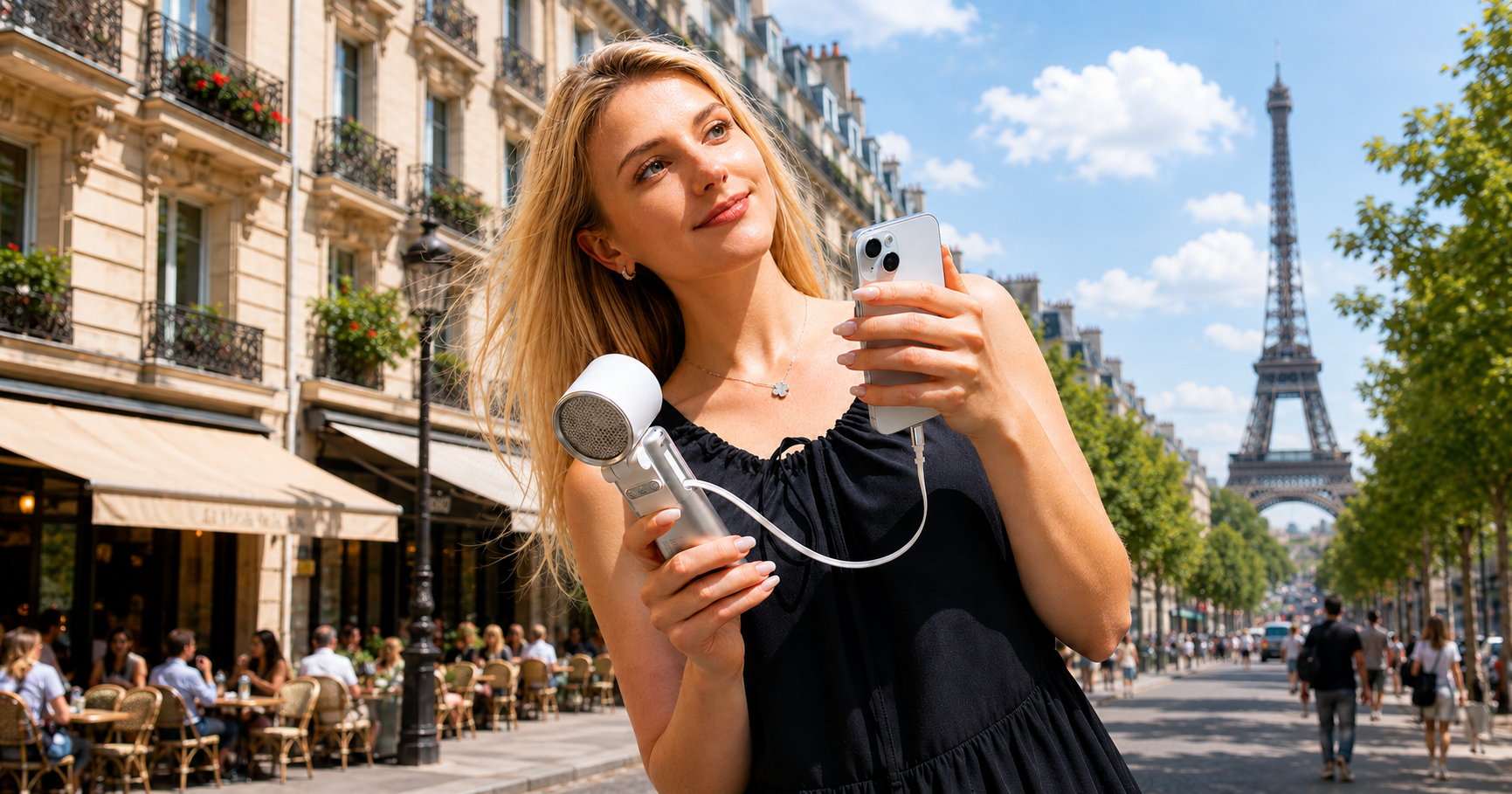
Travelling somewhere hot? The right personal cooling kit can make a sweaty travel day feel much more manageable, especially when you are walking, waiting in queues, sightseeing, commuting or trying to sleep somewhere that was definitely not built with Aussie summer people in mind.
Hot destinations are brilliant until the heat starts planning the trip for you. One minute you are excited for hawker centres, beaches, markets, monuments and sunset walks. The next, you are hiding inside the nearest air-conditioned shop pretending you only came in to browse.
With Western Europe recording its hottest June on record in 2026 and tropical favourites like Singapore, Bali and Thailand staying warm and humid year-round, a little cooling strategy goes a long way. This guide breaks down what to pack, what personal fans can realistically do, and which CapyCool gear earns its place in your bag.
First: what kind of hot are you dealing with?
Not all heat feels the same. A 32°C day in Singapore can feel completely different from a 40°C afternoon in Europe, and that changes what you should pack.
Humid tropical heat
This is the kind of heat you feel in places like Singapore, Bali, Thailand and other tropical holiday spots. The temperature may sit in the low 30s, but the humidity makes everything feel heavier. Sweat does not evaporate as quickly, clothes feel sticky, and even a short walk can turn into a full-body glow-up. Not the cute kind.
For humid heat, moving air helps a lot because it encourages sweat to evaporate and gives your skin a fresher, cooler feeling. This is where waist fans, neck fans, handheld fans and cooling towels really shine.
Dry extreme heat
This is the kind of heat you can hit in parts of Europe, inland Australia, the Middle East and the US during heatwaves. Shade helps more than it does in humidity, but when the air temperature climbs into the high 30s or 40s, a fan becomes more of a comfort tool than a complete cooling plan.
In extreme heat, especially indoors without air conditioning, you still need the basics: shade, cold drinks, breaks, loose clothing and cool indoor spaces. A fan can help you feel more comfortable, but it should never be your only heat-safety strategy.
What personal cooling can and cannot do
Worth saying upfront: a portable fan is not an air conditioner. It does not chill a room, and it does not magically turn a 40°C street into a breezy coastal walk. What it can do is move air across your skin, help sweat evaporate, and give you direct relief when the day starts feeling a bit too cooked.
That is why personal cooling is so useful for travel. You are often in the awkward heat zones: outdoor queues, train platforms, theme parks, markets, sightseeing walks, hotel rooms with weak air con, planes after boarding, or buses that feel like they were built during a personal disagreement with ventilation.
The honest CapyCool rule: use personal fans for comfort, airflow and everyday heat relief. In serious heatwaves, pair them with shade, hydration, rest and proper cool spaces. Cool gear helps, but common sense still gets a seat in the suitcase.
The cooling kit that actually earns its place
You do not need to pack your whole house. The best travel cooling kit is small, practical and easy to use while you are moving around.
For all-day walking
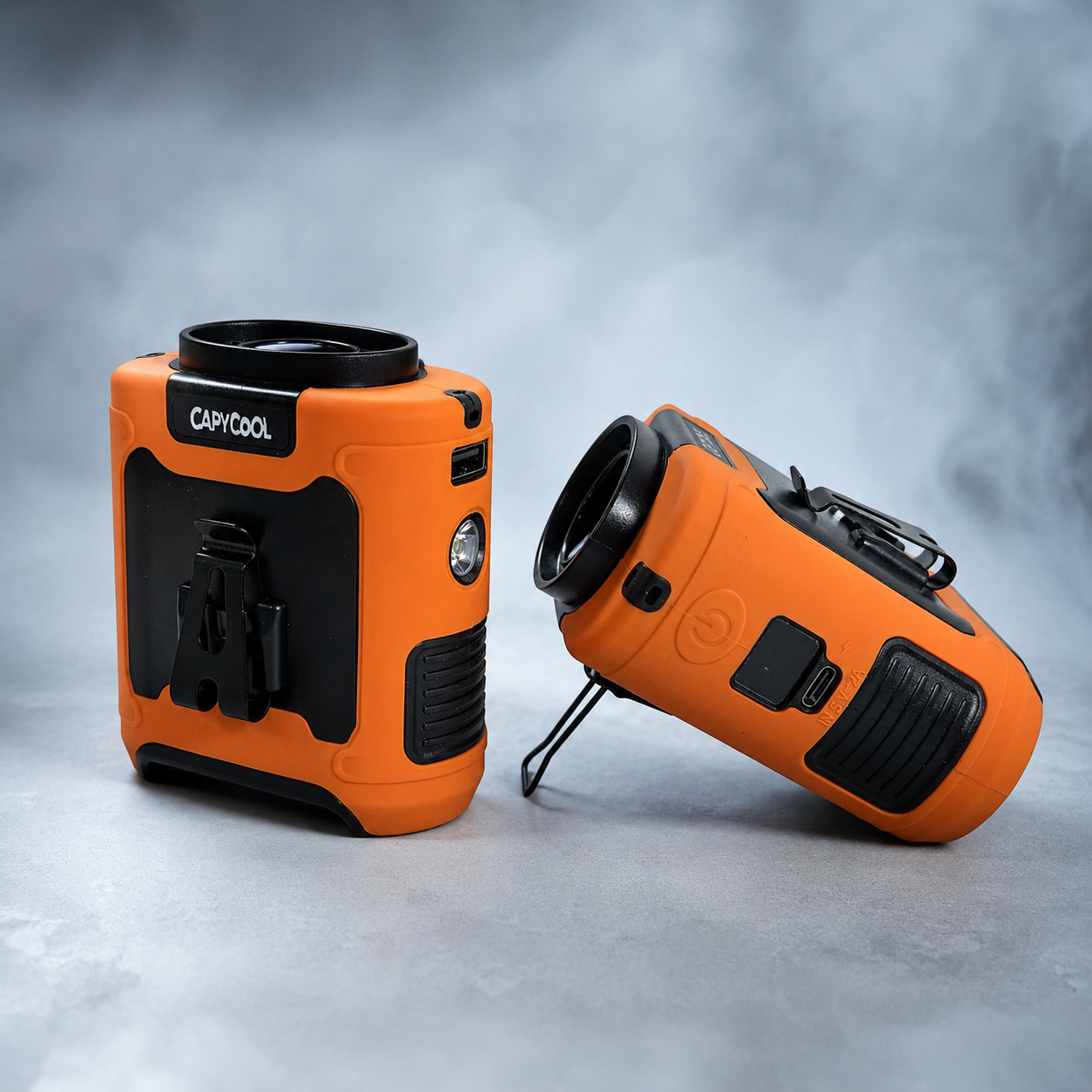
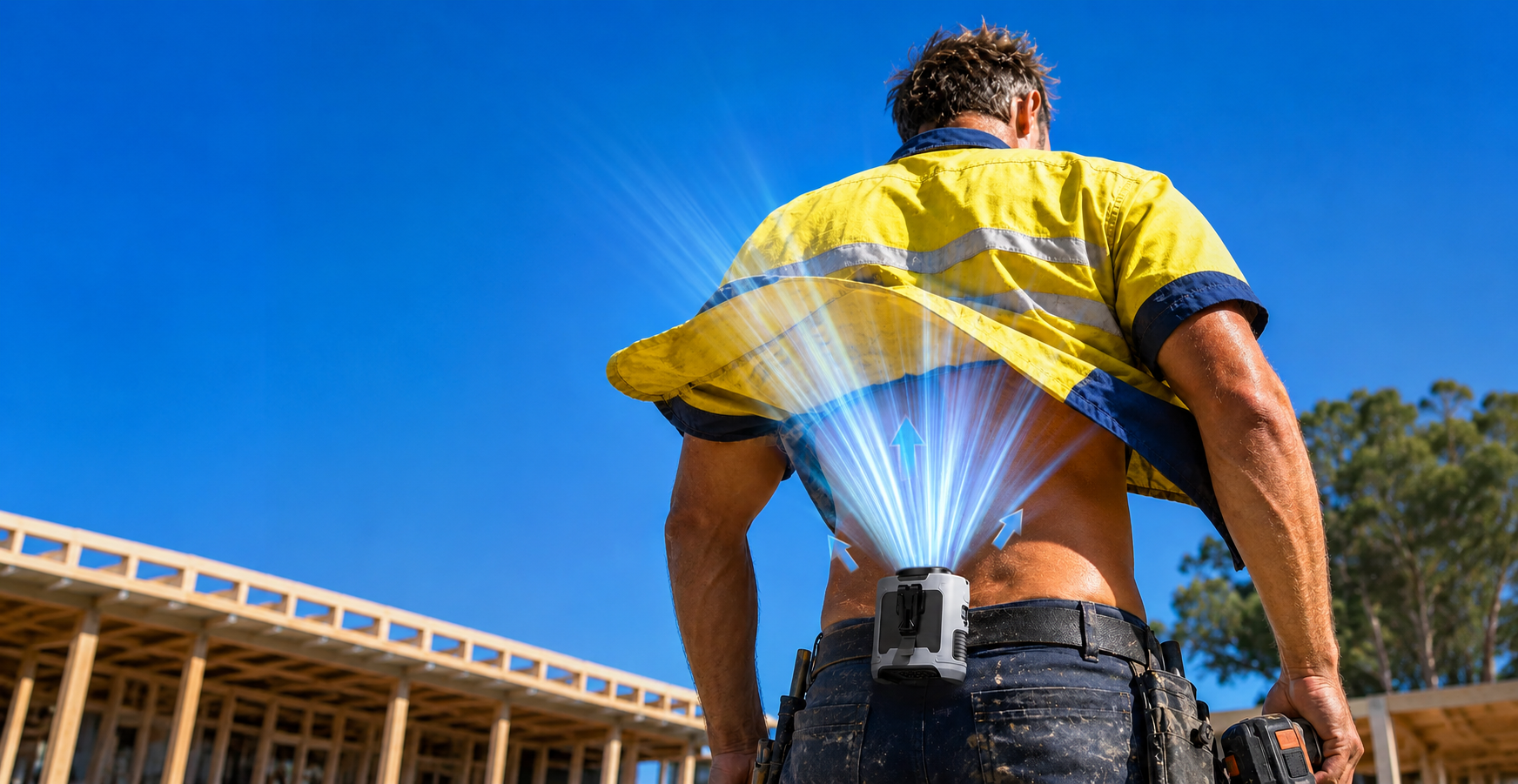
Choose a waist fan. It clips on, stays hands-free and pushes airflow up through your shirt while you walk.
For planes and queues
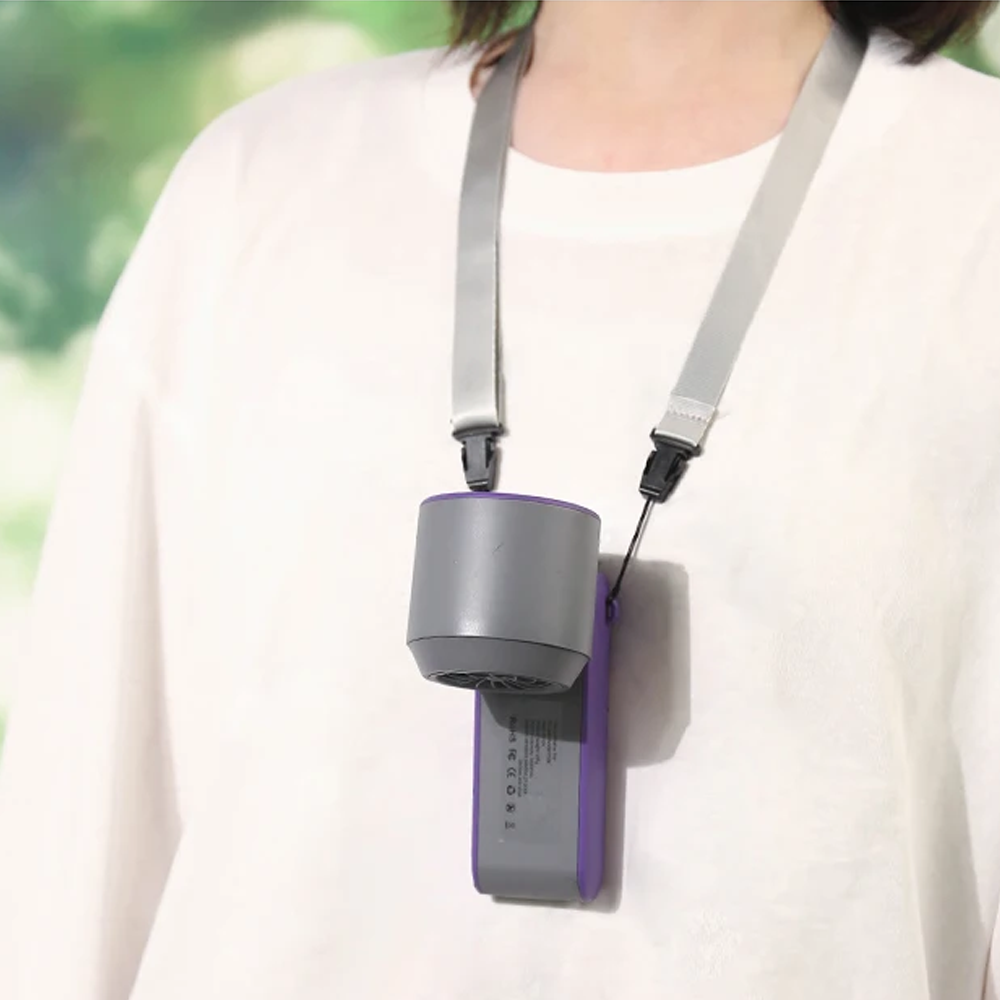
Choose a neck fan. It sits around your neck and gives gentle face-and-neck airflow without needing to hold anything.
For quick relief
Choose a portable fan. Easy to throw in your bag and pull out when the heat starts getting personal.
For premium cooling
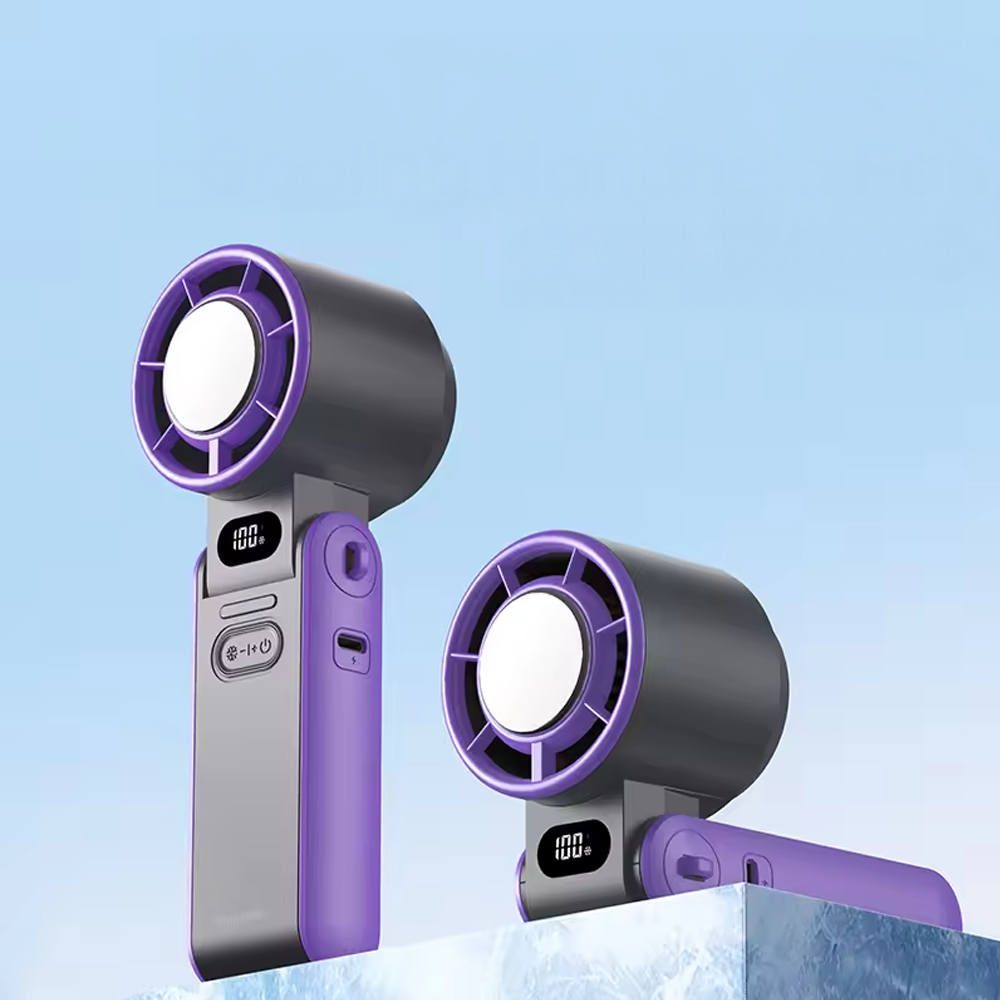
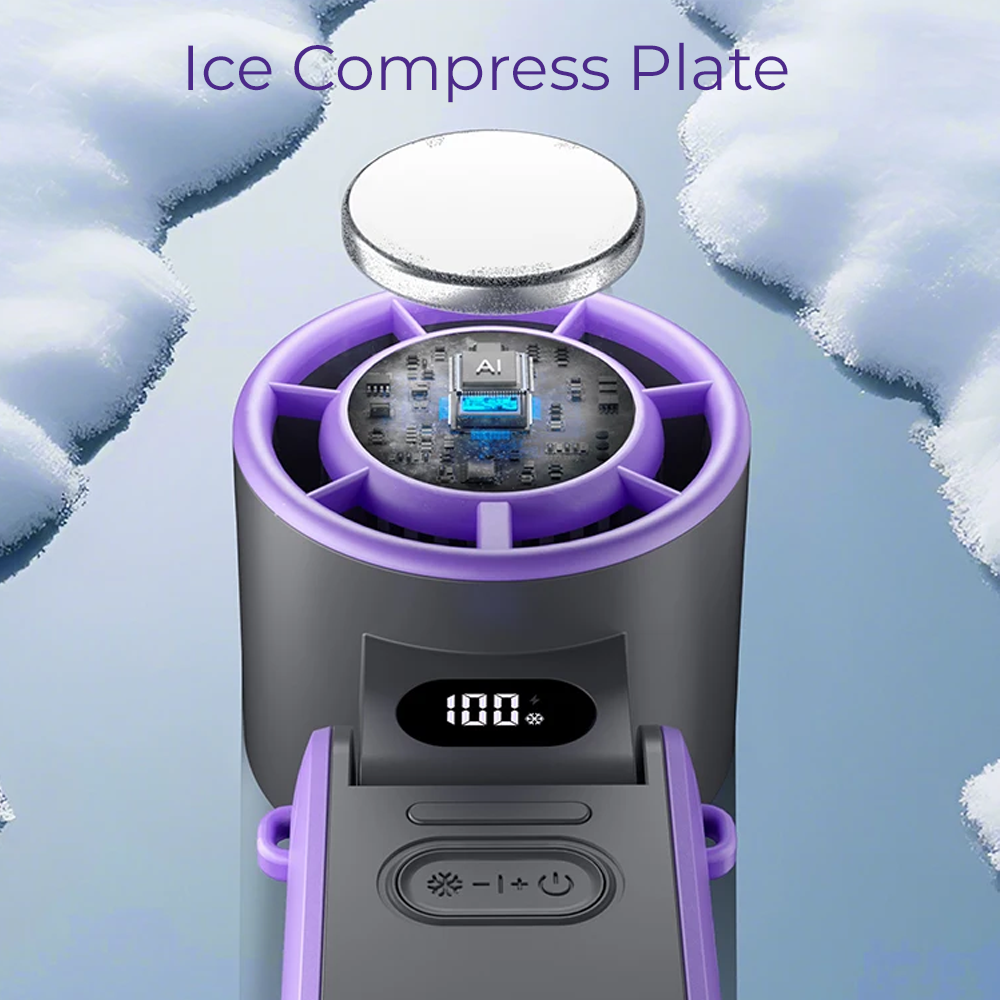
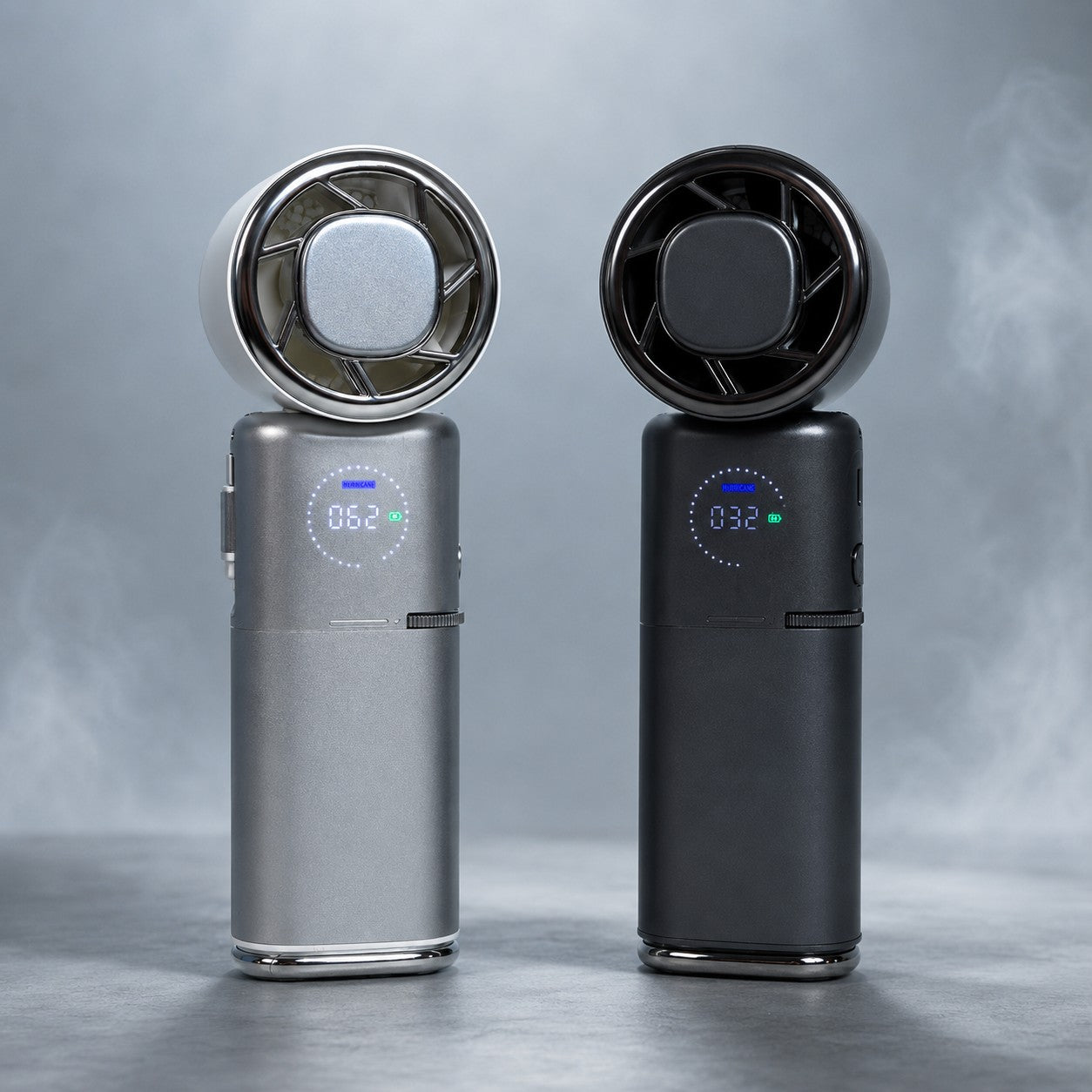
Choose the CapyUltra. Strong airflow, a cool-to-touch metal ice plate, 9000mAh battery and built-in charging cable.
A waist fan for long days on your feet
If your trip involves big walking days, a waist fan is usually the most useful pick. It clips to your waistband or belt and pushes air up your torso, so you get hands-free airflow while still using your phone, carrying a drink, taking photos or wrangling kids.
That makes it especially handy for places like Singapore, Bali, Thailand, theme parks, outdoor work trips and summer sightseeing days where you are out from breakfast until after dark. Our CapyCool waist fans are built around practical battery life and everyday movement, which is exactly what you want when the day is long and the air feels like soup.
A neck fan for travel days, dinners and waiting around
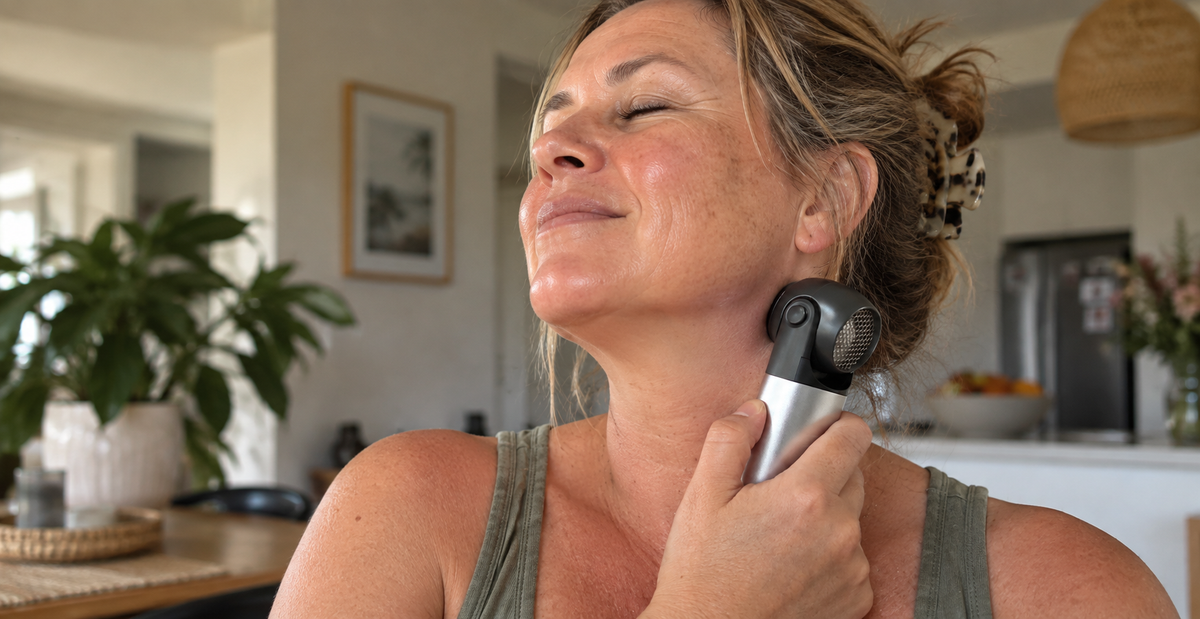
A neck fan is the easy, sit-still option. It works well on planes, at airports, in queues, on coaches, at outdoor dinners or anywhere you want cooling without holding a fan in your hand.
It is also a nice option for people who want something more discreet than a handheld fan. You wear it like headphones, let it blow toward your face and neck, and enjoy a little personal breeze while everyone else slowly melts into the pavement.
A portable fan for fast, simple relief
A portable fan is the throw-it-in-the-bag classic. It is great for a quick blast of air when you stop for coffee, line up for a train, sit outside for lunch or need a quick cool-down after walking in the sun.
If you are packing light, a portable fan is the easiest cooling upgrade. If you are heading somewhere seriously hot and humid, it pairs nicely with a waist fan or cooling towel for a more complete setup.
The CapyUltra, if you want the premium travel pick
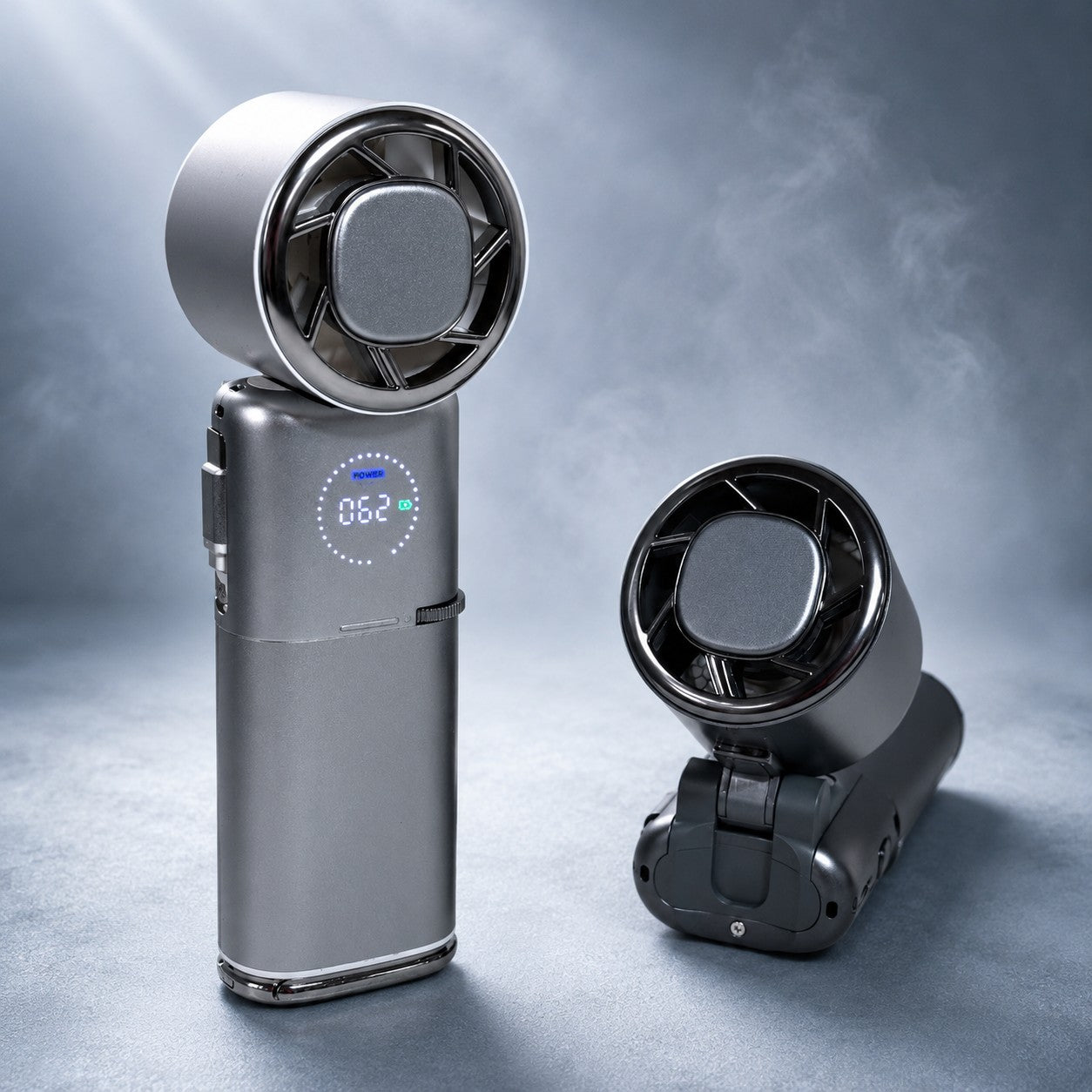
For travellers who want the nicest option in the portable range, the CapyUltra Portable Turbo Fan with Ice Compress is the one to look at.
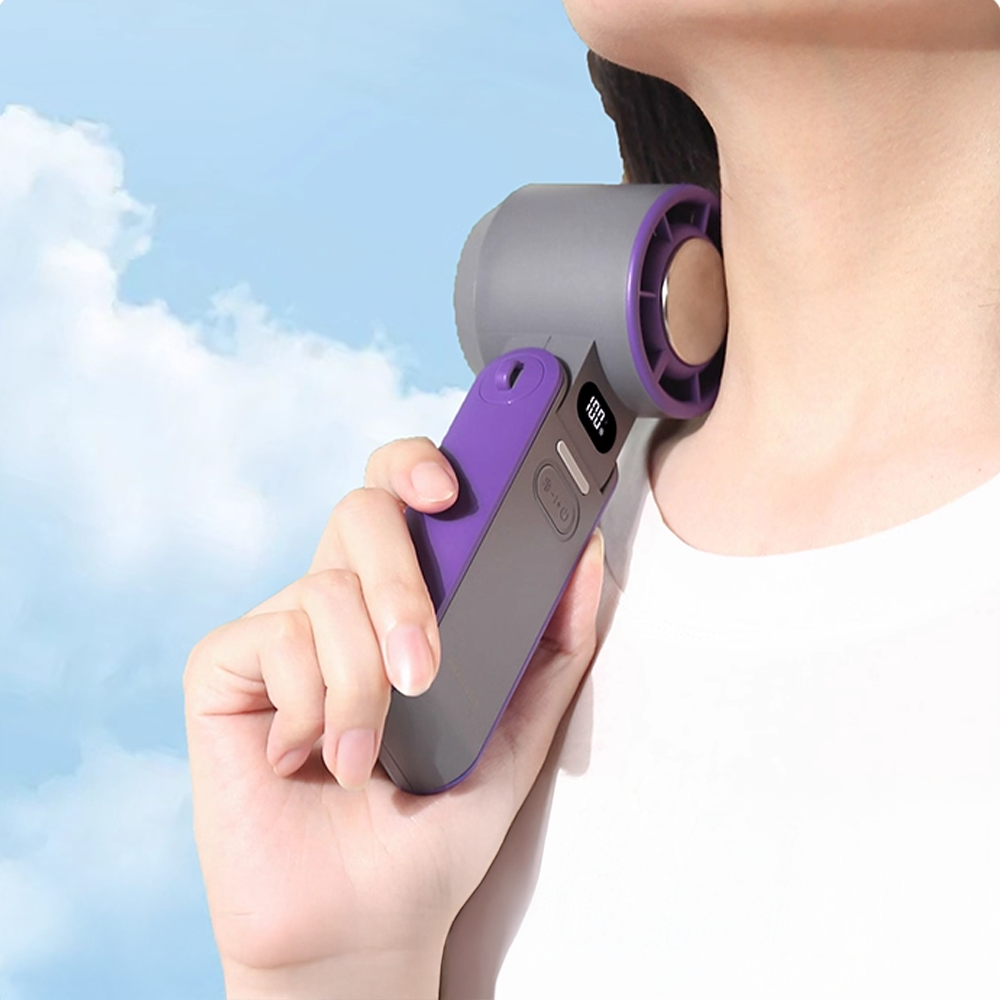
It combines strong turbo airflow with a metal ice-compress plate for direct skin relief on areas like your face, neck or wrists. It also has a 9000mAh dual battery, 100 speed levels, 22.5W fast charge support, a circular display, and a built-in retractable Type-C cable that can charge your phone without needing to carry an extra lead.
The important expectation to set: the ice plate cools your skin where you press it. It does not chill the air coming out of the fan, and it will not cool a room. Think of it as a quick “ahhh, needed that” moment when the heat starts winning.
A cooling towel, the cheapest little hero
A cooling towel is one of the simplest hot-weather travel upgrades. Wet it, wring it out, snap it, then drape it around your neck or over your shoulders. Pair it with airflow from a fan and it can feel seriously refreshing.
In humid places, you may need to refresh it with water more often, but it still earns its place because it is lightweight, easy to carry and very low-fuss. The silicone case also helps keep the rest of your bag from getting damp.
A power bank because travel days are battery thieves
Hot travel days destroy phone batteries. Maps, photos, translation apps, boarding passes, rideshare apps and constant screen brightness all add up. A travel power bank is close to essential.
Power banks generally need to travel in carry-on baggage, not checked luggage, and airlines can have their own limits around capacity, storage and onboard use. Many common 10,000mAh power banks sit well under the usual 100Wh threshold, but always check your airline rules before flying, especially now that several carriers have tightened lithium battery policies.
Destination-by-destination cooling tips
Singapore
Singapore is hot and humid all year, so the main problem is not just peak temperature, it is the constant sticky feeling. Pack a waist fan for long walking days, a cooling towel for your neck, and a power bank for your phone. The good news: the MRT, malls and indoor attractions give you plenty of chances to reset in air conditioning.
Bali
Bali’s heat is tropical and humid, especially around the coast. A neck fan or portable fan is easy to carry through markets, beach clubs and temples, while a cooling towel helps during longer walks. For Ubud, waterfalls or day tours, keep your battery backup sorted because you will probably be using maps and your camera all day.
Thailand
Thailand can be warm year-round, with the hot season especially intense around March to May. For Bangkok, temple days and markets, go for lightweight, hands-free cooling and plan the biggest walks for morning or late afternoon. For islands and beach days, a portable fan plus cooling towel is an easy combo.
Europe in summer
Europe can be tricky because many older buildings, hotels, trains and apartments were not designed around strong air conditioning. A portable fan helps in queues, rooms, trains and sightseeing days in the 30s. During extreme heat, especially around 40°C, do not rely on a fan alone. Shift sightseeing earlier or later, take indoor breaks and treat shade like it is part of the itinerary.
The United States in summer
The US depends heavily on where you are going. Eastern cities can feel humid and heavy, while places in the west and southwest can bring dry, extreme heat. In humid areas, fans and cooling towels are very useful for comfort. In extreme dry heat, use them alongside shade, water, air-conditioned breaks and local heat advisories.
Hot-destination packing checklist
- A fan that matches the trip: waist fan for walking, neck fan for hands-free sitting, portable fan for quick relief.
- A cooling towel for your neck, shoulders or wrists.
- A carry-on approved power bank, with airline battery rules checked before you fly.
- A broad hat and proper sunglasses for exposed sightseeing days.
- An insulated water bottle, plus electrolytes for very hot days.
- Loose, breathable, light-coloured clothing.
- A plan to do the biggest outdoor activities early or late, not at the hottest part of the day.
Frequently asked questions
Which fan is best for travelling?
For long walking days, a waist fan is usually the best choice because it is hands-free and pushes air through your shirt while you move. For planes, queues and restaurants, a neck fan is more discreet. For the smallest option, choose a portable handheld fan. Many travellers pack two: one for all-day movement and one for quick, easy relief.
Do portable fans work in humidity?
Yes, they help with comfort. Humidity makes sweat evaporate more slowly, so moving air across your skin can make you feel fresher and less sticky. A fan will not remove humidity from the air, but it can make tropical travel days much more manageable, especially when paired with a cooling towel.
Will a fan keep me safe in extreme heat?
No fan should be treated as your only heat-safety plan. In very high temperatures, especially indoors without air conditioning, fans can become less effective and may even make heat stress worse. Use fans for comfort, but combine them with shade, hydration, rest, cool indoor spaces and local heat-health advice.
Can I take a portable fan or power bank on a plane?
Portable fans and power banks are usually carried in cabin baggage, but airline rules vary. Power banks should not go in checked luggage, and some airlines restrict onboard use, charging or where they can be stored. Check your airline’s lithium battery policy before flying, especially for larger-capacity power banks.
Does the CapyUltra ice compress cool the air?
No. The CapyUltra ice-compress plate gives direct cool-to-touch relief where you press it, such as your face, neck or wrists. It does not chill the fan air or cool the room. The fan gives airflow, and the plate gives direct skin relief.
What should I pack for Singapore, Bali or Thailand?
For hot and humid destinations, pack a hands-free fan, a cooling towel, a power bank, breathable clothes, sunscreen, sunglasses and a water bottle. A waist fan is especially useful for long walking days, while a neck fan or portable fan is great for planes, queues and dinners.
Sort your cooling kit before you fly
CapyCool is Australian owned, ships fast from our Sydney warehouse, and is trusted by thousands of Aussies and businesses. Start with the waist fans for all-day movement, add a cooling towel for easy relief, or go premium with the CapyUltra Portable Turbo Fan with Ice Compress. Future you, standing in a hot airport queue, will be very grateful.









Share:
Cold Hands and Raynaud's: What Actually Helps
7 Winter Camping Essentials for a Warmer, Smarter Outdoor Adventure