




Published by CapyCool Research Labs. Reference piece, updated as the event develops. Figures are provisional and were accurate as of 25 June 2026.
Around the 2026 summer solstice, an exceptionally early and severe heatwave settled over Western Europe and the United Kingdom. France recorded its hottest day on record. The UK broke its June temperature record several times in a single afternoon. Spain, Italy, Portugal and Germany all issued their highest level heat alerts. This article explains what is happening, why heat in Europe and the UK tends to be more dangerous than the same reading on a thermometer in Australia or the United States, what heat does to the human body, and the practical steps that genuinely help.
The fast facts
- France recorded its hottest day on record on 23 June 2026.
- The UK reached a provisional 36.1 degrees Celsius at Gosport, beating a June record that had stood since 1976.
- England saw only its second ever red heat-health alert. The first was in July 2022.
- About 5 percent of UK homes have air conditioning, against roughly 90 percent in the US and around 74 percent of Australian households.
- The summer of 2022 was linked to more than 61,000 heat-related deaths across Europe.
What is happening across Europe and the UK right now
From late May 2026, a stagnant dome of high pressure built northward out of north-west Africa and parked over Western Europe, with the most intense heat concentrated over Spain, Portugal and France between 20 and 23 June. Under the high, sinking air warmed, skies stayed clear, and the ground baked day after day, each morning starting warmer than the last and each night offering little relief.
In France, Meteo-France placed dozens of departments under its red heatwave alert. The country recorded its hottest day on record on 23 June 2026, with its national thermal indicator, an average of measurements from 30 weather stations, provisionally reaching 29.8 degrees and surpassing the previous record set in 2019. The single highest reading was 44.3 degrees at Pissos in the Landes. The heat forced hundreds of schools to close or adjust their hours, and authorities restricted visitor hours at the Eiffel Tower and the Louvre.
In the United Kingdom, the Met Office issued a red Extreme Heat Warning for 24 to 25 June, while the UK Health Security Agency issued a red heat-health alert covering six regions of England. This was only the second red heat-health alert ever issued, the first having been in July 2022. The UK broke its June temperature record several times in a single day, reaching a provisional 36.1 degrees at Gosport in Hampshire and beating the 35.6 degrees set at Southampton in 1976, a record that had stood for 50 years. Dew points near 22 degrees made this spell noticeably more humid than the dry heat of July 2022, with widespread tropical nights where the temperature did not fall below 20 degrees, especially in towns and cities.
In Spain, the national weather agency AEMET reported highs above 45 degrees, peaking at 45.1 degrees in Andujar on 22 June, with almost the entire country under a heat alert. Spain had already recorded its highest May heat death toll since records began earlier in the season. Germany, Italy, Portugal, Switzerland, Belgium and Luxembourg all faced extreme heat, with several issuing top-level red alerts and cities reporting heat-related power outages, wildfire warnings, and disruption to rail and air travel.
A short history of Europe's deadly heat
Europe has lived through several of the deadliest heat events on record, and the death tolls are far larger than most people expect. Heat is often called a silent hazard because it rarely topples buildings or makes dramatic television, yet it kills more people in Europe than any other extreme weather.
- 2003. More than 70,000 excess deaths across Europe over the summer, including well over 14,000 in France alone, according to the demographic analysis by Robine and colleagues (2008).
- 2010. A prolonged heatwave and wildfires across western Russia were associated with roughly 55,000 deaths, with close to 11,000 excess deaths in Moscow alone, where the daily death rate ran at about double the normal level.
- 2022. A study led by Joan Ballester and colleagues, published in Nature Medicine in 2023, estimated more than 61,000 heat-related deaths across 35 European countries that summer, a figure later revised upward toward 70,000. Italy, Spain and Germany carried the highest totals.
- 2023 and 2024. Follow-up studies in Nature Medicine estimated tens of thousands of heat-related deaths in each year, with 2024 again exceeding 60,000 across the countries studied.
One encouraging finding sits inside this grim picture. The research team estimated that the 2023 toll would have been around 80 percent higher without the heat adaptation measures put in place since 2000, and more than twice as high among people aged over 80. In other words, the steps that follow in this article work. Preparation, behaviour change and looking out for one another measurably reduce the harm.
Why the same temperature is more dangerous in Europe and the UK
A 38 degree day in Seville, London or Berlin is not the same experience as a 38 degree day in Adelaide or Phoenix. Several factors stack up to make European heat more lethal per degree.
Air conditioning is rare
This is the single biggest reason. The International Energy Agency puts air conditioning ownership across Europe at around 20 percent of homes, against roughly 90 percent in the United States. The figure is about 5 percent in the UK and around 3 percent in Germany. By contrast, around 74 percent of Australian households have a cooler or air conditioner. When the air outside is hotter than the body, a cool indoor space is the most reliable refuge there is, and most European homes simply do not have one.
Buildings are designed to hold heat
Much of Europe's housing was built for cold winters, with thick walls, small windows and heavy insulation that traps warmth. In England, around one in six homes was built before 1900. Conservation rules and the appearance of outdoor units often make retrofitting air conditioning difficult, particularly in older and protected buildings. Dense, old cities also create a strong urban heat island effect, where concrete and brick soak up heat through the day and release it slowly overnight.
Older populations, and many living alone
Europe has some of the oldest populations on earth. According to Eurostat, people aged 65 and over make up about 22 percent of the EU population, rising to nearly 25 percent in Italy. Older bodies regulate heat less efficiently, often sweating later and less. Many older people also live alone. Eurostat reports that around four in ten women aged 65 or over live by themselves. Isolation turns a survivable situation into a fatal one, because there is no one to notice when something goes wrong.
Less acclimatisation, and bad timing
People and infrastructure in cooler climates are simply less prepared for extreme heat. An early-season event like June 2026 is especially risky because bodies have not yet adjusted to summer conditions, which is part of why this red alert flagged a risk even to otherwise healthy people, not only the most vulnerable.
Humidity and nights that never cool down
When the air is humid, sweat cannot evaporate easily, and evaporation is the body's main cooling tool once the air is hotter than the skin. Humid heat therefore loads the body faster and with less warning than dry heat. High overnight temperatures make it worse, because the body relies on cooler nights to recover. A run of tropical nights above 20 degrees removes that recovery window, which is exactly what the UK and parts of Europe experienced in June 2026.
Australia and the United States are far from immune, and heat is the deadliest weather hazard in both. Heat causes an average of more than 1,200 deaths a year in the US by the most conservative count. The difference is that widespread air conditioning, newer housing in hot regions, and strong, well-rehearsed public heat messaging blunt the per-degree impact in ways much of Europe has not yet matched.
What heat actually does to the body
The body holds its core temperature close to 37 degrees. It sheds heat two main ways: by sending more blood to the skin so warmth radiates away, and by sweating, where evaporation carries heat off the skin. Once the air is hotter than the skin, radiation and convection stop helping, and sweating becomes the only effective route. If the air is also humid, even sweat struggles, because it cannot evaporate. That is the trap of humid heat.
Two stages matter most:
- Heat exhaustion. The warning stage. Heavy sweating, cool clammy skin, dizziness, nausea, headache, weakness and a fast, weak pulse, while the person stays lucid. It usually responds to moving somewhere cool, resting, drinking fluids and active cooling.
- Heat stroke. A medical emergency. A core temperature above 40 degrees combined with confusion, slurred speech, collapse or loss of consciousness. The body's thermostat has failed. The priority is rapid cooling and emergency help, because outcome depends heavily on how hot the person gets and for how long.
The wet-bulb temperature combines heat and humidity into a single number that represents the lowest temperature cooling by sweat can reach. A limit of 35 degrees wet-bulb was long assumed to be the point beyond which humans cannot survive. Empirical testing at Penn State found the real limit for young, healthy adults averaged about 30.55 degrees, well below the old assumption, and limits for older and unwell people are lower still.
The people at greatest risk are older adults, infants and young children, pregnant women, people with heart, lung or kidney conditions, people taking medications that affect sweating or fluid balance, outdoor workers, and anyone who is socially isolated. If you fall into one of these groups, or care for someone who does, treat a red alert as the serious event it is.
The honest science on fans, and how to make one work harder
Where air conditioning is scarce, a fan is the most common cooling tool people reach for. The honest answer is that a fan on its own can only do so much, and in the most extreme conditions it can even work against you. The good news is that the fix is simple and well supported by research.
Work by Professor Ollie Jay and the University of Sydney Heat and Health Research Centre, alongside collaborators, has mapped this out clearly. Their biophysical modelling set temperature thresholds below which fan use is never harmful: under about 39 degrees for healthy young adults, under about 38 degrees for healthy older adults, and under about 37 degrees for older adults on certain medications that reduce sweating. Below these thresholds, and especially in humid heat, a fan helps by speeding up sweat evaporation. Applied across more than 100 cities, fans would have been beneficial on the large majority of hot days.
The catch is in very hot, dry air. When the air is much hotter than the skin and there is little humidity, a fan blowing over you behaves a bit like a fan-forced oven, driving heat into the body faster than the limited extra sweat can carry it away. A randomised study published in the New England Journal of Medicine in 2024 tested older adults in two conditions. In hot and humid heat, using a fan, with or without wetting the skin, reduced strain on the heart. In very hot and dry heat, the fan alone increased cardiac strain, while wetting the skin on its own was the strategy that helped.
The practical takeaway
A fan paired with wet skin beats a fan alone. Mist or wipe your skin with water, or drape a damp cooling towel over the neck and shoulders, and let the fan move air across it. This recreates the evaporation your body is struggling to manage and extends the range in which a fan genuinely helps. Much of Europe's heat, especially in humid spells and dense cities, sits squarely in the zone where a fan plus skin wetting is a sound, low-energy way to cool down. Above the thresholds in dry heat, drop the fan and focus on wetting the skin, cool showers and finding an air-conditioned space.
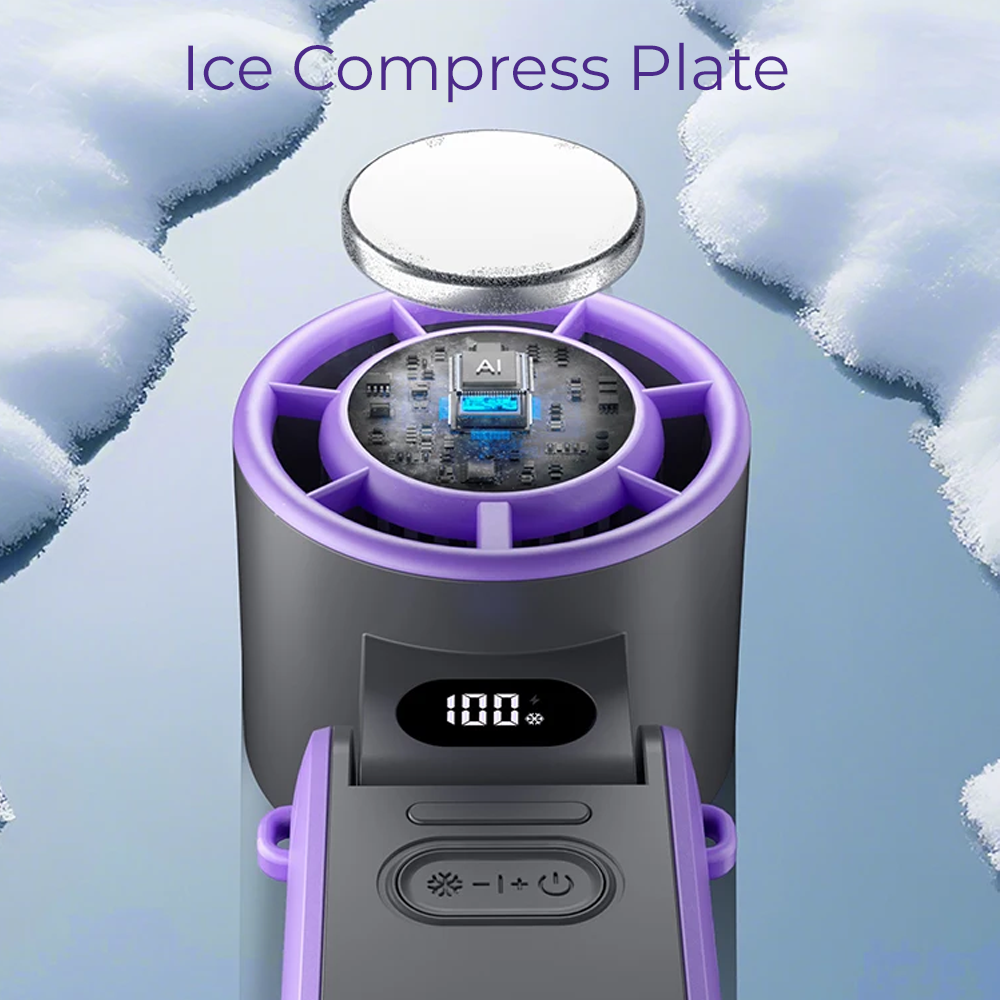
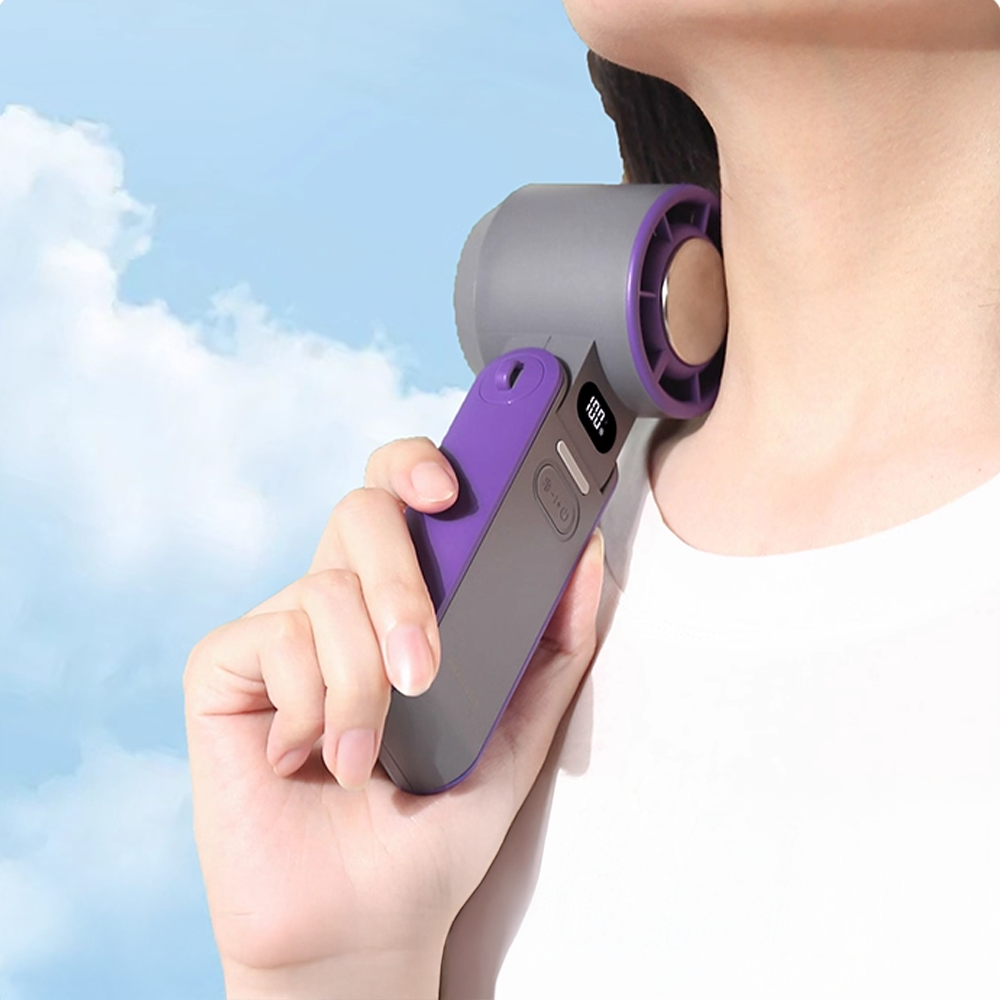
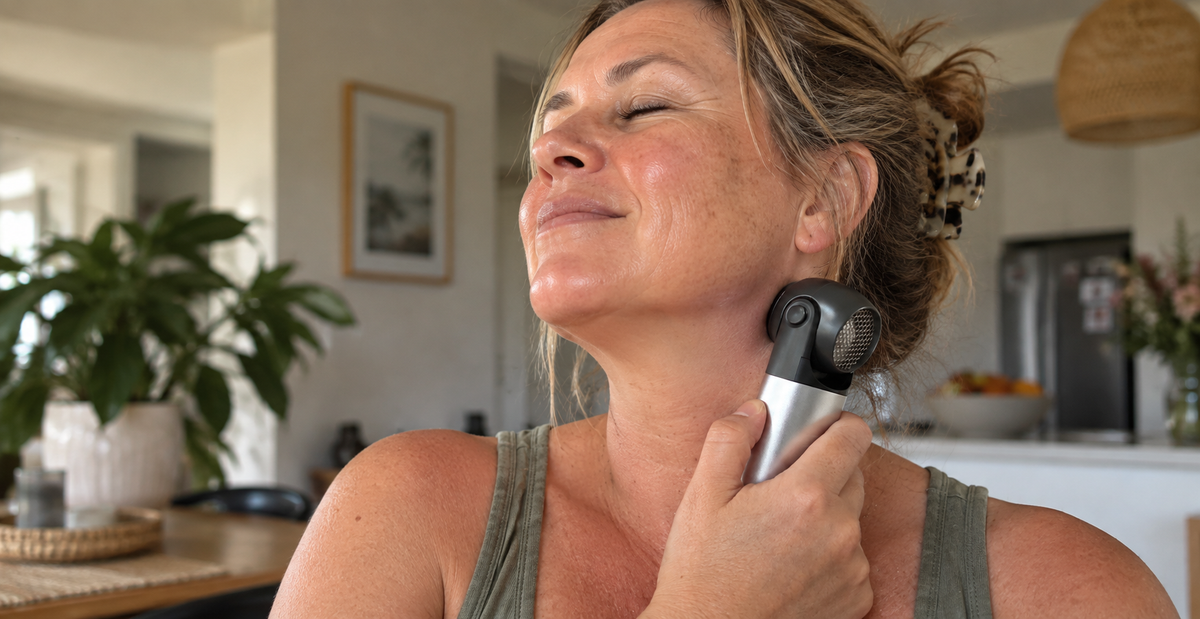
One more point worth being honest about, because the market is full of overblown claims. Cooling the neck or face feels wonderful and reduces your sense of effort and discomfort, which is genuinely useful on a hot day. It does not, however, lower your core body temperature or cool your brain, and no small personal device drops your body temperature by some large fixed number of degrees. Research on neck and head cooling, including the work of Douzi and colleagues (2019), found it improved how people felt and performed despite no measurable change in core temperature. Treat neck cooling as comfort and relief, which is real and worthwhile, rather than as a medical cooling treatment.
What people in the UK and Europe can do right now
No single measure is enough on its own. The evidence points to layering several simple things together. Here is the practical set, in rough order of impact.
Cool your body
- Wet your skin. A spray bottle, a damp flannel on the neck and wrists, or a wet cooling towel all help your body do what humidity is stopping it from doing.
- Take a cool shower or bath, or run cool water over your wrists and forearms.
- Try a foot bath in cool water while you sit.
- Drink water regularly through the day rather than waiting until you feel thirsty.
Use a fan the smart way
- Below the thresholds above, run a fan, and run it over wet skin or a damp towel for a stronger effect.
- In very hot, dry air above the thresholds, switch from the fan to wetting the skin and cool water.
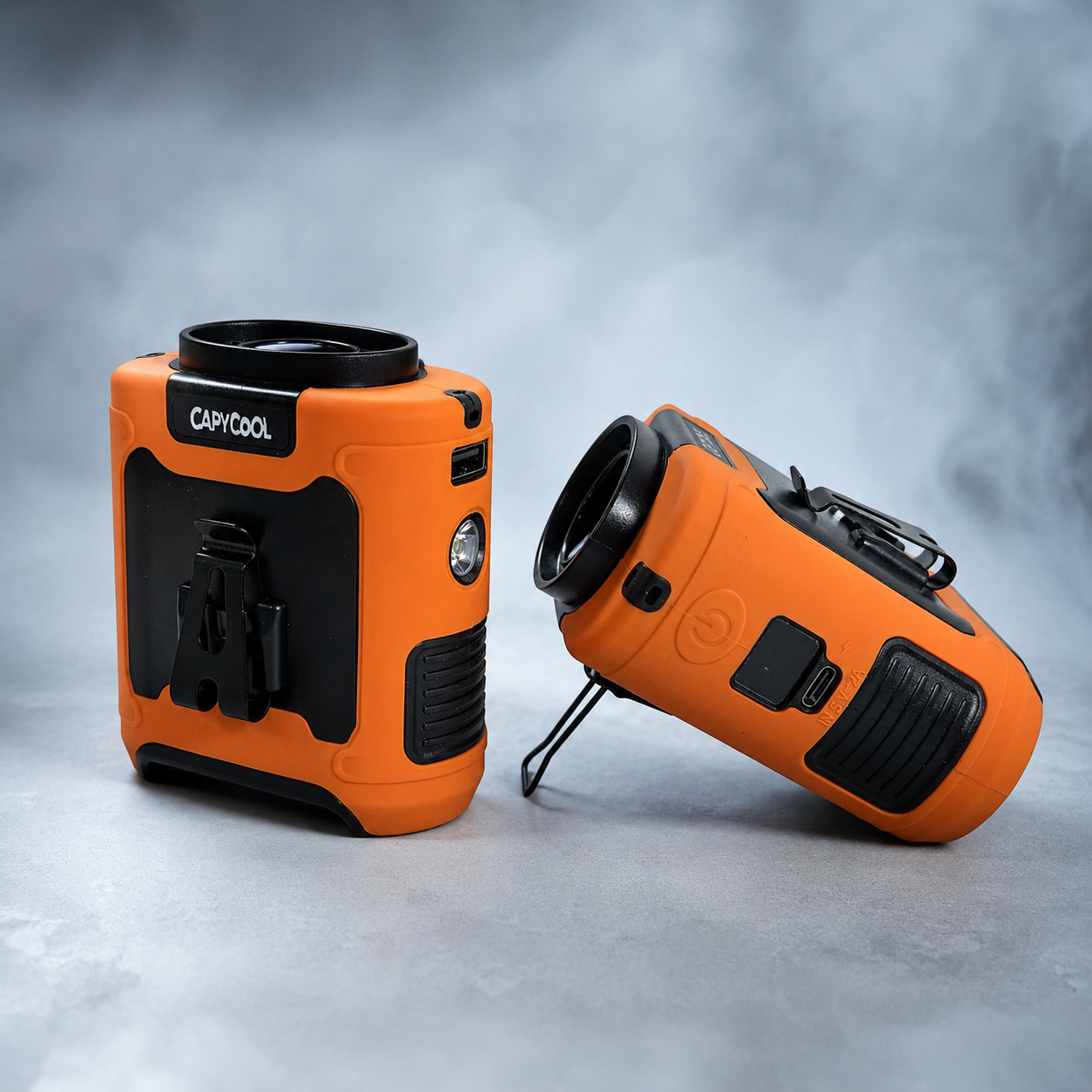
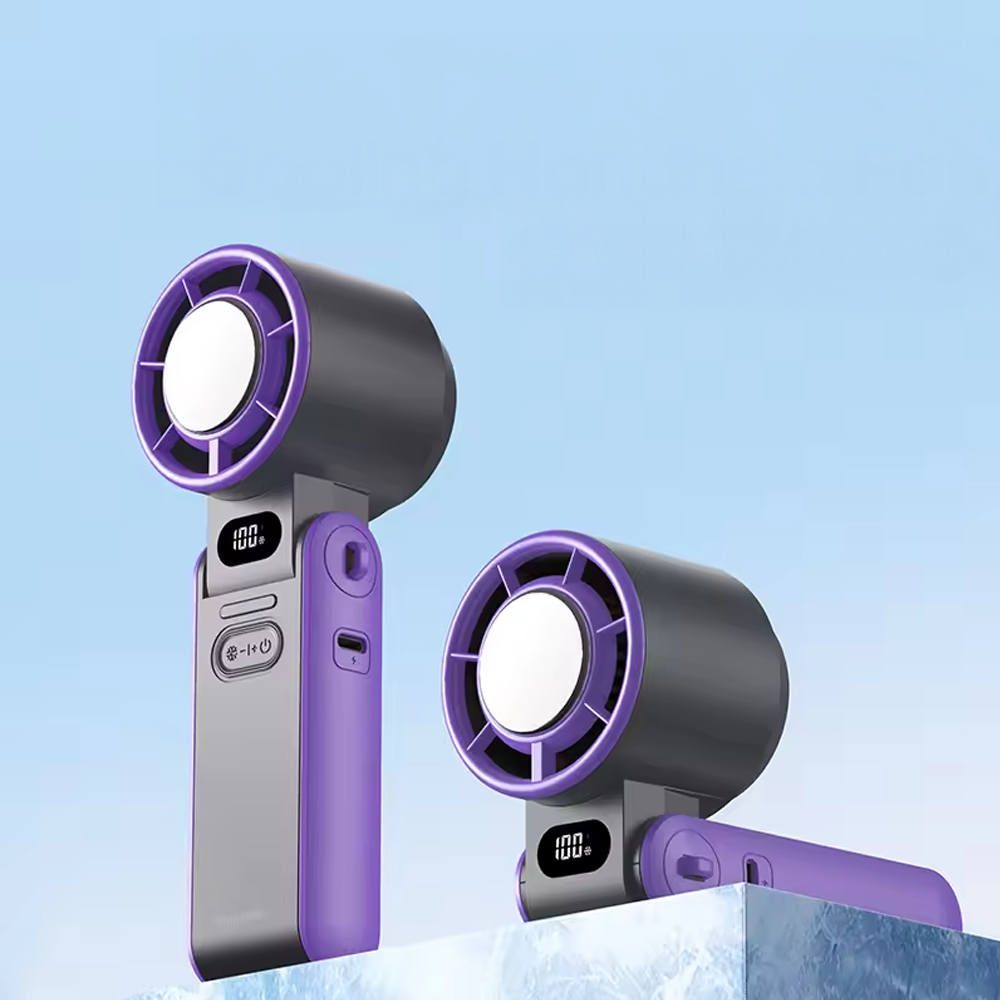
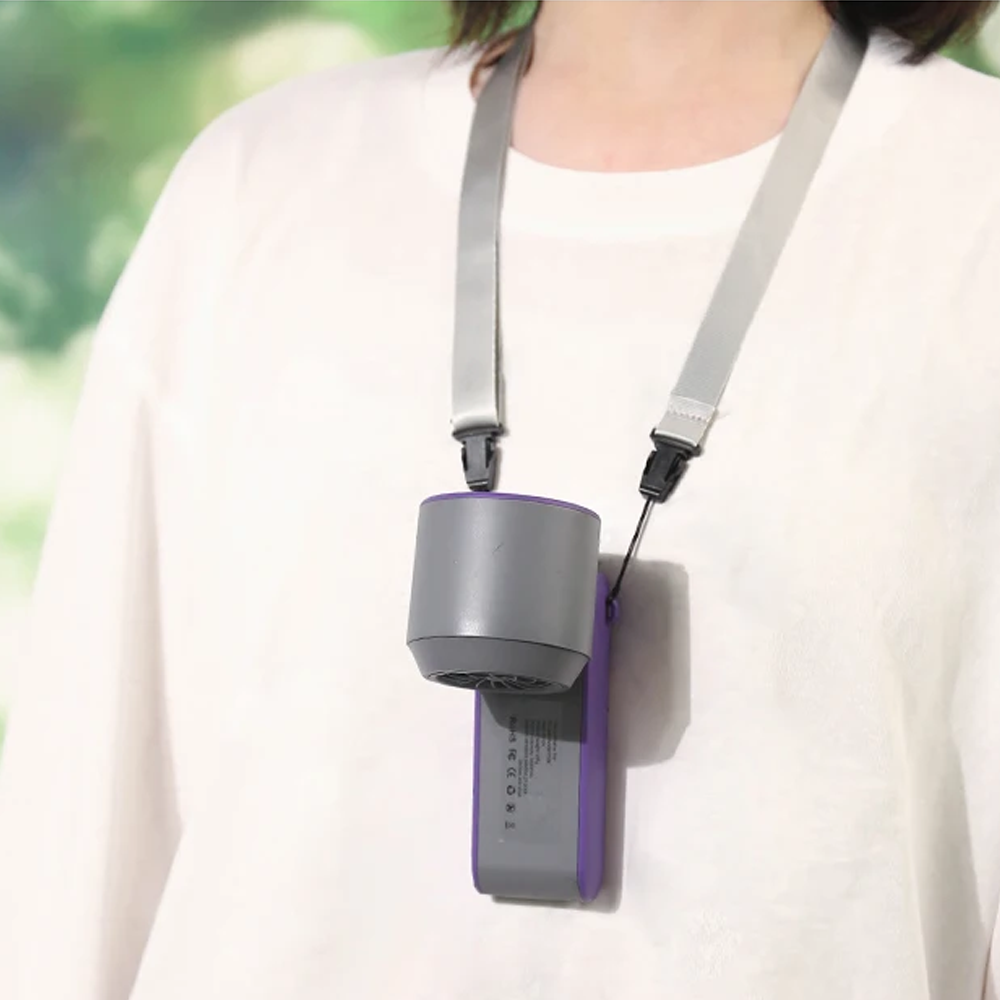
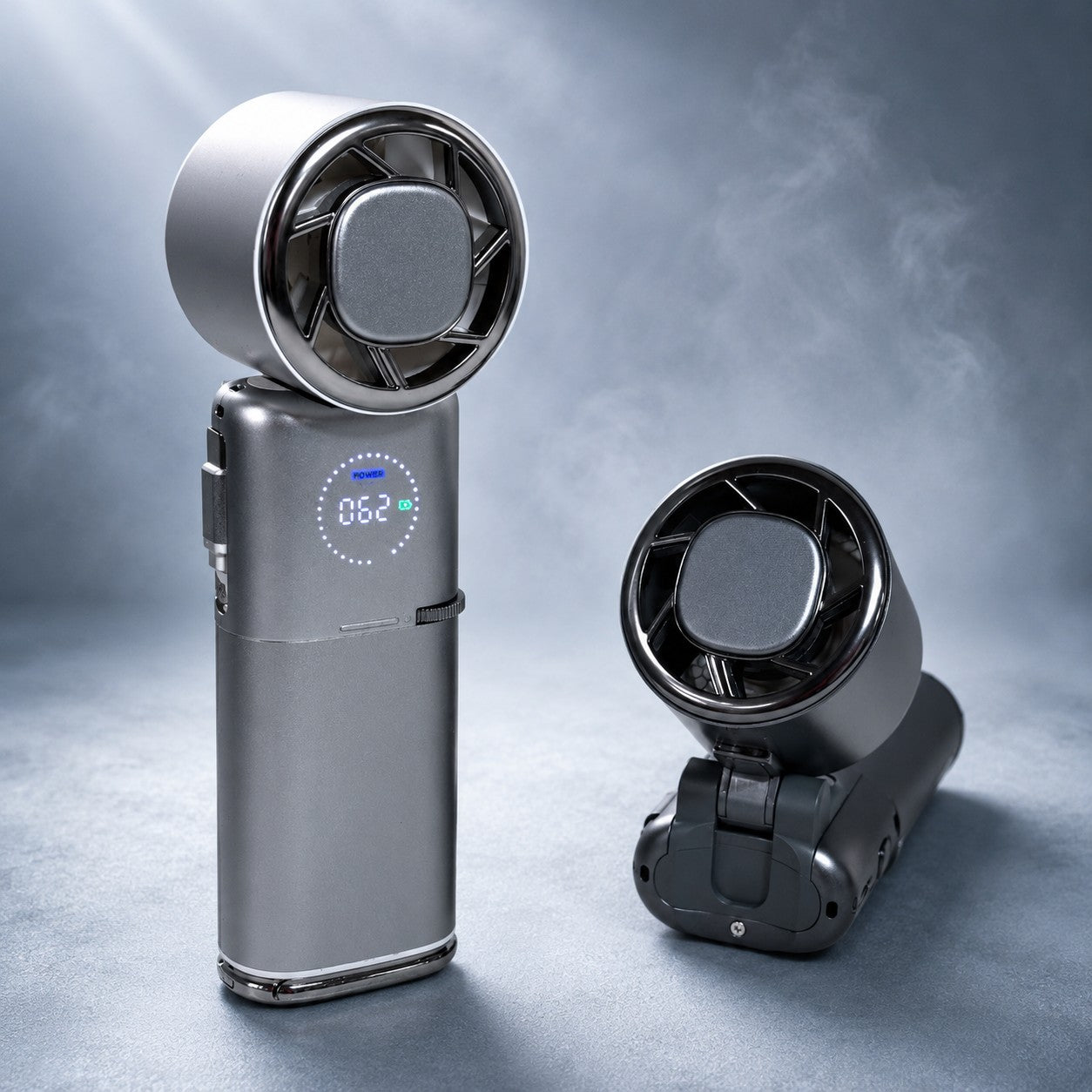
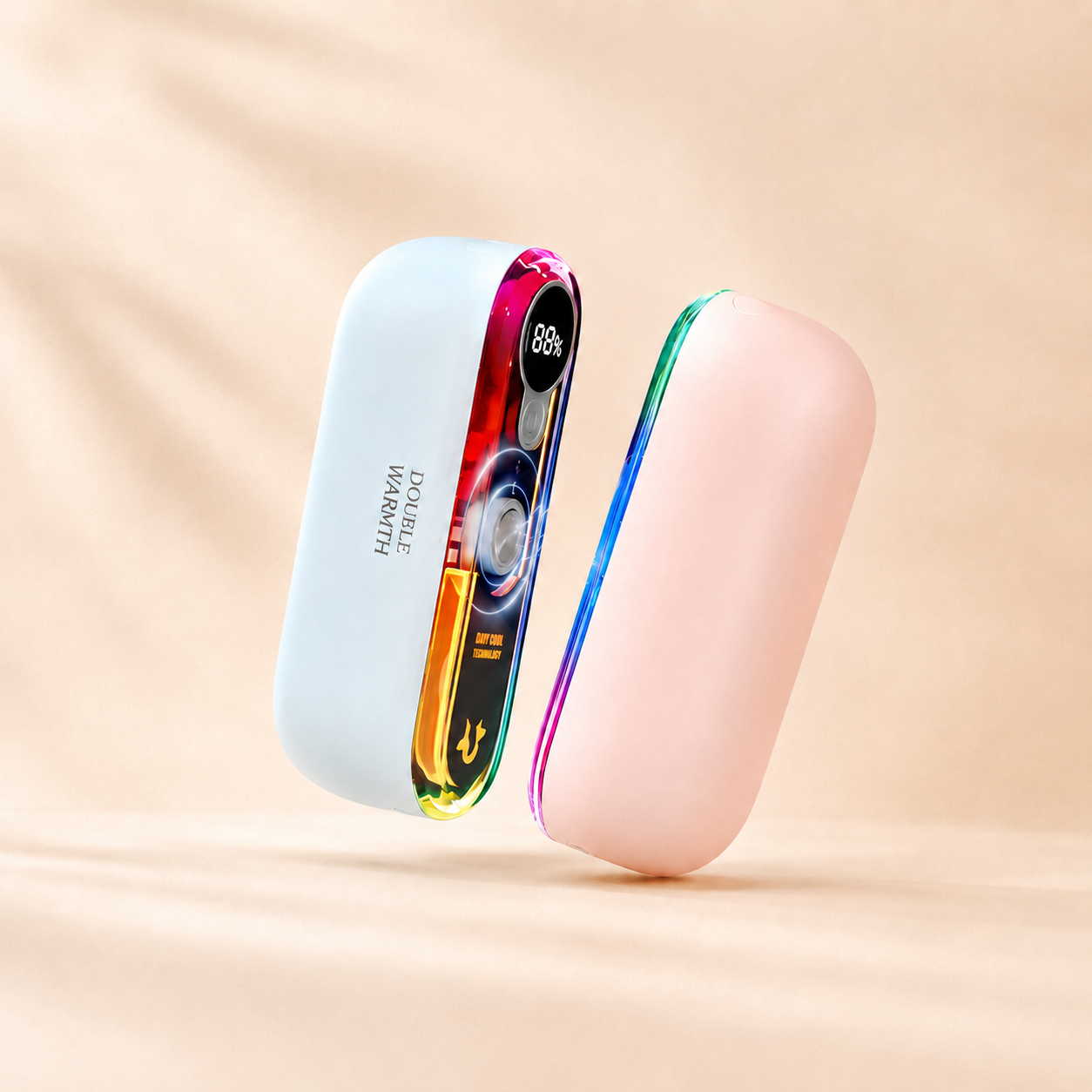
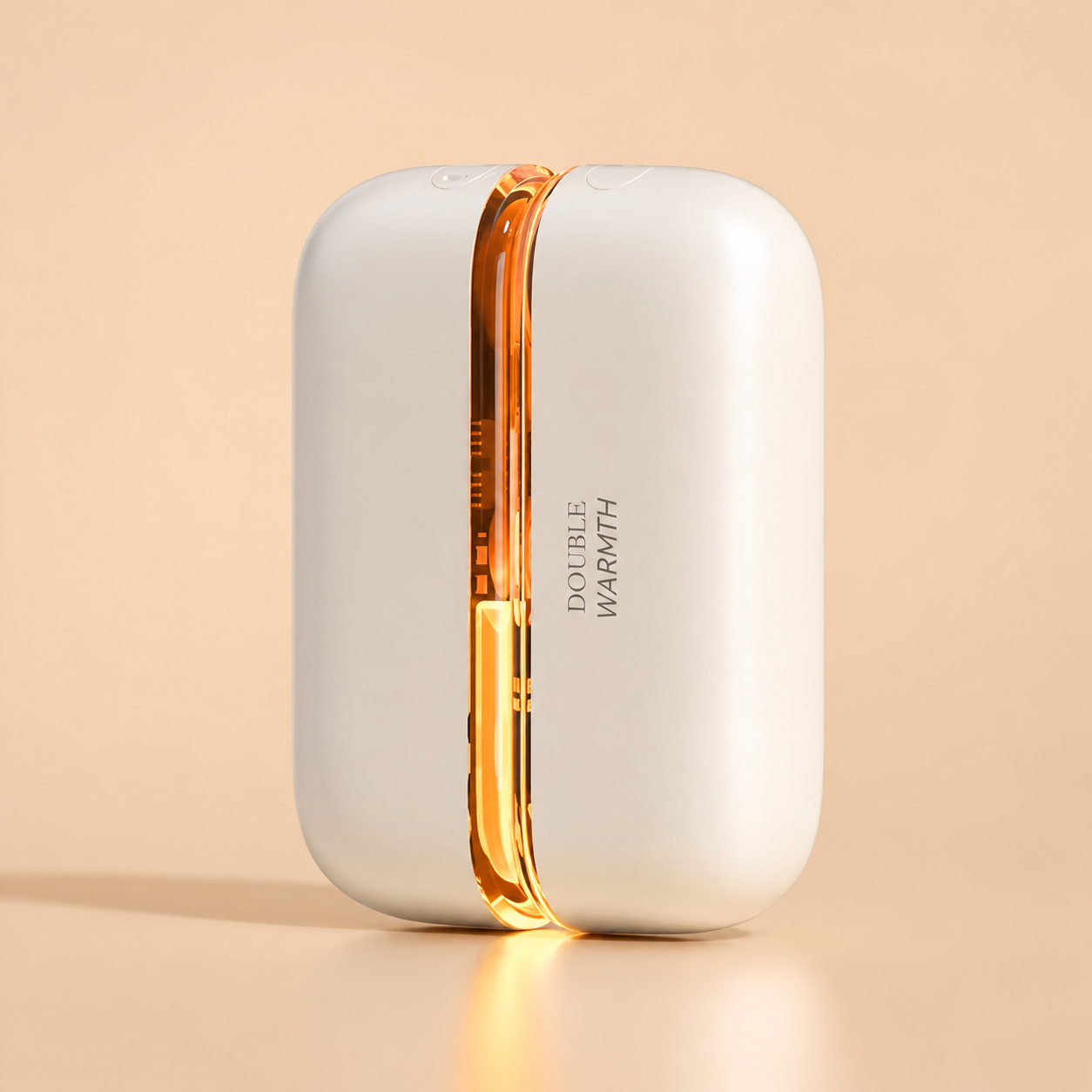
- A hands-free personal fan, such as a waist-worn fan paired with a damp cooling towel, keeps air moving across the body while leaving your hands free for everything else.
Cool your home without air conditioning
- Close curtains, blinds and shutters on sun-facing windows through the day to keep heat out.
- Open windows at night, once the outside air is cooler than inside, and set up a cross-breeze.
- Use external shade where you can, and avoid running the oven or other heat-producing appliances during the day.
Change your routine
- Avoid the hottest hours, roughly 11am to 3pm, for any strenuous activity.
- Wear loose, light-coloured, breathable clothing.
- Seek out air-conditioned public spaces such as libraries, shopping centres and community cooling centres.
- Never leave children, older people or pets in a parked car, even briefly.
Know the warning signs
- Learn the difference between heat exhaustion and heat stroke, described above.
- If someone becomes confused, stops sweating, has very hot skin or collapses, treat it as an emergency. Move them somewhere cool, start cooling them quickly, and call emergency services, 999 in the UK, 112 across the EU, 000 in Australia and 911 in the US.
The bigger picture
Europe is the fastest-warming continent. According to the Copernicus Climate Change Service and the World Meteorological Organization, it has been warming at roughly twice the global average since the 1980s, and 2024 was Europe's warmest year on record. Heat stress days and tropical nights are rising. In the UK, the Met Office reports that days hotter than 30 degrees more than tripled over 2015 to 2024 compared with the 1961 to 1990 period. Globally, the most recent Lancet Countdown reporting found heat-related deaths have climbed sharply since the 1990s.
The pattern is clear. Heatwaves like this one are becoming more frequent, longer and more intense, and they are arriving earlier in the year. That is not a reason for despair. It is a reason to treat heat as a normal part of planning, the way cold winters have always been planned for, and to close the preparation gap while there is time.
Looking after each other
If you take one thing from this article, make it this. The strongest predictor of who dies in a heatwave is not the temperature on the thermometer. It is whether anyone is checking on you.
The clearest evidence comes from Chicago in 1995, when a heatwave caused 739 excess deaths in a matter of days. The sociologist Eric Klinenberg's study of that disaster found that many people died alone, behind closed doors and sealed windows, out of contact with family, friends and neighbours. When the city later adopted cooling centres, active check-ins and better outreach, the toll in a comparable event a few years later was a small fraction of the size.
That is the hopeful part. A phone call to an elderly parent, a knock on a neighbour's door, an offer to sit together somewhere cool for an afternoon, these are not small gestures. During a heatwave they are among the most effective things any of us can do, and they cost nothing. Check on the older people in your street, on relatives who live alone, and on anyone you know who is unwell. Make it a daily habit while the alert is in force.
Stay cool, drink water, keep your home shaded, use a fan over wet skin, and look out for the people around you. Heat is serious, and it is also, with the right steps, very survivable.
Frequently asked questions
Why is the 2026 heatwave in Europe and the UK so dangerous?
The 2026 heatwave is dangerous because it combines extreme temperatures with conditions that make Europe especially vulnerable. Only around 5 percent of UK homes and about 20 percent of European homes have air conditioning, much of the housing is built to retain heat, the population is older than most, and an early-season event arrives before bodies have adjusted to summer. Humid air and tropical nights above 20 degrees stop the body cooling and recovering, which raises the risk even for otherwise healthy people.
Why doesn't Europe just use air conditioning like Australia or the US?
Only around 20 percent of European homes have air conditioning, roughly 5 percent in the UK and 3 percent in Germany, compared with about 90 percent in the US and around 74 percent of Australian households. The reasons are historically mild summers, older buildings that are hard or restricted to retrofit, conservation rules, cost, and concern about energy use. Uptake is rising quickly as heatwaves become more frequent.
Do fans actually help in a heatwave?
Yes, in humid heat and below about 39 degrees for younger adults or 38 degrees for older adults, a fan helps by speeding up sweat evaporation, and it works best over wet skin. Above those thresholds in very hot, dry air, a fan alone can push heat into the body faster than sweat can carry it away and may increase strain on the heart. In that situation, switch from the fan to wetting the skin and using cool water.
Does wetting your skin or using a cooling towel really make a fan work better?
Yes. A fan moving air across wet skin or a damp cooling towel recreates the evaporative cooling that humidity blocks, so the combination is more effective than a fan alone. A 2024 study in the New England Journal of Medicine found that in hot and humid conditions, fan use with or without skin wetting reduced strain on the heart in older adults, and in very hot, dry conditions, wetting the skin was the strategy that helped.
Can a neck fan or personal cooling device lower your body temperature?
No. Cooling the neck or face improves comfort and reduces your sense of effort and discomfort, which is genuinely useful on a hot day, but it does not lower your core body temperature or cool the brain. Research on neck and head cooling found benefits to comfort and performance despite no measurable change in core temperature. Be sceptical of any product claiming a large fixed temperature drop or brain cooling.
What is a wet-bulb temperature and why does it matter?
The wet-bulb temperature is a single figure that combines heat and humidity and represents the limit of cooling by sweat evaporation. A limit of 35 degrees wet-bulb was long assumed to be the survivable maximum, but testing at Penn State found that even young, healthy adults reach their limit at about 31 degrees wet-bulb, with a measured average near 30.55 degrees. Limits are lower for older and unwell people, which is why humid heat is so hazardous.
How do I tell the difference between heat exhaustion and heat stroke?
Heat exhaustion involves heavy sweating, cool clammy skin, dizziness, nausea, headache and a fast, weak pulse, while the person stays lucid. It usually responds to rest, cool fluids and active cooling. Heat stroke involves a core temperature above 40 degrees with confusion, collapse or loss of consciousness, and it is a medical emergency. Move the person somewhere cool, begin rapid cooling and call emergency services straight away.
Who is most at risk during a heatwave, and how can I help?
Those most at risk are older adults, especially anyone living alone, infants and young children, pregnant women, people with heart, lung or kidney conditions, people on certain medications, outdoor workers and socially isolated people. The most effective help is simple. Check on vulnerable people daily during an alert, help them keep cool and hydrated, and make sure they can reach somewhere cool, because social isolation is one of the strongest predictors of heat death.
Sources
CapyCool Research Labs uses named primary sources and reputable reporting. Event figures for June 2026 are provisional and drawn from official agencies and contemporaneous news coverage, and will be updated as records are finalised.
- NPR, France records its hottest day ever as Europe withers in heatwave, 23 June 2026. npr.org
- Met Office, Red Extreme Heat Warning issued with June temperature records forecast to break, 2026. metoffice.gov.uk
- GOV.UK, UKHSA issues red heat-health alerts across England, 2026. gov.uk
- CNN, Extreme heat is melting national records across Europe, 24 June 2026. cnn.com
- Time, What to Know About Europe's Deadly Heatwave, 23 June 2026. time.com
- Euronews, How Europe's heatwave is shutting down daily life, 22 June 2026. euronews.com
- Robine et al., Death toll exceeded 70,000 in Europe during the summer of 2003 (2008).
- Ballester et al., Heat-related mortality in Europe during the summer of 2022, Nature Medicine (2023). hal.science
- Gallo et al., Heat-related mortality in Europe during 2023, Nature Medicine (2024). nature.com
- Heat-related mortality in Europe during 2024, Nature Medicine (2025). nature.com
- International Energy Agency, Staying cool without overheating the energy system. iea.org
- CNN, European summers are getting brutally hot, so why is air conditioning so rare? cnn.com
- Eurostat, Population structure and ageing. ec.europa.eu
- Eurostat, Four in ten women aged 65 or over live alone. ec.europa.eu
- National Weather Service and CDC, heat mortality data. wpc.ncep.noaa.gov
- Vecellio, Wolf, Cottle and Kenney, Evaluating the 35 degree wet-bulb temperature adaptability threshold for young, healthy subjects, Journal of Applied Physiology (2022). journals.physiology.org
- Penn State, Humans cannot endure temperatures and humidities as high as previously thought. psu.edu
- University of Sydney, Using a fan and wetting the skin reduces risk of deadly cardiac strain in hot and humid weather, 2024. sydney.edu.au
- Monash Sustainable Development Institute, Fan-First Cooling policy brief. heathealth.info
- Douzi et al. (2019), neck and head cooling and perceived exertion, Scandinavian Journal of Medicine and Science in Sports. [Insert verified DOI or URL before publishing.]
- UK Health Security Agency, How to keep cool and stay well during hot weather, 23 June 2026. ukhsa.blog.gov.uk
- South Side Weekly, on the 1995 Chicago heatwave and Eric Klinenberg's social autopsy. southsideweekly.com
- Copernicus Climate Change Service, European State of the Climate 2024. climate.copernicus.eu
- World Health Organization, on the 2025 Lancet Countdown on health and climate change. who.int










Share:
It's not an air con. It's a fan
World Cup 2026: How Bad Is the Heat, Really?